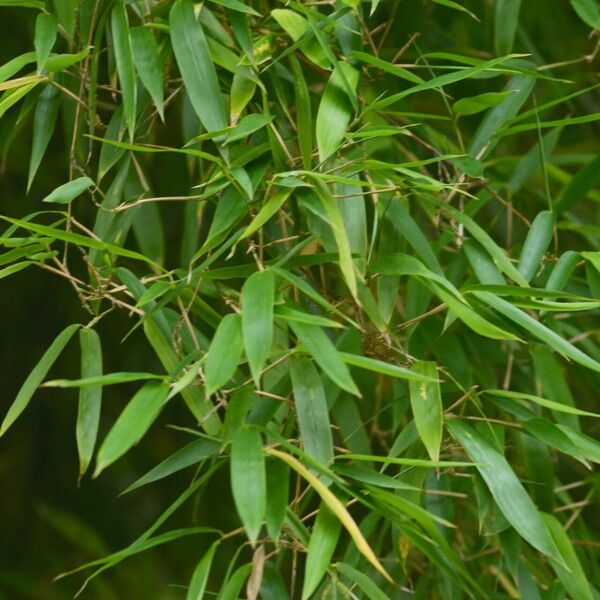
Plant Overview
Known as the "Water Bamboo," Phyllostachys heteroclada is a master of adaptation. While most bamboos suffer from "wet feet" and root rot in soggy soil, this resilient species has developed its own internal "snorkeling" system. It is a favorite for gardeners looking to add a lush, tropical screen to marshy spots or heavy clay areas where other plants might fail.
🔍 How to Identify
- 🌿 Vertical Culms: The stems (culms) grow very straight and upright, starting as a bright, powdery green and maturing into a deep, rich emerald.
- 🎋 Prominent Nodes: The rings along the stem are quite distinct, often featuring a thin white waxy band just below the node on younger plants.
- 🌬️ Internal Air Canals: The most unique identifier is hidden; the rhizomes and roots contain tiny air canals (aerenchyma) that look like microscopic honeycombs, allowing the plant to breathe in saturated mud.
🏡 In Your Garden
- 💧 The Wetland Specialist: Unlike its cousins, this bamboo thrives in riparian zones. It is the perfect solution for stabilizing soil near ponds, streams, or low-lying areas of the yard that stay damp after rain.
- 🏃 A Vigorous Runner: This is a "running" bamboo, meaning it spreads through underground rhizomes. Because it is so hardy and water-tolerant, it can be invasive. Always use a high-quality root barrier if you want to keep it in a specific "screen" shape.
- 🌬️ Wind & Cold Resistance: It is remarkably cold-hardy (down to USDA Zone 6) and handles wind better than many large-leafed tropicals, making it a sturdy choice for privacy hedges.
⚠️ Safety & Toxicity
- 🐾 Pet Safe: Good news for pet owners—Phyllostachys heteroclada is considered non-toxic to dogs, cats, and horses.
- 🩹 Physical Hazards: While not poisonous, the young shoots emerging from the ground are very hard and sharp. Take care when walking barefoot near a growing grove. The leaves also have a slightly silica-rich, "toothed" edge that can cause minor skin irritation or "grass cuts."
✨ Fun Fact
In its native regions of China, this plant is often called "Fishscale Bamboo." Its unique internal structure makes the wood incredibly flexible and resistant to rot, which is why it has been used for centuries to weave traditional fishing baskets and create sturdy tool handles.

Detailed Care Instructions
Phyllostachys Heteroclada, also known as Water Bamboo, is a versatile plant that can thrive in a variety of conditions. Here are some tips on how to grow and care for Phyllostachys Heteroclada:
- Select a suitable location: Phyllostachys Heteroclada prefers a sunny spot with well-draining soil. It can also tolerate partial shade.
- Planting: Make sure to plant the rhizomes of the Phyllostachys Heteroclada at a depth that is at least 2 inches below the soil surface. This will help prevent the plant from spreading too quickly.
- Watering: Water the plant regularly, especially during dry periods. Make sure the soil remains consistently moist but not waterlogged.
- Fertilizing: Phyllostachys Heteroclada benefits from regular fertilization. Use a balanced fertilizer during the growing season to promote healthy growth.
- Pruning: Trim any dead or damaged canes to encourage new growth. It is also important to thin out overcrowded areas to allow for better air circulation.
- Controlling spread: Phyllostachys Heteroclada is a fast-growing plant and can spread rapidly. Consider planting it in containers or installing root barriers to control its spread.
- Winter protection: Provide winter protection for Phyllostachys Heteroclada by mulching around the base of the plant and wrapping the canes with burlap to prevent frost damage.
By following these tips, you can successfully grow and care for Phyllostachys Heteroclada in your garden or landscape.
Phyllostachys Heteroclada plants should be watered regularly to keep the soil consistently moist but not waterlogged. The best way to water these plants is to water deeply, allowing the water to penetrate the soil and reach the roots. Be sure to water at the base of the plant to avoid wetting the leaves, which can cause fungal disease. During hot and dry periods, you may need to water more frequently to ensure the plant stays hydrated. It's also important to monitor the soil moisture level by checking the top few inches of soil regularly. Adjust your watering schedule as needed based on the plant's individual needs and environmental conditions.
To fertilize Phyllostachys Heteroclada plants, use a balanced fertilizer with an NPK ratio of 10-10-10. Apply the fertilizer in early spring before new growth begins. Follow the manufacturer's instructions for application rates based on the size and age of the plant. Water the plant thoroughly after fertilizing to help the nutrients penetrate the soil and reach the roots. Repeat the fertilizing process every 4-6 weeks during the growing season. Avoid over-fertilizing, as this can damage the plant and cause nutrient imbalances.
Phyllostachys Heteroclada plants prefer well-draining, fertile soil that is slightly acidic to neutral in pH. A rich soil mixture that is high in organic matter, such as compost or peat moss, can provide the necessary nutrients for healthy growth. Additionally, adding perlite or sand to the soil can improve drainage and prevent waterlogging, which can be detrimental to the plant's root system. It is important to regularly check the moisture levels of the soil and water the plant accordingly to ensure proper growth and development.
Phyllostachys heteroclada can be propagated through division or by taking cuttings. Division involves separating a mature plant into smaller sections, each with roots attached. This can be done by carefully digging up the plant and using a sharp tool to cut the rhizomes into smaller sections. Each section should have several culms and healthy roots.
To propagate by taking cuttings, select a healthy culm with several nodes. Cut the culm into sections, making sure each cutting has at least one node. Place the cuttings in a container with water or moist soil, keeping them in a warm and bright location. Roots should start to form within a few weeks.
Once the cuttings or divisions have established roots, they can be planted in a suitable location with well-draining soil and plenty of sunlight. Regular watering and fertilization will help the plants grow and establish themselves. It is important to monitor the newly propagated plants for signs of stress or disease and provide necessary care to ensure their successful growth.








