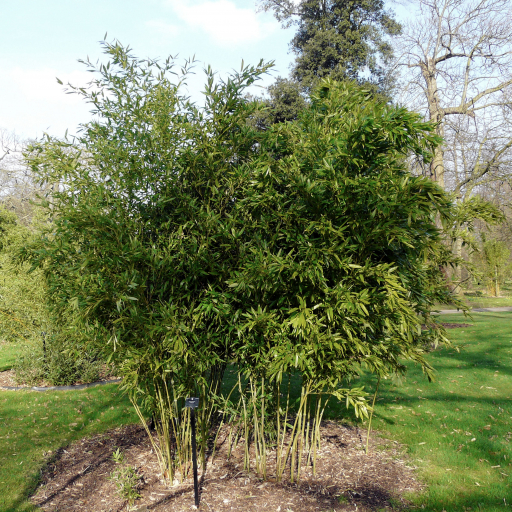
Plant Overview
Known affectionately as the "Big Node Bamboo" or "Bird’s Nest Bamboo," Phyllostachys nidularia is a standout species prized for its architectural silhouette. Originating from the river valleys of China, this bamboo is legendary for its incredibly prominent, swollen joints that look like stacked rings. It’s a favorite for gardeners looking to create a dense, living screen that feels both ancient and artistic.
🔍 How to Identify
- 🎋 The "Big Nodes": The most striking feature is the supra-nodal ridge—the "joint" of the cane—which is significantly more swollen and prominent than in other bamboo species.
- 🟢 Culm Color: The canes (culms) emerge in a deep, vibrant green and maintain a matte, slightly rough texture rather than a waxy shine.
- 🍃 Compact Canopy: The leaves are relatively short and lance-shaped, growing in dense clusters that give the top of the plant a "tufted" or nest-like appearance.
🏡 In Your Garden
- 🚧 The Runner Reality: Like most Phyllostachys, this is a "running" bamboo. While it is slightly more well-behaved than its cousins, it still requires a root barrier if you don't want it visiting your neighbor's yard.
- 💧 Thirst for Balance: This species is particularly fond of consistent moisture but is surprisingly resilient to colder temperatures once established. It thrives best in fertile, well-draining soil where its roots won't sit in stagnant water.
- ✂️ Craftsman’s Choice: Because the wood is thick-walled and flexible, the canes are historically used in China for high-quality basket weaving and tool handles.
⚠️ Safety & Toxicity
- ✅ Safe for All: Phyllostachys nidularia is considered non-toxic to dogs, cats, and horses. It is a "friendly" giant for household pets.
- 🔪 Physical Hazard: The main safety concern is physical. Dry, cut bamboo canes can be incredibly sharp, and the edges of the leaves can occasionally cause minor "paper-cut" style irritations if brushed against quickly.
✨ Fun Fact
The species name nidularia comes from the Latin word "nidus," meaning nest. This refers to the way the branches and dense foliage bunch together at the nodes, creating perfect, protected alcoves for small birds to build their homes!

Detailed Care Instructions








