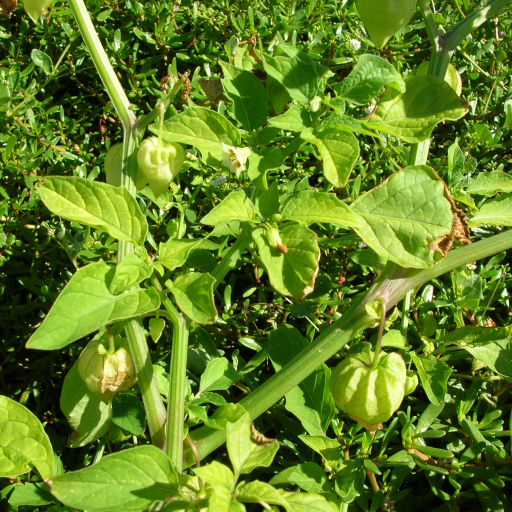
Plant Overview
Often called the "Balloon Cherry" or "Cutleaf Groundcherry," Physalis angulata is like a tiny, natural gift-wrapper. Known for its delicate papery husks that hide a sweet-tart golden berry, this plant has traveled from the Americas to gardens across the globe. It carries a sense of mystery, often appearing unexpectedly in disturbed soils like a wild treasure, looking like a cross between a tomato plant and a Victorian lantern.
🔍 How to Identify
- 🏮 The Lantern: The most iconic feature is the inflated, papery calyx that surrounds the fruit. It has 10 distinct longitudinal ribs and turns from green to a parchment-tan color as it matures.
- 🍃 Cutleaf Foliage: Unlike some of its relatives, the leaves are "dentate," meaning they have irregular, jagged teeth along the edges, looking slightly tattered or "cut."
- 🌼 Nodding Flowers: The flowers are small, bell-shaped, and creamy yellow with dark spots at the base. They tend to hang face-down toward the soil to protect their pollen from rain.
🏡 In Your Garden
- 🌱 The Pioneer Spirit: This plant loves "disturbed" soil—it’s often the first to show up after you’ve tilled a garden bed. It thrives in full sun but isn't picky about soil quality, making it a low-maintenance (though sometimes aggressive) guest.
- ♻️ Self-Seeding Habit: Because it is an annual that produces hundreds of seeds per plant, it "travels" around your garden. If you plant it once, expect to see its "balloons" popping up in unexpected corners for years to come.
⚠️ Safety & Toxicity
- 🟠 Status: Edible only when fully ripe; toxic when green.
- 🚫 The Danger: Like many members of the Nightshade family, the green parts of the plant (leaves, stems, and unripe green fruit) contain solanine. Ingesting green fruit can cause stomach upset, headaches, or more severe reactions in children and pets.
- 🐾 Pet Warning: Keep curious dogs away from the foliage, as the bitter leaves can be tempting to chew but are toxic to most domestic animals.
✨ Fun Fact
In many cultures, the Physalis angulata is used as a natural "musical" toy for children. When the papery husk is dry, you can place it on the back of your hand and "pop" it like a tiny balloon, releasing a satisfying snap!

Detailed Care Instructions
| Humidity | Normal |
| Lighting | Part Sun |
| Toxicity | Poisonous |
| Difficulty | Medium |
| Hibernation | Cold Period |
To grow Physalis Angulata plant, also known as the Chinese lantern or wild gooseberry, follow these steps:
- Climate and soil requirements: Physalis Angulata prefers warm climates and well-draining soil. Choose a location that receives full sun or partial shade.
- Seed selection and preparation: Purchase Physalis Angulata seeds from a reliable source. Soak the seeds in water for 24 hours before sowing to encourage germination.
- Germination and propagation: Start seeds indoors or directly sow them outdoors after the danger of frost has passed. If starting indoors, sow seeds in trays filled with seed-starting mix. Cover the seeds lightly with soil and keep the soil consistently moist. Germination usually occurs within 7-14 days. Once the seedlings have several sets of leaves, they can be transplanted outdoors.
- Outdoor transplanting: Dig holes in the prepared garden area, spacing them 18-24 inches apart. Remove the seedlings from the trays, being careful not to damage their roots, and place them in the holes. Gently firm the soil around each plant.
- Watering and fertilizing: Physalis Angulata plants require regular watering to keep the soil moist but not waterlogged. Avoid overwatering or allowing the soil to dry out completely. Fertilize the plants every 2-4 weeks with a balanced organic fertilizer.
- Pruning: Physalis Angulata plants tend to spread and can become invasive. Regularly remove any runners or unwanted growth to maintain control over the plant's size and shape.
- Pest and disease control: Physalis Angulata can be susceptible to pests like aphids and spider mites. Monitor the plants regularly and take appropriate measures such as using organic insecticidal sprays or introducing beneficial insects for control. Watch out for diseases like powdery mildew or leaf spot, and treat them promptly if detected.
- Harvesting: Physalis Angulata plants produce lantern-shaped fruits enclosed in a papery husk. Harvest the fruits when they turn yellow or orange and the husk is dry and papery. Gently remove the husk to access the fruit. The fruits are edible and can be used in cooking, preserves, or eaten fresh.
By following these steps, you should be able to successfully grow Physalis Angulata plants in your garden. Remember to provide proper care and maintenance throughout the growing season for a bountiful harvest.

Place in a bright room that is sun drenched almost all day. Or directly in a south-facing window.

To water this plant, you should lightly moisten the soil around its roots without letting it become waterlogged. This can be done by using a watering can or small hose, taking care to aim directly at the base of the plant. It is best to water in the morning or evening when the sun is not too strong, to avoid scorching the leaves. Be sure not to overwater the plant as it prefers well-drained soil and too much moisture can cause root rot. Keep an eye on the moisture level of the soil and adjust your watering schedule accordingly.
To fertilize the plant, use a balanced fertilizer with equal amounts of nitrogen, phosphorus, and potassium. Apply the fertilizer once every two weeks during the growing season. Be sure to water the plant thoroughly before fertilizing and avoid applying fertilizer during periods of drought or when the soil is dry. Spread the fertilizer evenly around the base of the plant and avoid getting it on the leaves or stems.
The ideal soil for Physalis Angulata plant is a well-draining soil that is rich in organic matter. It should be slightly acidic with a pH range of 5.5 to 6.8. The soil should be moist but not waterlogged, as the plant prefers a moderate amount of moisture. The plant can grow in a range of soils, including sandy loam, loam, and clay, as long as the soil is nutrient-rich and well-draining. Adding compost or well-rotted manure to the soil before planting can help provide the plant with the necessary nutrients. It is important to avoid using soil that is contaminated with chemicals, as the plant can absorb these toxins, which can be harmful to human health.
To propagate this plant, you will need to collect seeds from ripe fruits or take stem cuttings from healthy mature plants. For seed propagation, simply extract the seeds from the fruits and allow them to dry for a few days before planting in well-draining soil. Cover with a layer of soil and keep moist until the seeds germinate.
For stem cutting propagation, take a cutting from a healthy mature plant using a clean, sharp pair of scissors. The cutting should be about 6 inches long and have two or three sets of leaves. Remove any leaves from the bottom half of the stem and make a fresh cut at the base. Dip the base of the cutting in rooting hormone and plant it in well-draining soil. Water the cutting and keep it in a warm, bright location with indirect sunlight. Keep the soil moist but not waterlogged and wait for roots to grow before transplanting into a larger pot or outside in the garden.








