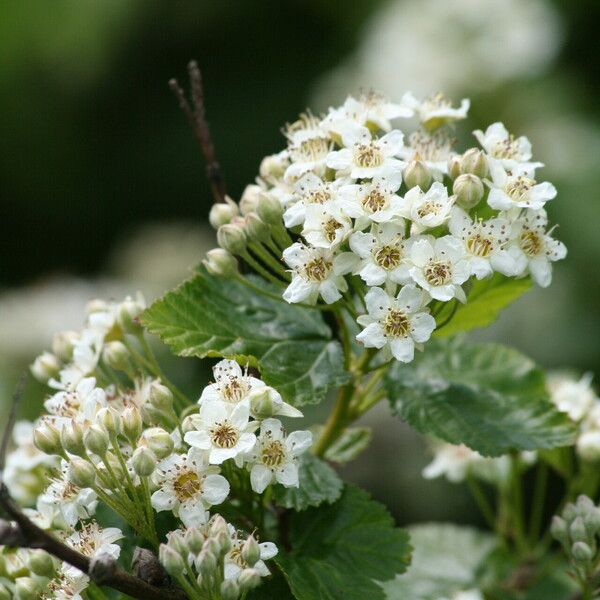
Plant Overview
Often called the Mountain Ninebark, this rugged beauty is a staple of the American West, clinging to rocky slopes and canyon walls from Wyoming down to Texas. It earns its nickname from the fascinating way its older stems shed their bark in thin, papery layers, supposedly having "nine layers" of skin. It is the perfect choice for a naturalistic landscape, offering a mix of delicate spring blooms and dramatic winter texture.
🔍 How to Identify
- 🪵 The Bark: The most iconic feature is the "shredding" bark on mature stems, which peels away in long, reddish-brown or tan strips to reveal lighter layers beneath.
- 🍃 Maple-like Leaves: The foliage consists of small, three-lobed leaves that look like miniature versions of a currant or maple leaf, turning a lovely dull yellow or bronze in the autumn.
- 🌸 Cluster Blooms: In late spring, it produces dense, flat-topped clusters of small white flowers, often blushed with a hint of rose-pink and featuring many tiny, hair-like stamens.
- 🍒 Seed Pods: After the flowers fade, the plant develops small, inflated, reddish-brown pods that persist into the winter, providing visual interest long after the leaves have fallen.
🏡 In Your Garden
- ⛰️ Rocky Resilience: Unlike many garden shrubs that demand rich loam, Mountain Ninebark thrives in poor, rocky, or sandy soils. It is an excellent "problem solver" for erosion control on steep banks.
- ☀️ Drought Strategy: Once established, this plant is incredibly water-wise. It prefers to dry out between waterings and may suffer from root rot if kept in soggy, poorly drained garden beds.
- ✂️ Pruning Nuance: Because it flowers on "old wood" (growth from the previous year), any heavy pruning should be done immediately after the flowers fade to ensure you don't cut off next year's display.
⚠️ Safety & Toxicity
- 🟢 Non-Toxic Status: Physocarpus monogynus is generally considered non-toxic to humans, dogs, and cats. It is a "friendly" shrub for high-traffic family areas.
- 🧤 Mechanical Irritation: While not chemically toxic, the peeling bark can sometimes be dry and sharp; wearing gloves during heavy pruning is recommended to avoid minor scratches.
✨ Fun Fact
The "Ninebark" name is a bit of botanical folklore—while the bark does peel many times, there aren't actually exactly nine layers. Early settlers believed that if you peeled it back nine times, you would finally reach the "heart" of the wood.

Detailed Care Instructions
Growing a Physocarpus monogynus, commonly known as mountain ninebark, involves several steps to ensure the plant thrives. Here’s a comprehensive guide on how to grow this hardy shrub:
1. Choosing the Right Location:
- Sunlight: Physocarpus monogynus thrives best in full sun to partial shade. Aim for at least 6 hours of direct sunlight per day.
- Soil: It prefers well-draining soil but is adaptable to various soil types, including clay, loam, and sandy soils. It can tolerate both acidic and alkaline pH levels.
- Space: Ensure you have enough space, as the shrub can grow up to 6 feet tall and wide.
2. Planting:
- Timing: The best time to plant Physocarpus monogynus is in early spring or fall, when temperatures are cooler.
- Digging the Hole: Dig a hole that is twice the width and the same depth as the root ball of your plant.
- Planting: Place the plant in the hole, ensuring it sits at the same depth as it was in the nursery container. Backfill the hole with soil, pressing it down gently to eliminate air pockets.
- Watering: Water the plant thoroughly after planting to help settle the soil around the roots.
3. Watering:
- Initial Stage: Keep the soil consistently moist but not waterlogged for the first few weeks while the plant establishes.
- Ongoing Care: Once established, Physocarpus monogynus is drought-tolerant and requires minimal watering. Water deeply during prolonged dry spells.
4. Mulching:
- Apply a 2-3 inch layer of mulch around the base of the plant to help retain moisture, suppress weeds, and regulate soil temperature.
- Keep mulch a few inches away from the trunk to prevent rot.
5. Pruning:
- Timing: Prune in late winter or early spring before new growth begins.
- Method: Remove any dead, damaged, or diseased branches. Thin out crowded areas to improve air circulation and light penetration. You can also shape the plant to your desired size and form.
6. Fertilizing:
- Optional: While not strictly necessary, you can apply a balanced, slow-release fertilizer in early spring to encourage healthy growth.
- Avoid excessive fertilization, as this can lead to weak, leggy growth.
7. Pests and Diseases:
- Generally hardy: Physocarpus monogynus is resistant to most pests and diseases. However, keep an eye out for common issues like powdery mildew or aphids and treat them promptly if they occur.
- Preventative Measures: Ensure good air circulation and avoid overhead watering to minimize the risk of fungal diseases.
8. Propagation:
- Cuttings: You can propagate Physocarpus monogynus by taking softwood cuttings in early summer. Treat the cuttings with rooting hormone and plant them in a well-draining potting mix.
- Seeds: Collect seeds from mature plants in the fall, stratify them over winter, and plant them in the spring.
By following these guidelines, you should be able to successfully grow a healthy and attractive Physocarpus monogynus plant in your garden. Happy gardening!

Place in a bright room that is sun drenched almost all day. Or directly in a south-facing window.

To effectively water *Physocarpus monogynus*, it's important to understand its requirements based on its natural habitat and growth patterns. Here's a detailed guide:
### Soil Moisture
*Physocarpus monogynus* prefers well-drained soil. Proper drainage prevents root rot and other water-related diseases. Ensure the soil is consistently moist but not waterlogged.
### Watering Frequency
- Young Plants: Water newly planted *Physocarpus monogynus* regularly to help them establish a strong root system. During the first growing season, water deeply once a week if there is no significant rainfall.
- Established Plants: Once established, this species is more drought-tolerant. Water them during prolonged dry periods, approximately every two weeks.
### Deep Watering
Deep watering encourages the roots to grow deeper in the soil. Water the plant slowly and thoroughly until the soil around the root zone is moistened to a depth of about 6-8 inches.
### Mulching
Apply a layer of organic mulch (e.g., shredded bark, compost) around the base to help retain moisture and regulate soil temperature. Keep the mulch a few inches away from the stem to prevent rot.
### Monitoring
- Check Soil Moisture: Insert your finger into the soil up to 2-3 inches to test moisture. If it feels dry at that depth, it's time to water.
- Signs of Under-Watering: Wilting leaves, especially during hot afternoons, indicate the need for water.
- Signs of Over-Watering: Yellowing leaves or soft, mushy roots suggest too much water.
### Seasonal Adjustments
- Spring and Summer: Water more frequently during the active growing season.
- Fall and Winter: Reduce watering as the plant's growth slows down but ensure that the soil doesn't dry out completely.
### Tools
- Hose or Drip Irrigation: A hose with a gentle spray nozzle or a drip irrigation system works best for delivering water directly to the root zone without causing soil erosion or foliar diseases.
- Soaker Hose: This can be particularly effective for providing slow, deep watering.
By adhering to these guidelines, you ensure that *Physocarpus monogynus* receives the appropriate amount of water it needs to thrive without the risk of over- or under-watering.
Here are the fertilizing instructions for Physocarpus monogynus:
- Soil Test: Conduct a soil test before fertilizing to determine pH levels and nutrient deficiencies. This helps in choosing the right type and amount of fertilizer.
- Fertilizer Type: Use a balanced, slow-release granular fertilizer with an N-P-K ratio around 10-10-10. Organic options like compost or well-rotted manure can also be beneficial.
- Timing: Fertilize in early spring, just as new growth begins. This supports the plant's active growing season. If your soil is particularly poor, a second, light application in mid-summer can be beneficial.
- Application:
- Evenly spread the granular fertilizer around the base of the plant, extending to the drip line (the outermost edge of the branch spread).
- Avoid direct contact with the plant stems to prevent burning.
- For liquid fertilizers, dilute according to the manufacturer's instructions and apply directly to the soil.
- Evenly spread the granular fertilizer around the base of the plant, extending to the drip line (the outermost edge of the branch spread).
- Watering: After applying fertilizer, water the area thoroughly to help the nutrients seep into the soil and reach the roots.
- Mulching: Apply a 2-3 inch layer of organic mulch around the base of the plant, keeping it a few inches away from the stems. Mulching helps retain moisture and adds organic matter to the soil as it decomposes.
- Observation: Monitor the plant for any signs of nutrient deficiencies, such as yellowing leaves or stunted growth. Adjust the fertilizing schedule or type accordingly, based on what the plant shows it needs.
Following these guidelines will support healthy growth and vibrant foliage.
Physocarpus monogynus thrives well in a variety of soil types, but for optimal growth, it prefers well-draining soil that is rich in organic matter. Here are some specifics to consider when selecting or preparing soil for this plant:
- Drainage: Well-draining soil is crucial to prevent waterlogging, which can lead to root rot. You can improve drainage by incorporating sand or perlite into the soil mix.
- Organic Matter: Adding organic matter such as compost, well-rotted manure, or leaf mold can greatly enhance the soil’s fertility and structure, providing essential nutrients and improving moisture retention.
- pH Level: This plant is adaptable to a range of pH levels but tends to perform best in slightly acidic to neutral pH soil (around 6.0 to 7.0). If the soil is too alkaline, you might need to amend it with materials like sulfur or peat moss to lower the pH.
- Texture: A loamy soil that balances sand, silt, and clay proportions typically offers an ideal environment. Such soil ensures good aeration, drainage, and nutrient availability.
- Moisture: While the soil must drain well, it should still retain enough moisture to keep the roots hydrated. Mulching around the base of the plant can help maintain soil moisture levels.
When planting, ensure the hole is twice as wide and just as deep as the plant’s root ball, and backfill with the amended soil to encourage healthy root development. Regular monitoring of soil conditions, coupled with appropriate amendments, will help the Physocarpus monogynus flourish.
Propagating Physocarpus monogynus, also known scientifically as a plant in the genus Physocarpus, can be achieved through several methods including seed germination, softwood cuttings, and division. Here are the detailed steps for each method:
Seed Germination:
- Seed Collection:
- Collect seeds from mature, healthy plants after the flowering period.
- Allow the seeds to dry properly if they are still moist.
- Collect seeds from mature, healthy plants after the flowering period.
- Cold Stratification:
- Physocarpus seeds often require a period of cold stratification to break dormancy.
- Place the seeds in a moist medium (like a mix of peat moss and sand) and keep them in a refrigerator at about 4°C (39°F) for about 30 to 60 days.
- Physocarpus seeds often require a period of cold stratification to break dormancy.
- Sowing:
- After stratification, sow seeds in a well-draining seed-starting mix or a mix of sand and peat.
- Cover them lightly with soil as they need some light for germination.
- Keep the medium moist but not waterlogged.
- After stratification, sow seeds in a well-draining seed-starting mix or a mix of sand and peat.
- Germination:
- Seeds should start to germinate within a few weeks to a couple of months.
- Maintain a consistent temperature around 18-21°C (65-70°F).
Softwood Cuttings:
- Seeds should start to germinate within a few weeks to a couple of months.
- Timing:
- The best time to take softwood cuttings is late spring to early summer when new growth is still soft but mature enough to handle.
- The best time to take softwood cuttings is late spring to early summer when new growth is still soft but mature enough to handle.
- Preparation:
- Select a healthy, non-flowering stem and cut a 4-6 inch section.
- Remove the lower leaves, leaving the top 2-3 leaves.
- Select a healthy, non-flowering stem and cut a 4-6 inch section.
- Planting:
- Dip the cut end into rooting hormone to encourage root development.
- Plant the cutting into a mix of perlite and peat or a well-draining potting mix.
- Water thoroughly and cover with a plastic dome or a clear plastic bag to maintain humidity.
- Dip the cut end into rooting hormone to encourage root development.
- Rooting:
- Place the cuttings in a bright, indirect light location.
- Keep the soil consistently moist but not soaked.
- Roots should develop in 4-6 weeks, after which you can transplant them into individual pots or directly into the garden.
Division:
- Place the cuttings in a bright, indirect light location.
- Timing:
- Divide plants in early spring or fall when the plant is not in active growth.
- Divide plants in early spring or fall when the plant is not in active growth.
- Preparation:
- Carefully dig up the entire plant.
- Gently shake off excess soil from the roots.
- Carefully dig up the entire plant.
- Division:
- Use a sharp, clean knife or spade to divide the root mass into smaller sections, ensuring each section has a good set of roots and stems.
- Immediately re-plant the divisions in their new location.
- Use a sharp, clean knife or spade to divide the root mass into smaller sections, ensuring each section has a good set of roots and stems.
- Aftercare:
- Water the newly planted divisions thoroughly.
- Mulch around the plants to retain moisture and suppress weeds.
- Ensure they are kept moist until well established.
By following these propagation techniques, you can successfully propagate Physocarpus monogynus and enjoy new plants in your garden.
- Water the newly planted divisions thoroughly.







