Plant Overview
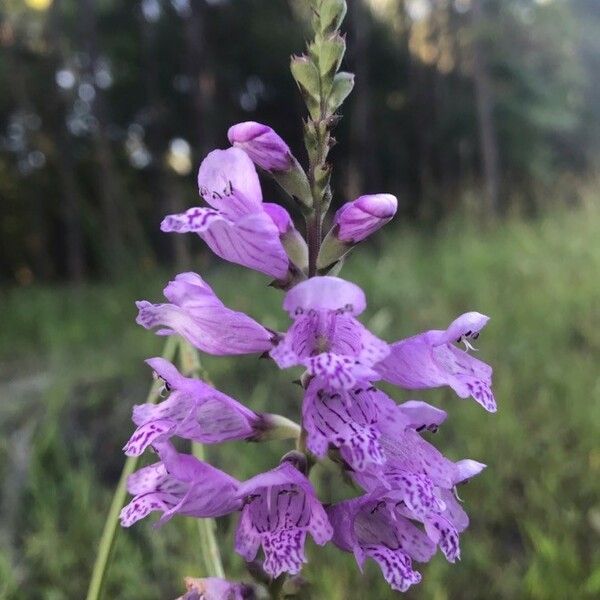
Often called the Narrow-leaf Obedient Plant or "False Dragonhead," this wildflower is a graceful staple of the North American prairie. It earns its quirky nickname because the individual flowers can be pushed into a new position on the stem and will stay exactly where you leave them, as if they are following orders. With its elegant, towering spikes of lavender-pink blooms, it is a favorite for those looking to add architectural height and a bit of "mechanical magic" to their summer landscape.
🔍 How to Identify
- 🌸 Snapdragon-like Blooms: The flowers are tubular, two-lipped, and arranged in dense, four-sided vertical spikes that bloom progressively from the bottom to the top.
- 🌿 Slender Foliage: As the name suggests, this species features very narrow, lance-shaped leaves with fine teeth along the edges, sitting opposite each other along the stem.
- 🟦 Square Stems: A true member of the Mint family (Lamiaceae), it possesses distinct four-sided stems that are remarkably sturdy and rarely require staking despite their height.
🏡 In Your Garden
- 💧 A Thirst for Moisture: This plant naturally thrives in wet meadows and ditches, making it the perfect candidate for "problem" low-lying areas of your yard or a dedicated rain garden.
- 🦋 Pollinator Magnet: It is a high-value nectar source for bumblebees and hummingbirds, who are some of the few visitors strong enough to prize open the tubular petals to reach the treat inside.
- 🌱 The Spreading Spirit: While beautiful, it spreads via underground rhizomes. It is less aggressive than some of its relatives, but it still prefers a spot where it has room to roam without crowding out delicate neighbors.
⚠️ Safety & Toxicity
- ✅ Generally Safe: Physostegia angustifolia is not known to be toxic to humans, dogs, or cats, making it a "worry-free" addition to family landscapes.
- 👐 Mild Caution: While not poisonous, the serrated edges of the leaves can be slightly sharp; wearing gardening gloves is recommended when pruning or transplanting to avoid minor skin scrapes.
✨ Fun Fact
The "obedient" movement of the flowers is due to a physical property called pedicel friction. This allows the flower stalks to swivel and lock into a new orientation—a trait that has fascinated children and naturalists for centuries!

Detailed Care Instructions
To grow Physostegia Angustifolia plants, also known as Obedient Plant or False Dragonhead, follow these steps:
- Choose a suitable location: Physostegia Angustifolia prefers full sun to partial shade. Ensure the planting area has well-draining soil.
- Prepare the soil: Amend the soil with organic matter, such as compost, to improve its fertility and drainage. Physostegia Angustifolia can tolerate a wide range of soil types but prefers moist, loamy soil.
- Planting: Dig a hole that is as deep and wide as the root ball of the plant. Place the plant in the hole and backfill with soil, firming it gently around the roots. Water well after planting.
- Watering: Water the plant regularly, especially during dry periods, to keep the soil evenly moist. However, avoid excessive watering, as Physostegia Angustifolia can suffer from root rot in waterlogged soil.
- Mulching: Apply a layer of organic mulch, such as wood chips or straw, around the base of the plant to help conserve moisture and suppress weed growth.
- Fertilizing: Physostegia Angustifolia generally does not require heavy fertilization. However, you can apply a balanced slow-release fertilizer in spring to promote healthy growth.
- Pruning: Physostegia Angustifolia plants tend to spread through rhizomes, so it's important to control their growth. Cut back any excessive spreading rhizomes to prevent the plant from becoming invasive. Additionally, deadhead the flowers after blooming to encourage new growth and prevent self-seeding.
- Propagation: Physostegia Angustifolia can be propagated through division in early spring or fall. Dig up the plant, carefully divide the rhizomes, and replant them in suitable locations.
- Pest and disease control: Physostegia Angustifolia is generally resistant to most pests and diseases. However, occasional infestations by aphids or spider mites may occur. Monitor the plants regularly and treat any infestations with appropriate organic or chemical pesticides.
By following these steps, you can successfully grow Physostegia Angustifolia plants and enjoy their beautiful flowers in your garden.
To water this plant, it is first important to ensure that the soil is not overly dry or waterlogged. This can be achieved by lightly touching the top layer of soil with your finger to feel for moisture. If the soil feels dry, it may be time to water the plant.
When watering, it is best to do so slowly and directly at the base of the plant. Watering from above may cause the plant to become prone to disease and rot. It is recommended to water deeply, allowing the soil to fully absorb the water and reach the roots of the plant.
It is important to avoid over-watering, as this can lead to root rot and other issues. Additionally, it is best to avoid getting water on the leaves and flowers of the plant, as this can encourage the growth of mold and fungus.
In general, it is a good idea to monitor the soil moisture levels and adjust your watering schedule accordingly. During periods of high heat and low humidity, you may need to water more frequently, while cooler temperatures and higher humidity may mean less frequent watering is necessary.
To fertilize this plant, use a well-balanced fertilizer with equal amounts of nitrogen, phosphorus, and potassium. Apply the fertilizer once a month during the growing season, starting in early spring and ending in late summer. Follow the instructions on the fertilizer package for specific amounts and application methods. It is important not to over-fertilize, as this can lead to excessive growth or even damage to the plant.
The ideal soil for growing this plant is well-draining and moderately fertile. It should have a pH level between 6.0 and 7.5. The soil should be rich in organic matter, such as compost or well-decomposed manure. A sandy loam or loamy soil would be best for this plant. It is important to ensure that the soil is not too wet or waterlogged, as this can lead to root rot. To prevent this, planting in raised beds or adding drainage material such as perlite or vermiculite to the soil can be helpful.
Physostegia Angustifolia is a plant that can be propagated through several methods. One of the most common ways to propagate this plant is through division. To do this, you will need to dig up the plant and carefully separate the rhizomes (underground stems) into smaller sections. Make sure each section has a few healthy shoots and roots attached. Plant these new sections in well-prepared soil and keep them moist until they are established.
Another way to propagate this plant is through stem cuttings. Take stem cuttings from healthy plants in the spring or early summer. Cuttings should be about 4-6 inches long and taken from the base of a plant. Remove the lower leaves and dip the cut end into rooting hormone. Plant the cutting in a well-draining soil mixture and keep moist until it roots.
You can also propagate this plant through seed. Collect seeds from plants in the fall and store them in a cool, dry place until spring. Sow seeds in well-draining soil and keep them moist until they germinate.
Regardless of the propagation method used, it is important to provide Physostegia Angustifolia with plenty of water and nutrients as it grows. With patience and care, you can successfully propagate and grow this beautiful plant.








