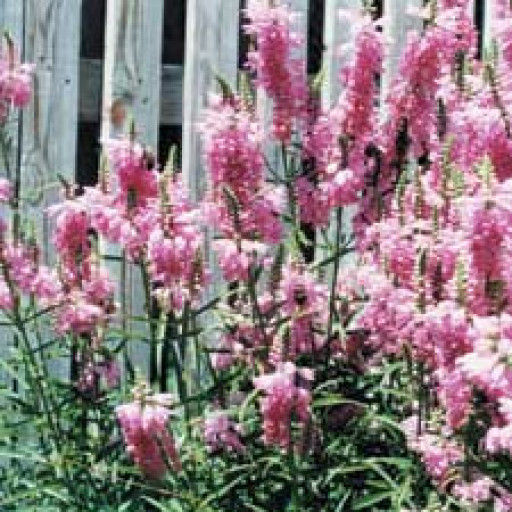
Plant Overview
Known as the Obedient Plant or False Dragonhead, this North American native is a charming late-summer bloomer that hides a playful secret in its stems. It earned its common name because individual flowers can be pushed into a new position on the spike and will stay exactly where you put them, almost like a poseable toy. It is a staple in prairie-style gardens and "moon gardens," where its pale pink or white spikes seem to glow during the twilight hours.
🔍 How to Identify
- 🌸 Snapdragon Spikes: Tall, dense terminal spikes crowded with tubular, two-lipped flowers that resemble snapdragons or small dragon heads.
- 🟩 Square Stems: As a member of the mint family, it features very sturdy, distinctly four-sided stems that help the plant stay upright even in wind.
- 🌿 Serrated Leaves: Narrow, lance-shaped green leaves with sharp, "saw-tooth" edges that grow oppositely along the stem.
🏡 In Your Garden
- 🏃 The "Polite" Spreader: While beautiful, this plant spreads via underground rhizomes. In rich, moist soil, it can become quite "enthusiastic," so it is best used in areas where it has room to wander or in heavy clay soils which naturally check its spread.
- 🦋 Pollinator Magnet: It is a high-value nectar source for hummingbirds and large bees. Its tubular shape is specifically designed for long-tongued insects who are strong enough to push past the flower's "lip."
⚠️ Safety & Toxicity
- 🐾 Safe Status: Physostegia virginiana is considered non-toxic to humans, dogs, and cats.
- 👶 Garden Friendly: It is an excellent choice for family gardens, as it lacks thorns and doesn't cause skin irritation, making its "obedient" flowers a fun, tactile experience for children.
✨ Fun Fact
The "obedience" of the flowers is caused by a unique anatomical feature called thigmotropy. The flowers are attached to the stem by tiny, hinged stalks that use friction to hold whatever position they are moved into—a rare trait in the plant kingdom!

Detailed Care Instructions
| Soil Ph | 5.5-6.3 |
| Lighting | Full Sun |
| Bloom Time | Late Summer, Fall |
| Sun Exposure | Full Sun, Partial Shade |
| Hardiness Zones | 3-10 |
To grow Physostegia Virginiana (also known as obedient plant or false dragonhead), you can follow these steps:
- Choose the right location: Obedient plants prefer full sun to partial shade, so select a spot in your garden that receives at least 6 hours of direct sunlight per day. The soil should be moist and well-draining.
- Prepare the soil: Prior to planting, amend the soil with organic matter like compost or aged manure to improve its fertility and drainage. This will create a favorable environment for the plant to establish and grow.
- Planting: Plant Physostegia Virginiana in spring or early fall. Dig a hole that is slightly larger than the root ball of the plant. Place the plant in the hole, making sure that the crown is level with or slightly above the soil surface. Backfill the hole with soil, gently firming it around the plant.
- Watering: Adequate watering is crucial during the plant's establishment period. Keep the soil consistently moist, but not waterlogged. Once the plant is established, it is somewhat drought-tolerant, but regular watering during dry spells is still recommended.
- Mulching: Apply a layer of mulch around the plant to help retain moisture, suppress weed growth, and regulate soil temperature.
- Pruning: Physostegia Virginiana tends to spread aggressively, so regular pruning is necessary to control its growth. Cut back the stems in early spring to about 6-8 inches above the ground to encourage bushier growth and prevent floppiness.
- Fertilizing: Obedient plants generally do not require heavy fertilization. However, if your soil lacks nutrients, you can apply a balanced slow-release fertilizer in spring.
- Pests and diseases: Obedient plants are generally resistant to pests and diseases, but occasionally may suffer from spider mites or powdery mildew. Monitor the plant regularly and treat any issues promptly with appropriate organic or chemical controls.
- Division: Every few years, divide the plant in early spring to rejuvenate it. Dig up the clump, separate the sections, ensuring each division has roots attached, and replant them in well-prepared soil.
By following these steps and providing consistent care, you can successfully grow Physostegia Virginiana in your garden.

Place in a window with dappled sun or a spot in the middle of a room. Or directly in a window facing west or east.

To properly water this plant, first check the soil moisture level by inserting your finger about an inch deep into the soil. If it feels dry, it is time to water. Use a watering can or hose to slowly add water to the soil, being careful not to overwater or let the water pool on top of the soil. Water at the base of the plant rather than on the foliage. Ensure proper drainage by allowing excess water to drain out of the bottom of the pot or planting hole. Watering frequency may vary depending on the climate and location of the plant, so it is important to monitor the soil moisture level regularly.
To fertilize this plant, you should use a balanced fertilizer with an N-P-K ratio of 10-10-10. Apply the fertilizer in early spring when new growth emerges, and then again in mid-summer. Water the plant thoroughly before and after fertilizing, and do not apply fertilizer to dry soil. Avoid applying too much fertilizer, as this can damage the plant.
The soil should be a well-draining loam that is rich in organic matter and has a pH between 6.0 and 7.0. It should be kept consistently moist but not waterlogged. The plant prefers full sun but can tolerate partial shade. It is important to avoid any soil that is heavy and compacted or prone to flooding. The plant requires regular fertilization with a balanced fertilizer throughout the growing season.
To propagate this plant, you will need to obtain healthy stem cuttings from an existing plant during the active growing season. Ensure that the cutting is approximately 4-6 inches long and has at least 2-3 pairs of leaves. Take care not to damage the roots of the parent plant in the process.
Next, remove the leaves from the bottom 2 inches of the cutting and dip the cut end in rooting hormone powder. Place the cutting in a pot filled with well-draining soil mix and water it lightly. Keep the pot in a warm and humid area with indirect light, ensuring that the soil remains moist.
After a few weeks, check for roots to have developed. Once the roots have grown to about an inch long, you can transplant the new plant into a larger container or directly into outdoor soil in a sunny location. Ensure that you keep the soil evenly moist while the plant establishes itself.
With proper care, your new plant should continue to grow and flower for years to come.
Common pests of the obedient plant include Spider mites, whiteflies. Make a habit of checking your obedient plant frequently for pests so that any infestations can be caught and managed early.








