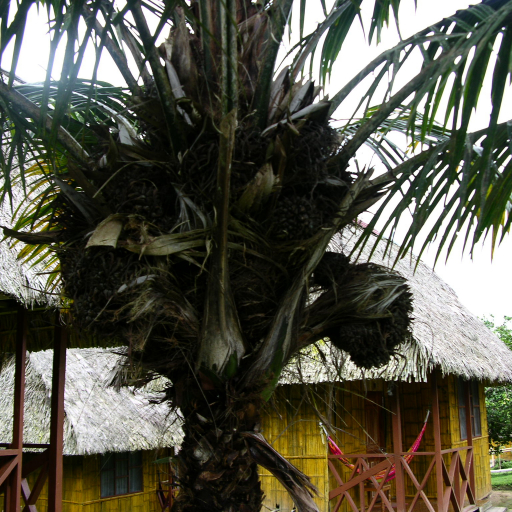
Plant Overview
Known as the "Vegetable Ivory" palm, the Phytelephas aequatorialis is a botanical marvel from the humid rainforests of Ecuador. For centuries, it has been cherished not just for its tropical beauty, but for its extraordinary seeds, which dry into a hard, white substance nearly identical to elephant ivory. This eco-friendly alternative has saved countless elephants by providing a sustainable source for high-end carvings, buttons, and jewelry.
🔍 How to Identify
- 🌿 The Fronds: It features massive, feathery (pinnate) leaves that can reach up to 20 feet in length, arching gracefully from the crown to create a lush, jungle canopy effect.
- 🥥 The Fruit Clusters: Look for large, woody, "armored" fruit clusters that grow near the base of the trunk; these heavy brown globes contain the precious Tagua nuts.
- 🪵 The Trunk: Often appearing "trunkless" when young, it eventually develops a stout, fibrous stem that stays relatively low to the ground compared to other palm species.
🏡 In Your Garden
- ☁️ Atmospheric Needs: Because this palm originates in the misty lowlands of the Andes, it craves high humidity and consistent moisture. It is not a "set and forget" plant; in dry climates, it requires frequent misting to prevent its leaf tips from browning.
- 🌱 Slow and Steady: This is a slow-growing species that resents being moved. Its deep taproot means you should choose its permanent home carefully, ideally in rich, loamy soil that mimics the nutrient-dense floor of a tropical rainforest.
⚠️ Safety & Toxicity
- ✅ Generally Safe: The Ecuadorean Ivory Palm is considered non-toxic to humans and common household pets.
- 🦷 Dental Hazard: While the immature seeds contain a sweet, edible "milk," the mature Tagua nuts are literally as hard as stone. They should never be chewed by pets or children, as they pose a significant choking hazard and can easily crack teeth.
✨ Fun Fact
Before the invention of plastic in the mid-20th century, the world ran on Tagua! Millions of "vegetable ivory" buttons were manufactured from this plant’s seeds to fasten the coats and uniforms of soldiers and civilians across the globe.

Detailed Care Instructions
Growing Phytelephas aequatorialis, commonly known as the Ecuadorian ivory palm or tagua palm, can be a fascinating and rewarding endeavor due to its unique characteristics and valuable seeds. However, it's essential to understand that this is a tropical plant and has specific requirements for successful cultivation. Here are the steps to grow Phytelephas aequatorialis:
1. Obtain Seeds or Seedlings
- Seeds: The seeds of Phytelephas aequatorialis are large and can be obtained from specialized nurseries or suppliers, particularly those focusing on tropical or exotic plants.
- Seedlings: If you prefer not to start from seeds, you may be able to find young plants for sale, though these might be harder to come by.
2. Growing Conditions
- Climate: This palm is tropical and thrives in warm, humid environments. It is native to areas with high rainfall and stable temperatures.
- Temperature: Ideal temperatures range between 25-30°C (77-86°F). It should not be exposed to freezing temperatures.
- Humidity: High humidity is necessary for optimal growth. This can be imitated in a greenhouse or controlled indoor environment if you're not in a tropical region.
3. Soil Requirements
- Type: The plant prefers well-draining, fertile soil. A mix of loam with organic matter is ideal.
- pH: A slightly acidic to neutral pH (6.0-7.0) is best suited for this palm.
4. Sowing Seeds
- Preparation: If you are starting from seeds, soak them in warm water for 24-48 hours to help soften the tough outer shell and encourage germination.
- Planting: Plant the seeds in a container filled with a mix of sand, peat, and perlite. Ensure that the pointed end is facing down and cover it with about an inch of soil.
- Moisture: Keep the soil consistently moist but not waterlogged. Humidity and warmth are crucial at this stage.
5. Care and Maintenance
- Watering: Keep the soil evenly moist. Water regularly, particularly during dry periods, but avoid water stagnation to prevent root rot.
- Fertilizing: Use a balanced, slow-release fertilizer. Feed during the growing season (spring and summer) for best results.
- Light: Provide partial to full shade. While it can tolerate some direct sunlight, excessive exposure might damage the plant.
- Pruning: Minimal pruning is required, mainly to remove dead fronds to keep the plant healthy and tidy.
6. Transplanting
- Location: Once the seedlings are strong enough, they can be transplanted outdoors in a suitable climate or moved to a larger container. Ensure the site or pot offers enough space for future growth.
- Spacing: These palms can get quite large, so allow for adequate space between plants to prevent crowding.
7. Pest and Disease Management
- Pests: Keep an eye out for common pests such as spider mites, aphids, and scale. Use appropriate organic or chemical pest control methods if necessary.
- Diseases: Ensure good air circulation and proper watering techniques to prevent fungal infections.
8. Maturity and Harvest
- Growth Rate: Phytelephas aequatorialis grows relatively slowly. It may take several years to reach maturity and begin producing the characteristic tagua nuts (vegetable ivory).
- Harvesting: Once the plant starts producing nuts, you can collect them for various uses, which may include crafting and jewelry making due to their ivory-like appearance.
Additional Tips
- If growing indoors or in a non-tropical climate, consider using a greenhouse that can provide the necessary warmth and humidity.
- Always wear gloves when handling seeds to avoid any potential irritants.
By following these guidelines and ensuring you provide the optimal growing conditions, you can successfully cultivate Phytelephas aequatorialis and enjoy its unique features.
Watering Phytelephas aequatorialis, a tropical plant native to regions with high humidity, requires careful attention to maintain its health and growth. Here are detailed guidelines to help you water this plant effectively:
- Soil Moisture: Ensure that the soil is consistently moist but not waterlogged. This plant thrives in well-draining soil that retains some moisture without becoming overly saturated.
- Watering Frequency: During the growing season (spring and summer), water the plant regularly to keep the soil moist. In its natural habitat, it receives frequent rain, so replicating this with regular watering helps it thrive. In the cooler months (fall and winter), reduce the frequency of watering, allowing the top inch of soil to dry out between waterings.
- Water Quality: Use rainwater or distilled water if possible, as this plant can be sensitive to the chemicals found in tap water. If you must use tap water, let it sit out for 24 hours to allow any chlorine to evaporate before watering the plant.
- Humidity: High humidity is beneficial. In dry environments, increase humidity around the plant by misting it regularly or placing a humidifier nearby. Alternatively, you can place the pot on a tray filled with pebbles and water, ensuring that the bottom of the pot does not sit directly in the water.
- Mulching: Apply a layer of mulch on top of the soil to help retain moisture. Organic materials like bark, leaves, or compost can be used as mulch and will also contribute to the nutrient content of the soil as they break down.
- Container Planting: If growing Phytelephas aequatorialis in a pot, choose one with drainage holes to prevent water from accumulating at the bottom. Ensure that excess water can drain away to avoid root rot, which can be fatal to the plant.
- Signs of Water Stress: Be attentive to indicators of overwatering or underwatering. Yellowing leaves, wilting, or a foul smell from the soil are signs of too much water, while dry, crispy leaves may indicate insufficient watering. Adjust your watering habits based on these signs.
By following these guidelines, you can provide the appropriate watering conditions for Phytelephas aequatorialis to thrive and grow healthily in your care.
Phytelephas aequatorialis, like many tropical plants, benefits from a well-balanced fertilization regimen to support its growth and health. Here are some fertilizing instructions tailored for this species:
Fertilization Schedule:
- Frequency: Fertilize the plant approximately every 4 to 6 weeks during the growing season, which typically spans spring through early fall.
- Dormant Period: Refrain from fertilizing during the plant's dormant period (late fall and winter) as its growth slows down.
Type of Fertilizer:
- Balanced Fertilizer: Use a balanced, water-soluble fertilizer with an N-P-K ratio of around 10-10-10 or 20-20-20.
- Slow-Release Fertilizer: Alternatively, a slow-release granular fertilizer can be applied at the beginning of the growing season. Follow the manufacturer’s guidelines for application rates and frequency.
Application Instructions:
- Liquid Fertilizer:
- Dilution: Dilute the fertilizer to half the recommended strength to avoid over-fertilization, which can harm the plant.
- Application: Apply the diluted solution around the base of the plant, ensuring even distribution without over-saturating the soil.
- Dilution: Dilute the fertilizer to half the recommended strength to avoid over-fertilization, which can harm the plant.
- Granular Fertilizer:
- Application: Scatter the recommended amount evenly around the base of the plant and gently work it into the top layer of soil.
- Watering: Water the plant thoroughly after applying granular fertilizer to help it dissolve and penetrate the root zone.
Additional Tips:
- Application: Scatter the recommended amount evenly around the base of the plant and gently work it into the top layer of soil.
- Soil Health: Ensure the plant is in well-draining soil rich in organic matter to facilitate nutrient uptake.
- Foliar Feeding: Occasionally, especially if you observe nutrient deficiencies (e.g., yellowing leaves), you can use a foliar spray to directly provide nutrients to the leaves.
- Micronutrients: Consider using a fertilizer that contains micronutrients or supplement with secondary minerals such as magnesium and calcium, which are beneficial for this species.
By following these guidelines, you'll help ensure that Phytelephas aequatorialis receives the nutrients it needs to grow and thrive.
Phytelephas aequatorialis thrives best in well-draining soil rich in organic matter. Here are specific soil characteristics and components that will help ensure optimal growth for the plant:
- Texture: The soil should have a loamy texture, which is a balanced mix of sand, silt, and clay. Such soil provides good drainage while retaining adequate moisture and nutrients.
- Organic Matter: Incorporate organic compost or well-decomposed manure to enrich the soil. This addition helps improve soil structure, enhances nutrient content, and increases microbial activity.
- Drainage: Proper drainage is crucial to prevent waterlogging, which can lead to root rot. If natural soil drainage is poor, you can improve it by adding coarse sand or fine gravel to the soil mix.
- pH Level: Aim for a slightly acidic to neutral soil pH, ideally between 6.0 and 7.0. You can test and adjust the pH with soil amendments if necessary. For example, agricultural lime can raise pH, while sulfur or peat moss can lower it.
- Nutrient Content: Ensure the presence of essential nutrients like nitrogen, phosphorus, and potassium. Using a balanced, slow-release fertilizer can provide a steady supply of nutrients over time.
- Mulching: Mulching with organic materials like bark chips or leaves helps retain soil moisture, regulate temperature, and add organic matter as it decomposes.
By catering to these soil requirements, you will create a conducive environment for Phytelephas aequatorialis to grow healthily and robustly.
Propagation of Phytelephas aequatorialis can be accomplished through seeds. Here’s an in-depth guide on how to propagate this specific plant:
Seed Collection and Preparation
- Seed Collection:
- Identify mature fruits that have fallen to the ground or can be harvested from the plant. The fruits are typically brown and woody when mature.
- Identify mature fruits that have fallen to the ground or can be harvested from the plant. The fruits are typically brown and woody when mature.
- Seed Extraction:
- Open the fruit carefully to access the seeds within. These seeds are often covered in a fibrous husk, which should be removed.
- Open the fruit carefully to access the seeds within. These seeds are often covered in a fibrous husk, which should be removed.
- Cleaning:
- Clean the seeds thoroughly using water to remove any remaining pulp and husk that could encourage mold or bacterial growth.
Germination Process
- Clean the seeds thoroughly using water to remove any remaining pulp and husk that could encourage mold or bacterial growth.
- Soaking:
- Soak the cleaned seeds in water for 24 to 48 hours to soften the seed coat, which aids in the germination process.
- Soak the cleaned seeds in water for 24 to 48 hours to soften the seed coat, which aids in the germination process.
- Preparation of Germination Medium:
- Prepare a germination tray with a well-draining medium. A mix of sand and peat or a soil-less seed-starting mix works well.
- Ensure that the medium is moist but not waterlogged to prevent seed rot.
- Prepare a germination tray with a well-draining medium. A mix of sand and peat or a soil-less seed-starting mix works well.
- Sowing the Seeds:
- Place the soaked seeds on the surface of the medium and cover them lightly with the germination medium. It’s essential that the seeds are not buried too deeply.
- Place the soaked seeds on the surface of the medium and cover them lightly with the germination medium. It’s essential that the seeds are not buried too deeply.
- Environmental Conditions:
- Maintain a warm and humid environment to encourage germination. Ideal temperatures range between 25°C to 30°C (77°F to 86°F).
- Covering the germination tray with a plastic lid or placing it in a humidity-controlled chamber can help maintain the necessary moisture levels.
- Maintain a warm and humid environment to encourage germination. Ideal temperatures range between 25°C to 30°C (77°F to 86°F).
- Watering:
- Keep the germination medium consistently moist, but be careful not to overwater. Mist the medium with water as needed.
Seedling Care
- Keep the germination medium consistently moist, but be careful not to overwater. Mist the medium with water as needed.
- Transplanting:
- Once the seeds germinate, and seedlings have developed a few sets of true leaves, they can be transplanted into individual pots.
- Use a potting mix that ensures good drainage and contains organic matter.
- Once the seeds germinate, and seedlings have developed a few sets of true leaves, they can be transplanted into individual pots.
- Growing Environment:
- Place the pots in a partially shaded location to protect the young seedlings from intense direct sunlight.
- Gradually acclimate the seedlings to more light as they grow.
- Place the pots in a partially shaded location to protect the young seedlings from intense direct sunlight.
- Watering and Feeding:
- Water regularly to keep the soil moist but avoid waterlogging. Proper drainage is crucial to prevent root rot.
- Use a balanced, slow-release fertilizer to provide necessary nutrients during the growing season.
Final Planting
- Water regularly to keep the soil moist but avoid waterlogging. Proper drainage is crucial to prevent root rot.
- Planting Site:
- When the seedlings are large and robust enough, they can be transplanted to their final growing location.
- Choose a site that offers partial shade to mimic their natural habitat, with well-draining soil rich in organic matter.
- When the seedlings are large and robust enough, they can be transplanted to their final growing location.
- Planting:
- Dig a hole that’s large enough to accommodate the root ball of the young plant.
- Place the seedling into the hole, backfill with soil, and firm it gently around the base.
- Dig a hole that’s large enough to accommodate the root ball of the young plant.
- Watering and Mulching:
- Water the newly planted seedlings thoroughly to settle the soil around the roots.
- Apply a layer of organic mulch around the base to retain moisture and suppress weeds.
With proper care and attention throughout each stage of propagation, Phytelephas aequatorialis should establish well and grow into a healthy plant.
- Water the newly planted seedlings thoroughly to settle the soil around the roots.








