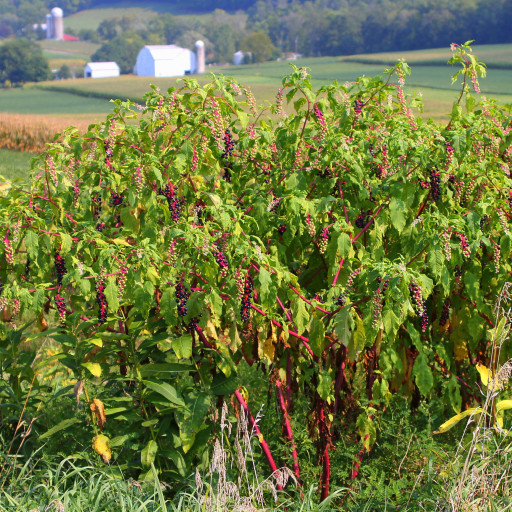
Plant Overview
Often called "Inkberry," "Poke Sallet," or "American Nightshade," Phytolacca americana is a bold, statuesque perennial that sparks plenty of debate. While some gardeners view it as a pesky weed, others value its dramatic magenta stems and the vital feast it provides for migrating songbirds. Its history is deeply rooted in American folklore, serving as everything from a traditional (though dangerous) food source to a source of ink for Civil War soldiers.
🔍 How to Identify
- 🌿 Magenta Stems: The most striking feature is the thick, succulent-looking stalks that turn a brilliant beet-red or neon pink as the plant matures in late summer.
- 🍇 Glossy Berries: It produces long, drooping clusters of berries that transition from green to a deep, polished purple-black, resembling miniature bunches of grapes.
- 🍃 Large Foliage: The leaves are expansive, smooth, and lance-shaped, often reaching up to a foot in length, giving the plant a lush, almost tropical appearance.
🏡 In Your Garden
- 🥕 The Deep Taproot: Pokeweed develops a massive, stubborn tuberous root that can grow to the size of a bowling ball. Because of this, it is notoriously difficult to transplant; once it chooses a spot, it intends to stay there.
- 🐦 A Bird's Buffet: If you are a bird lover, this plant is a powerhouse. It is a primary food source for mockingbirds, bluebirds, and cedar waxwings, though you should be prepared for "purple reminders" left behind on your garden fences.
- ✂️ Managing Spread: It is a prolific self-seeder. If you want the aesthetic of the red stems without a hundred new seedlings next year, it is best to prune away the berry clusters before they become overly ripe and fall.
⚠️ Safety & Toxicity
- 🚫 Dangerous Beauty: All parts of the Pokeweed plant—roots, stalks, leaves, and berries—are toxic to humans, dogs, cats, and livestock. The roots contain the highest concentration of toxins.
- 👶 Hazard for Kids: The berries are particularly tempting to children because they look like edible fruit and produce a bright, staining juice. Always monitor children or remove the berries in high-traffic play areas.
- 🥣 Preparation Myths: While "Poke Sallet" is a famous Southern dish, it requires boiling the young shoots in three separate changes of water to remove toxins. Casual consumption or improper cooking can lead to severe illness.
✨ Fun Fact
During the 1844 presidential campaign, supporters of James K. Polk wore twigs of Pokeweed as a pun on his name. Additionally, the dark juice of the berries was so effective as a dye that it was frequently used to color cheap wine and write letters during the American Civil War.

Detailed Care Instructions
Yes. Because some people regard pokeweed as highly ornamental, one option is to grow it in a container. The container could be located on a deck, for example. However, growing pokeweed in a pot outdoors will not prevent it from spreading, since wild birds will still be able to access it, eat the berries, and spread the seeds.
What are non-invasive alternatives to pokeweed?
Since the chief ornamental features of pokeweed are its height and its berries, the best substitutions will be shrubs with colorful berries. For a shrub with purple berries (although they are light purple rather than the dark purple of pokeweed's berries), grow beautyberry (Callicarpa americana). An option with darker berries is elderberry (Sambucus).
What are some characteristics of pokeweed?
The two most intriguing characteristics of pokeweed are its fast growth rate and its unusual berries. Its fast growth rate is a given considering that, despite dying down to ground level in winter, it is able to achieve a height of as much as 10 feet under the right conditions (in the southeastern United States) by late summer. Not only are its berries attractive, but they have also been used as ink (thus the common name of "inkberry") and as a dye.
| Color | Green |
| Soil Ph | 6 To 8 |
| Humidity | Normal |
| Invasive | Weed |
| Lighting | Part Sun |
| Toxicity | Poisonous |
| Soil Type | Sandy, Loamy, Clay |
| Bloom Time | Small, White |
| Difficulty | Medium |
| Plant Type | Perennial Herb |
| Hibernation | Cold Period |
| Mature Size | Height Up To 10 Feet, Width Up To 5 Feet |
| Native Area | North America |
| Sun Exposure | Full Sun Or Partial Shade |
| Hardiness Zones | 5 To 9 |
To grow Phytolacca Americana (also known as American pokeweed), follow these steps:
- Select a location: Choose a sunny spot in your garden with fertile, well-draining soil. Pokeweed is a hardy plant that can tolerate a wide range of soil conditions but prefers slightly acidic soil.
- Prepare the soil: Remove any weeds or grass from the planting area and loosen the soil. Add organic matter such as compost or well-rotted manure to enrich the soil.
- Planting: Pokeweed can be grown from seeds or transplants. If using seeds, sow them directly in the soil in early spring or fall, as they require a period of cold stratification to break dormancy. Plant the seeds about ¼ inch deep and keep the soil moist until germination, which may take several weeks. For transplants, dig a hole slightly larger than the root ball and gently place the plant in it. Backfill the hole with soil and firm it around the base of the plant.
- Watering: Keep the soil consistently moist during the growing season, especially when the plant is establishing itself. However, avoid overwatering, as pokeweed can suffer from root rot in waterlogged soil.
- Fertilization: Phytolacca Americana doesn't require heavy fertilization. However, applying a balanced slow-release fertilizer once or twice during the growing season can help promote healthier growth.
- Maintenance: Keep the area around the plant free from weeds. Mulching can help suppress weed growth and retain soil moisture. Prune the plant in early spring to remove any dead or damaged branches and to promote bushier growth.
- Harvesting: Pokeweed has edible parts, but it's important to remember that certain parts of the plant, such as the roots and mature berries, are toxic. Only the young leaves and shoots can be cooked and consumed. Harvest them before they reach their full size and become too tough. Always ensure thorough cooking before consumption.
Note: Pokeweed can become invasive in some regions, so it's essential to monitor and control its spread if required.

Place in a bright room that is sun drenched almost all day. Or directly in a south-facing window.

To properly water this perennial plant, you should first consider its soil type. It prefers soil that is well-draining and not too compact. Water deeply and consistently, making sure the area around the root ball is moist but not over-saturated. It's important to avoid getting water on the leaves as this can lead to fungal development. You should also avoid watering during the hottest part of the day, as this can cause stress on the plant. Instead, water in the early morning or late evening when temperatures are cooler and the water will have time to soak in before evaporating. Finally, be careful not to overwater, as this can lead to root rot.
To fertilize this plant, apply a balanced fertilizer (10-10-10) in the spring when new growth begins. Follow the package instructions for application rates. Water the plant thoroughly after fertilizing. Avoid fertilizing in the fall or winter when the plant is dormant.
The best type of soil to use for this plant is a loamy, well-draining soil that is rich in nutrients. It is important to ensure that the soil has good drainage as this plant is sensitive to wet soil. The pH of the soil should be between 5.5 and 7.5. It is recommended to add organic matter such as compost or aged manure to the soil before planting to ensure adequate nutrients for the plant's growth. Additionally, it is important to avoid using soil that may contain harmful chemicals or pollutants.
Propagation of this certain plant can be done through several methods, including seeds and cuttings. To propagate via seeds, collect mature seeds from the plant and sow them in well-drained soil. The soil should be moist, but not overly wet, and kept in a warm location. Germination usually occurs within two weeks.
To propagate through cuttings, select healthy stems from the plant and make a clean cut at a 45-degree angle. Remove any leaves on the lower part of the stem and dip the end of the stem in rooting hormone. Place the stem in a well-draining potting mix and keep it moist, but not overly wet. Propagation usually occurs within several weeks.
It is important to note that this certain plant can be toxic to humans and animals, so caution should be taken when handling it. Gloves should be worn and hands should be washed thoroughly after handling it.
Common pests of the pokeweed include Aphids, thrips, larvae. Make a habit of checking your pokeweed frequently for pests so that any infestations can be caught and managed early.








