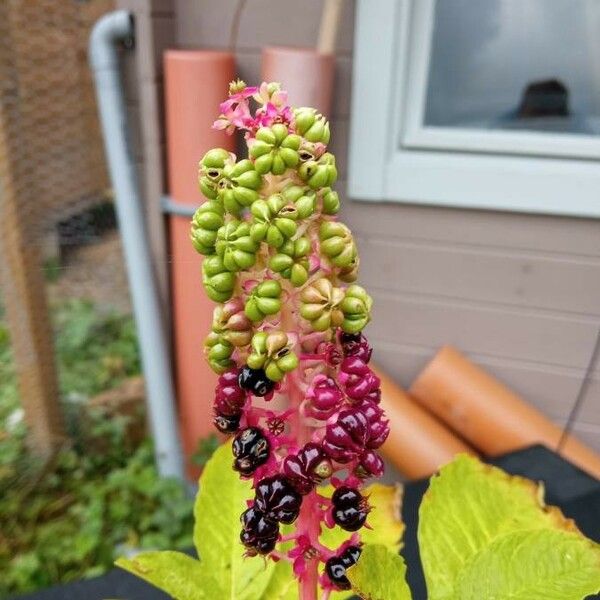
Plant Overview
Often called the Indian Pokeweed, Phytolacca esculenta is a giant of the herbaceous world, frequently mistaken for a woody shrub due to its massive, fleshy stalks and imposing height. Native to East Asia, it carries a sense of mystery; its botanical name esculenta translates to "edible," yet it is a plant that demands extreme respect and caution. In various cultures, it has transitioned through history as a source of medicine, a dangerous poison, and even a vibrant textile dye.
🔍 How to Identify
- 🍇 Upright Clusters: Unlike its American cousin which has drooping fruit, this species holds its flower and berry spikes (racemes) stiffly upright or horizontally.
- 🍃 Lush Foliage: It features large, lance-shaped leaves with wavy margins that can grow up to 10 inches long, creating a dense, tropical-looking canopy.
- 🎃 Segmented Berries: The glossy, purple-black berries are unique because they are divided into 8 distinct segments, looking like tiny, dark pumpkins when viewed up close.
🏡 In Your Garden
- 🏗️ The Taproot Challenge: This plant develops a massive, fleshy, carrot-like tuberous root. Because of this deep anchor, it hates being moved; once it’s established, digging it up becomes a major renovation project.
- 🍴 Soil Indicators: It is a "heavy feeder" that loves nitrogen-rich, disturbed ground. If it pops up spontaneously in your yard, it’s a biological signal that your soil is exceptionally fertile and full of organic matter.
- 🐦 Avian Magnet: While toxic to humans, the berries are a favorite for songbirds. Birds eat the fruit and "plant" the seeds elsewhere, which is why you’ll often find this pokeweed growing along fence lines or under tall trees.
⚠️ Safety & Toxicity
- 🚫 High Toxicity: All parts of the plant—especially the roots and mature berries—contain phytolaccatoxins and saponins. It is considered toxic to humans, dogs, cats, and livestock.
- ⚠️ The "Edible" Trap: Do not let the name esculenta fool you. While young shoots are historically eaten in parts of Asia after rigorous, multiple-stage boiling (changing the water each time), the risk of severe gastrointestinal distress or respiratory failure is high for the untrained user.
- 🧤 Skin Sensitivity: Some individuals experience "phytophotodermatitis" or simple skin irritation just from handling the crushed leaves or roots, so wearing gloves during pruning is highly recommended.
✨ Fun Fact
🖋️ The Rebel's Ink: The juice from the dark berries is so pigment-rich that it was used during the American Civil War and in ancient Asia as a natural ink. However, because the color is "fugitive" (fades over time), those historical letters often turned from deep purple to a ghostly brown!

Detailed Care Instructions
To successfully grow Phytolacca Esculenta plant, also known as Indian poke or pokeweed, follow these steps:
- Climate and sunlight: Phytolacca Esculenta thrives in full sun to partial shade. Choose a location that receives at least 6-8 hours of direct sunlight per day.
- Soil requirements: The plant prefers well-draining soil that is fertile and slightly acidic. Prepare the soil by adding organic matter, such as compost, to improve its texture and nutrient content.
- Planting: Sow the seeds directly into the soil in early spring or late summer/early fall. The ideal temperature for germination is around 70°F (21°C). Space the plants about 3 feet apart to allow for proper growth.
- Watering: Keep the soil consistently moist but not waterlogged. Water deeply once or twice a week, depending on the weather conditions, to ensure the roots are well-hydrated.
- Fertilization and maintenance: Apply a balanced, slow-release fertilizer in the spring to provide essential nutrients for healthy growth. Remove any weeds that compete with the plant for nutrients and water. Mulching around the base of the plant will help retain moisture and suppress weed growth.
- Pruning: Prune Phytolacca Esculenta in early spring to remove dead or damaged wood and to promote new growth. Additionally, pinching off the tips of young plants will encourage a bushier shape.
- Pests and diseases: Phytolacca Esculenta is relatively resistant to pests and diseases. However, it may occasionally be affected by aphids, leaf miners, or powdery mildew. Regularly inspect the plant for any signs of infestation or disease, and take appropriate measures such as the use of insecticidal soaps or fungicides if necessary.
- Harvesting: If you wish to harvest the plant for culinary or medicinal purposes, do so when the fruits are fully ripe and dark purple. Ensure that you handle all parts of the plant with gloves, as they contain toxins that can be harmful if ingested or come into contact with the skin.
By following these guidelines, you can successfully grow Phytolacca Esculenta plants in your garden.

Place in a window with dappled sun or a spot in the middle of a room. Or directly in a window facing west or east.

To water this plant, ensure that the soil is completely dry before watering it thoroughly, allowing the water to soak up through the roots and drain any excess water. Avoid leaving any water in the saucer to prevent the roots from becoming waterlogged. This plant prefers regular but infrequent watering rather than frequent but shallow watering. In addition, it is best to avoid watering the foliage to prevent any fungal diseases and leaf discoloration. Water the plant from the base, aiming for the soil, not the leaves or stems.
When fertilizing this plant, use a balanced fertilizer with roughly equal amounts of nitrogen, phosphorus, and potassium. Apply the fertilizer in the early spring, just before the growing season begins. Use a slow-release fertilizer and avoid over-fertilizing, as this can lead to foliage burn. Water the plant thoroughly after fertilizing to help the nutrients soak into the soil.
Phytolacca Esculenta plant prefers well-draining soil with a slightly acidic to neutral pH. It requires soil that is rich in organic matter and nutrients to support its growth. The recommended soil mixture for this plant is a combination of peat moss, perlite, and coarse sand or gravel to improve drainage. The pH of the soil should be between 6.0 and 7.0. The plant grows well in the full sun or partial shade and requires regular watering to keep the soil moist but not waterlogged. The soil should be allowed to dry moderately between watering sessions to avoid root rot. It is recommended to use a balanced fertilizer every two weeks during the growing season to support the plant's growth and development.
To propagate this plant, you can take stem cuttings from a healthy mother plant during the active growing season. Cut a 4 to 6 inch stem tip from the plant, making sure it has 2 or 3 nodes, which are the areas where leaves meet the stem. Remove the lowest sets of leaves and dip the cut end in a rooting hormone powder. Plant the cutting in a pot filled with moist soil mix or perlite. Keep the pot in a warm, bright location but not direct sunlight. Water regularly to ensure the soil stays moist. Once new growth appears, it indicates that roots have developed, and you can transplant the new plant into a larger pot or outdoor garden area.
Common pests of the indian pokeweed include Aphids, thrips, larvae. Make a habit of checking your indian pokeweed frequently for pests so that any infestations can be caught and managed early.








