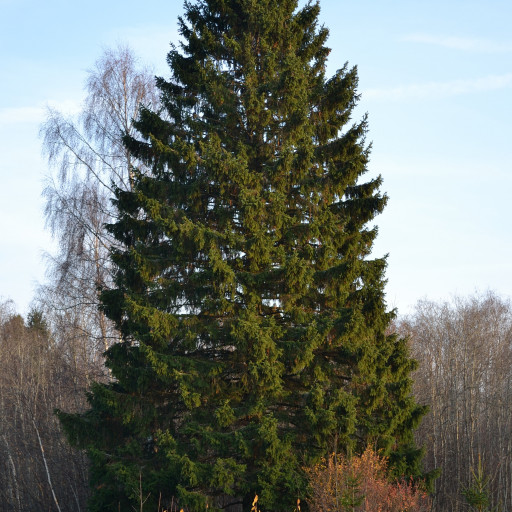
Plant Overview
Often called the "King of Christmas Trees," the Norway Spruce is a majestic evergreen native to Northern and Central Europe. Known for its classic pyramidal shape and gracefully drooping secondary branches, it brings a timeless "deep forest" aesthetic to any landscape. In many cultures, this tree symbolizes resilience and the eternal return of life during the darkest days of winter.
🔍 How to Identify
- 🌲 The Needles: Short (about 1–2 cm), stiff, and dark green. Unlike flat fir needles, these are four-angled; if you pluck one, you can easily roll it between your thumb and forefinger.
- 🧺 The Cones: It produces the largest cones of any spruce, often reaching up to 15 cm long. These cigar-shaped cones hang downward (pendulous) rather than standing upright.
- 📉 The "Weeping" Habit: While young trees look stiff, mature Norway Spruces are easily identified by their secondary branches, which hang vertically like a fringe from the main limbs.
🏡 In Your Garden
- 🚀 Growth Speed: This is one of the fastest-growing spruce species, often putting on several feet of height per year. This makes it an excellent choice for natural windbreaks or privacy screens, but ensure you have the vertical space!
- 💧 Root Sensitivity: It possesses a relatively shallow, wide-spreading root system. Because of this, it prefers consistent moisture and can struggle in areas with extreme drought or compacted soil.
- 🪵 Pruning Nuance: It generally dislikes heavy pruning into old wood. If you want to shape it, focus on "candling" (trimming the new growth) in the late spring to maintain a dense, bushy appearance.
⚠️ Safety & Toxicity
- ✅ Status: Generally non-toxic to humans, cats, and dogs.
- 🌵 Details: While not poisonous, the needles are very stiff and sharp. Curious pets or toddlers who try to chew on them may experience minor mouth irritation or stomach upset simply from the physical texture. The sticky resin (sap) can also cause mild skin irritation for some gardeners.
✨ Fun Fact
- 🌍 The Ancient Root: A Norway Spruce in Sweden known as "Old Tjikko" is one of the oldest living organisms on Earth. While its visible trunk is only a few centuries old, its root system has been regenerating itself for over 9,550 years!

Detailed Care Instructions
| Color | Pink |
| Soil Ph | Acidic, Slightly Alkaline |
| Humidity | Dry |
| Lighting | Full Sun |
| Toxicity | Non-Toxic |
| Soil Type | Adaptable, Well Drained |
| Bloom Time | Spring |
| Difficulty | Easy |
| Plant Type | Tree |
| Hibernation | Cold Period |
| Mature Size | 50'-75' Feet, 30-50' Wide |
| Native Area | Europe |
| Sun Exposure | Full Sun To Partial Shade |
| Hardiness Zones | 2-7 |
To grow Picea abies (Norway spruce), you can follow these steps:
- Choose a suitable location: Picea abies requires full sun to partial shade. It prefers well-drained soil and can tolerate a wide range of pH levels. Make sure there is enough space for the tree to grow, as it can reach a height of 40-60 feet (12-18 meters) and spread of 25-30 feet (7-9 meters).
- Prepare the soil: Amend the soil with organic matter like compost to improve drainage and fertility. Norway spruces prefer slightly acidic soil, so if your soil is alkaline, you may need to add sulfur to lower the pH.
- Planting: Dig a hole that is slightly wider and deeper than the root ball of the plant. Place the tree in the hole, making sure the top of the root ball is level with or slightly above the soil surface. Backfill the hole with soil, tamping it down gently to remove air pockets.
- Watering: Water the newly planted tree thoroughly and regularly, especially during the first year. Deep watering once or twice a week rather than frequent shallow watering is preferable. After the first year, the tree should be able to withstand most drought conditions.
- Mulching: Apply a layer of organic mulch, such as wood chips or bark, around the base of the tree. This helps retain moisture, suppress weeds, and regulate soil temperature. Leave a gap between the mulch and the trunk to prevent moisture buildup and potential disease issues.
- Pruning: Prune Picea abies minimally. Remove any dead or damaged branches, and thin out overcrowded areas to allow for better air circulation. It's best to prune in late winter or early spring before new growth begins.
- Fertilizing: Picea abies usually doesn't require frequent fertilizing if the soil is reasonably fertile. However, you can apply a slow-release, balanced fertilizer in early spring to provide necessary nutrients.
- Pests and diseases: Watch out for common pests, such as aphids, adelgids, and spruce gall adelgids. Monitor for signs of disease, such as needle rust or canker. If necessary, consult with a local nursery or arborist for appropriate pest control measures.
Remember that Picea abies is a slow-growing tree, so be patient and provide proper care to ensure its healthy growth.

Place in a window with dappled sun or a spot in the middle of a room. Or directly in a window facing west or east.

To water this type of plant, it is important to first check the soil moisture level by sticking your finger down into the soil. If the soil feels dry to the touch, then it is time to water. Avoid overwatering by allowing the soil to dry out slightly in between waterings. When watering, aim to water the soil directly around the base of the plant rather than the foliage. Use a watering can or hose on a low setting to apply a slow and steady stream of water. Avoid getting water on the needles or branches of the plant, as this can lead to fungal diseases or damage to the foliage. During the winter months, reduce watering as the plant's growth slows down and it requires less moisture.
To fertilize this plant, use a slow-release fertilizer that is high in nitrogen, such as a 10-8-6 blend. Apply the fertilizer in early spring before new growth appears and again in mid-fall after growth has stopped. Mix the fertilizer according to the package instructions and spread it evenly around the base of the plant, avoiding direct contact with the trunk or needles. Water the plant deeply after fertilizing to help the nutrients reach the roots.
The best type of soil to use for this plant is a slightly acidic soil with a pH range of 4.5-6.5. It should be well-draining and rich in organic matter to help retain moisture. A mix of peat moss, perlite, and sand can be used to create an ideal soil structure. The soil should also be kept moist but not waterlogged, as this can cause root rot. Regular fertilization with a balanced fertilizer can help promote healthy growth. Avoid using heavy clay soils or soils with high alkaline content, as they can be detrimental to the plant's health.
To propagate this plant, take semi-hardwood cuttings in the late summer or early autumn, when the plant is not actively growing. Prepare a rooting hormone mixture and dip the cuttings in it before planting in a well-draining potting mix. Keep the soil moist, but not waterlogged, and place the pot in a brightly lit, sheltered area. Over time, the cuttings should develop root systems and begin to grow.
Common pests of the norway spruce include Scale insect, spider mites, aphids. Make a habit of checking your norway spruce frequently for pests so that any infestations can be caught and managed early.








