Plant Overview
Known as Meyer's Spruce, this elegant conifer is the resilient traveler of the evergreen world. Originating from the high-altitude mountains of North China, it is frequently chosen as a hardier, more disease-resistant alternative to the popular Colorado Blue Spruce. With its symmetrical, "perfect Christmas tree" silhouette and shimmering blue-green needles, it brings a touch of alpine serenity to any landscape.
🔍 How to Identify
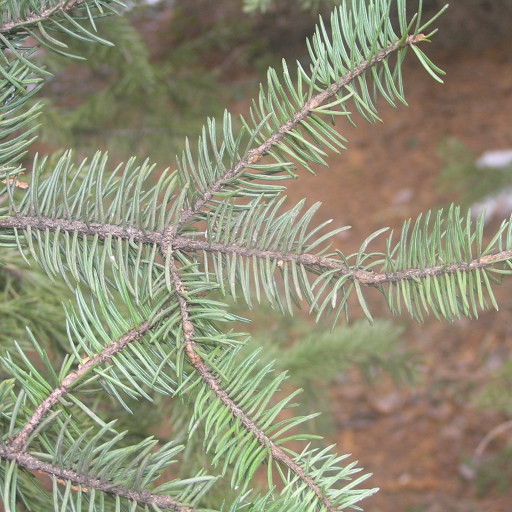
- 🌲 The Needles: Look for 4-sided, bluish-green needles that curve slightly upward. Unlike the sharp needles of its cousins, Meyer’s Spruce needles have relatively blunt tips, making them a bit "friendlier" to the touch.
- 📐 The Silhouette: It maintains a dense, broadly pyramidal shape that stays symmetrical even as the tree matures, reaching heights of 30 to 50 feet in a garden setting.
- 🪵 The Cones: It produces pendulous, cylindrical cones that start out green or purple and ripen into a polished, light brown. The scales on the cones are smooth and rounded.
🏡 In Your Garden
- 🌱 Root Stability: While it is more adaptable to different soil types than other spruces, it develops a deep root system. This makes it very wind-resistant once established, but it also means it dislikes being moved—so choose its "forever home" carefully!
- 🛡️ Climate Resilience: This tree is a survivor. It is notably more resistant to the "needle cast" diseases and pests that often plague Blue Spruces in humid environments, making it a top choice for gardeners in the Eastern United States or Northern Europe.
⚠️ Safety & Toxicity
- ✅ Status: Generally non-toxic and safe for residential planting.
- 🐾 Pet Safety: It is not considered poisonous to cats, dogs, or horses. However, if a curious pet chews on the needles, the physical texture may cause minor mouth irritation or a mild stomach upset.
- 🧤 Handling: While the needles are blunter than other spruces, they can still be prickly. Wearing gloves during pruning is recommended to avoid "spruce rash" or skin pricks.
✨ Fun Fact
Meyer's Spruce is named after Frank Nicholas Meyer, a famous "plant hunter" for the USDA who trekked across Asia in the early 1900s. He is the same explorer who discovered the "Meyer Lemon!"

Detailed Care Instructions
To grow Picea meyeri plant, also known as Meyer's spruce, you can follow these steps:
- Choose a suitable location: Meyer's spruce needs full sun exposure to grow well. Select a spot in your garden or landscape that receives at least 6-8 hours of direct sunlight every day.
- Soil preparation: The plant prefers well-draining soil with a slightly acidic to neutral pH (around 6.0 to 7.5). Amend the soil with organic matter like compost or peat moss to improve drainage and fertility.
- Planting: Dig a hole that is slightly wider and deeper than the root ball of the Picea meyeri plant. Gently place the plant in the hole, ensuring that the top of the root ball is level with or slightly above the soil surface. Backfill the hole with soil, lightly tamping it down to remove air pockets.
- Mulching: Apply a layer of organic mulch, such as wood chips or shredded bark, around the base of the Picea meyeri plant. This will help conserve moisture, regulate soil temperature, and suppress weed growth.
- Watering: Keep the soil consistently moist but not waterlogged. During the first year, provide regular watering to help establish the plant's root system. Afterward, you can rely on natural rainfall, but make sure the soil doesn't dry out completely during dry periods.
- Pruning: Minimal pruning is necessary for Picea meyeri. Remove any dead, damaged, or diseased branches as needed. You can also lightly shape the tree by selectively trimming branches to maintain a desired form.
- Fertilizing: Meyer's spruce generally doesn't require heavy fertilization. However, you can apply a balanced slow-release fertilizer in early spring or late fall according to the manufacturer's instructions to provide some additional nutrients.
- Protecting from pests and diseases: Monitor the plant regularly for common pests like aphids, spruce spider mites, or spruce budworms. If detected, treat them with insecticidal soap or appropriate insecticides. Keep an eye out for diseases like needle blight or root rot, which can be managed with proper watering, good sanitation practices, and, if necessary, fungicides.
- Winter care: Picea meyeri is cold hardy but still benefits from winter protection in areas with harsh winters. Apply a layer of mulch around the base of the tree to insulate the root system, and use burlap wraps or screens to shield the foliage from excessive winter winds and sun.
Remember to consult local gardening resources or experts for region-specific advice and to ensure proper care for your particular Picea meyeri plant.

Place in a bright room that is sun drenched almost all day. Or directly in a south-facing window.

To properly water this plant, make sure to thoroughly saturate the soil around it, being careful not to oversaturate or let water accumulate on the surface. Check the moisture level of the soil regularly and adjust watering as needed based on environmental conditions such as temperature and humidity. It is best to water this plant in the morning to allow any excess moisture to evaporate before nightfall, which can reduce the risk of fungal diseases. Avoid using tap water that contains high levels of chlorine or other chemicals, as this can damage the root system. Using a watering can or drip irrigation system is recommended for more precise and controlled watering.
To ensure optimal growth of this plant, it is recommended to fertilize it during the early spring before new growth emerges. Use a slow-release fertilizer with a balanced N-P-K ratio, such as 10-10-10, and apply it according to the manufacturer's instructions. Avoid fertilizing during the summer months as this can cause stress to the plant and damage the needles. It is also important to water the plant regularly, ensuring that the soil remains moist but not waterlogged. Additionally, prune any dead or damaged branches to promote healthy growth.
The ideal soil for the Picea Meyeri plant should have a slightly acidic to neutral pH level and be well-drained. It should also be nutrient-rich, but not too rich as it can cause excessive growth. A mix of sand, perlite, and peat moss can be added to improve drainage and aeration, and organic matter such as compost can be mixed in to provide nutrients. It is important to avoid using soil that is too dense or compacted, as this can cause waterlogging and root rot. Additionally, the soil should be kept consistently moist but not waterlogged.
To propagate this plant, first take a cutting from a healthy, mature branch that is roughly six inches in length. Strip off the lower leaves from the cutting, leaving only a few at the top. Dip the end of the cutting in rooting hormone powder and place it in a container filled with moist potting soil. Cover the container with a plastic bag and place it in a warm, bright location. Keep the soil moist and mist the cutting regularly. Within a few weeks, roots should begin to grow from the cutting. Once the roots are established, the new plant can be potted in a larger container or planted in the ground.








