Plant Overview
Hailing from the rugged landscapes of Western Mexico, the Pilosocereus alensis is often called the "Sonoran Blue Torch" or "Pitahaya Barbona" (Bearded Pitahaya). This stunning columnar cactus is a true standout in any collection, known for its dramatic architectural shape and a distinct "beard" of woolly hair that protects its developing flowers. In the wild, it acts as a majestic sentinel of the deciduous forests, reaching toward the sun with a waxy, blue-tinted skin that looks almost ethereal under the desert moonlight.
🔍 How to Identify
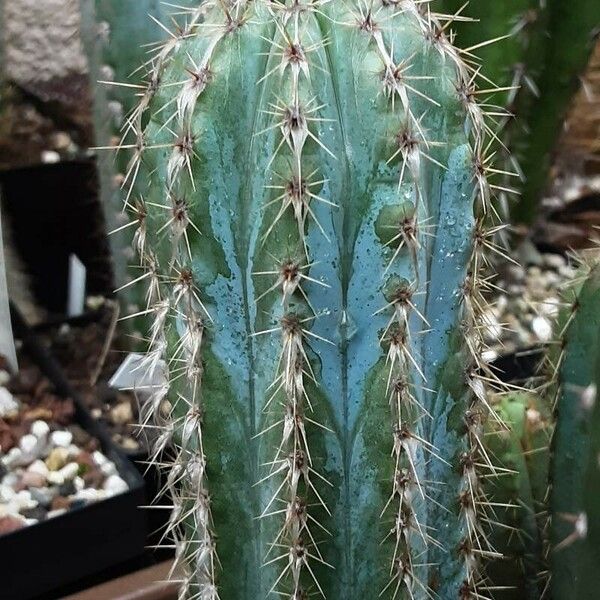
- 🌵 The Blue Hue: The stems possess a beautiful glaucous (waxy) coating that gives the plant a signature silvery-blue or teal complexion, which helps reflect intense sunlight.
- 🧔 The "Beard": As the plant matures, it develops a "pseudocephalium"—a thick, shaggy patch of white or tan woolly hair along the ribs near the top where flowers emerge.
- 📏 Columnar Growth: It grows in a candelabra-like fashion, branching mostly from the base or mid-section, with stems typically featuring 7 to 12 deep, prominent ribs.
- 🦴 Spine Structure: Each areole (the bump on the rib) hosts a cluster of straight, needle-like spines that transition from a golden-yellow when young to a weathered grey as they age.
🏡 In Your Garden
- ☀️ Sun-Seeker: This cactus craves high-intensity light to maintain its vibrant blue color. Without enough sun, the "wax" won't develop properly, and the plant may turn a dull green or become "leggy" (etiolated).
- 🏜️ Drainage is Vital: Because it is native to rocky slopes, it is highly susceptible to root rot. It requires a "gritty" soil mix—think more pumice and perlite than peat—to ensure water moves past the roots quickly.
- 🌬️ Fresh Air Enthusiast: Unlike some tropical houseplants, this cactus thrives on airflow. If kept indoors, place it near a window that can be opened; stagnant, humid air is its greatest enemy.
⚠️ Safety & Toxicity
- 🌵 Physical Hazard: While not chemically toxic, the spines are sharp and stiff. They can easily puncture skin or clothing, making the plant a "look but don't touch" addition to the home.
- 🐾 Pet & Child Safety: It is generally considered non-poisonous if nibbled, but the mechanical injury from the spines is a significant risk. Keep it on a high shelf or in a protected corner away from high-traffic areas and curious paws.
✨ Fun Fact
The Pilosocereus alensis is a member of the "night-owl" club. Its flowers are nocturnal, opening after sunset and emitting a distinct scent to attract bats, its primary pollinators in the Mexican wilderness!

Detailed Care Instructions

Place in a bright room that is sun drenched almost all day. Or directly in a south-facing window.

When the top few inches of soil dry out, water your plants. If the top few inches of soil are still moist, do not water your plant. Wait a few days, then poke your finger into the soil to see if anything has changed. Overwatering poses a disease risk, such as the development of fungal diseases in the roots. These plants have adaptations in there leaves that allow them to survive in low water supply.








