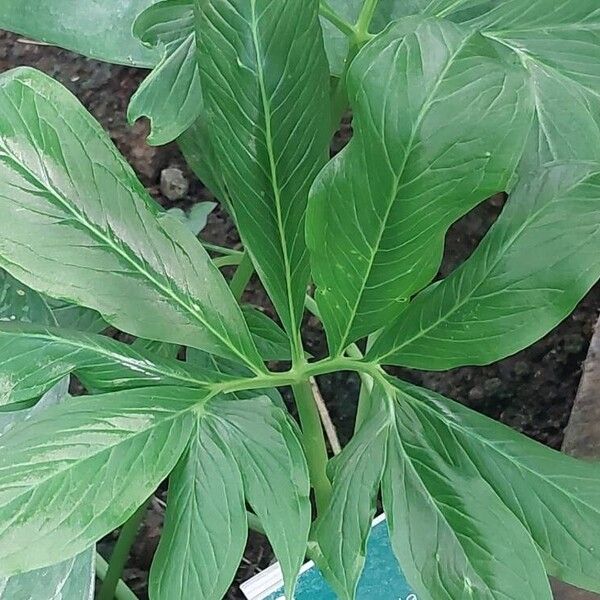
Plant Overview
Known as the "Pedate Pinellia," this elegant shade-lover is a sophisticated relative of the more common Jack-in-the-Pulpit. Its striking, hand-shaped foliage and slender, whip-like flowers give it a prehistoric, architectural look that fascinates woodland gardeners. While it adds a touch of mystery to dark corners, it is a plant that demands respect due to its potent chemical defenses.
🔍 How to Identify
- 🌿 Bird-Foot Leaves: The most distinct feature is the "pedate" leaf shape—a single stem branches out into 7 to 11 pointed leaflets, arranged in a semi-circle like the footprint of a large bird.
- 🐍 Cobra-Like Bloom: The flower features a pale green spathe (a leaf-like hood) from which a long, thin, green spadix emerges, arching upward like a slender serpent's tail.
- 🌱 Clumping Growth: It grows from underground corms (bulbs) and typically stands about 12 to 18 inches tall, creating a lush, fan-like canopy of green.
🏡 In Your Garden
- 🌑 Shadow Dweller: This plant is a specialist for the "difficult" dark spots in your yard. It thrives in deep to partial shade and mimics the cool, damp environment of an East Asian forest floor.
- 🌬️ Enthusiastic Spreader: Be mindful that Pinellia is a prolific self-seeder. It produces tiny "bulbils" and seeds that can travel easily, meaning it may pop up in unexpected places if you don't deadhead the flowers after they fade.
- 🪵 Soil Preference: It prefers rich, loamy soil high in organic matter. While it loves moisture, the corms are prone to rot if the soil stays "soggy" or frozen-wet during the winter dormancy period.
⚠️ Safety & Toxicity
- 🚫 High Toxicity: Do not ingest. Like many members of the Arum family, the entire plant contains needle-like calcium oxalate crystals.
- 🐱 Pet & Child Danger: If chewed, it causes immediate, intense burning of the mouth, swelling of the throat, and digestive distress. Keep it well out of reach of curious pets and toddlers.
- 🧤 Contact Irritation: The sap can cause skin irritation or rashes for those with sensitive skin. It is wise to wear gloves when dividing the clumps or weeding around them.
✨ Fun Fact
In Traditional Chinese Medicine, the corm of the Pinellia is known as "Tian Nan Xing." While toxic in its raw state, it is carefully processed through boiling and drying to be used as a remedy—though you should never try this at home!

Detailed Care Instructions

Place in a window with dappled sun or a spot in the middle of a room. Or directly in a window facing west or east.

Some plants require more regular watering than others, which should be done every few days. It's critical to maintain the soil moist all of the time. The water requirements of the same plant placed in pots with varying sizes will differ. Because the water in the smaller pot evaporates faster than the water in the larger pot, it will require more watering. Regardless of pot size, the surface should constantly be maintained moist.







