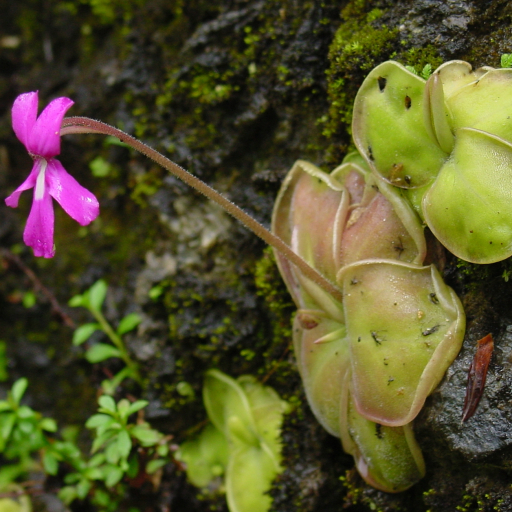
Plant Overview
Often mistaken for a common succulent at first glance, the Pinguicula is a charming predator of the plant world. Known affectionately as "Butterworts" due to their smooth, greasy-feeling leaves, these plants are a favorite among indoor gardeners for their delicate, orchid-like flowers. While they look innocent, they are highly effective "flypaper" traps that specialize in catching the tiniest of garden nuisances.
🔍 How to Identify
- 🍃 The Rosette: Most species grow in a low-profile, circular rosette of fleshy leaves that can look remarkably like an Echeveria.
- ✨ The Glistening Surface: If you look closely or catch the light, the leaves appear to be coated in tiny, shimmering "dewdrops." These are actually sticky digestive enzymes.
- 🌸 The "Violet" Blooms: They produce solitary, long-stemmed flowers in vibrant shades of purple, pink, white, or yellow. The flowers are zygomorphic (symmetrical like a face), often featuring a distinct "spur" at the back.
🏡 In Your Garden
- 🦟 The Gnat Specialist: Pinguicula are the gold standard for natural pest control. They are exceptionally good at clearing out fungus gnats and fruit flies that plague indoor collections.
- 💧 Mineral Sensitivity: These plants have evolved in nutrient-poor bogs or rocky cliffs. They hate "hard" water; you must use distilled, reverse osmosis, or rainwater to avoid burning their sensitive roots.
- ⛰️ Soil Nuances: They thrive in "airy" substrates. Many Mexican species actually prefer a more mineral-heavy mix (like perlite and lava rock) rather than the heavy peat moss used for Venus Flytraps.
⚠️ Safety & Toxicity
- 🟢 Safe for Households: Butterworts are considered non-toxic to humans, cats, and dogs.
- 🤚 Skin Contact: While the "glue" on the leaves is harmless to humans, it is best not to touch them frequently. The oils from your skin can clog their breathing pores (stomata) and damage the delicate trapping mechanism.
✨ Fun Fact
The name Pinguicula is derived from the Latin word "pinguis," meaning "fat" or "greasy." Historically, people in Northern Europe used the enzyme-rich leaves of certain species to curdle milk, creating a traditional yogurt-like dish known as tätmjölk.

Detailed Care Instructions
| Humidity | Normal |
| Lighting | Part Sun |
| Difficulty | Medium |
| Temperature | 25°C - 30°C |
| Hardiness Zones | 3 - 7 |
To grow Pinguicula, also known as butterworts, follow these steps:
- Choose a suitable location: Pinguicula prefers bright, indirect light, so place it near a window with filtered sunlight. Avoid placing it in direct sunlight as it may burn the leaves.
- Provide the right temperature and humidity: Pinguicula thrives in temperatures between 60 to 75°F (15 to 24°C). It appreciates high humidity levels, around 50-60%, so you may need to use a humidifier or place a tray of water near the plant to increase humidity.
- Use the right pot and soil: Plant your Pinguicula in a pot with good drainage holes to prevent waterlogged soil. Choose a well-draining soil mix specifically formulated for carnivorous plants or create your own by mixing equal parts peat moss, perlite, and sand.
- Watering: Pinguicula has specific watering needs. Always use purified water or rainwater to avoid mineral buildup. Keep the soil slightly moist but not overly wet. Water the plant from th bottom by placing the pot in a tray of water and allowing the plant to soak up water for about 30 minutes. Empty any excess water from the tray. Avoid watering the leaves directly.
- Feeding: Butterworts are carnivorous plants that naturally obtain nutrients from insects. You can feed them by placing small insects, such as fruit flies or gnats, onto the sticky leaves. The plant will digest and absorb nutrients from the trapped insects.
- Fertilizing: Pinguicula doesn't require additional fertilization if you regularly feed it insects. However, if you want to provide extra nutrients, use a diluted, high-quality insectivorous plant fertilizer once a month during the growing season.
- Dormancy: Some Pinguicula species go through a dormant period during the winter. During this time, reduce watering and provide cooler temperatures (around 50-60°F or 10-15°C) to mimic their natural habitat. Resume normal care in spring when new growth appears.
By following these steps, you can successfully grow Pinguicula plants. Remember to research the specific care requirements for the Pinguicula species you have, as there are various types with slightly different needs.

Place in a window with dappled sun or a spot in the middle of a room. Or directly in a window facing west or east.

To properly water Pinguicula plants, there are a few key factors to consider.
1. Water quality: It is important to use water that is low in mineral content, such as distilled or RO (reverse osmosis) water. Tap water can contain high levels of minerals that can harm the plant over time.
2. Watering frequency: Pinguicula plants prefer to be watered regularly, but it's essential to allow the soil to dry out partially before the next watering. This ensures that the plant's roots receive enough oxygen and helps prevent root rot.
3. Watering method: To water a Pinguicula, it is recommended to use a bottom-watering technique. This involves placing the plant pot in a tray or saucer filled with water and allowing the roots to absorb water from the bottom. Once the topsoil feels moist, remove the plant from the water tray. This method prevents water from touching the leaves, which can cause damage or rot.
4. Avoiding overhead watering: Pinguicula plants have delicate leaves that are susceptible to damage, especially when wet. Water droplets on the leaves can magnify sunlight, potentially leading to leaf burns. Therefore, it is essential to keep the leaves dry by avoiding overhead watering or misting.
5. Water temperature: It is recommended to use water at room temperature or slightly cooler when watering Pinguicula plants. Cold water can shock the roots, while hot water may damage the plant. Maintaining a moderate water temperature promotes healthy growth.
6. Seasonal adjustments: Pinguicula plants have different water requirements depending on the season. During their active growing phase, typically in spring and summer, they require more frequent watering. In fall and winter, when they enter dormancy, watering should be reduced to prevent overhydration.
Remember, proper watering is crucial for Pinguicula plants' health, and finding a balance between moisture and dryness is key. By following these guidelines, you can help ensure your Pinguicula plant thrives and remains healthy.
To fertilize a Pinguicula plant:
- Start by choosing a balanced and diluted liquid fertilizer suitable for carnivorous plants. Avoid using fertilizers with high levels of nitrogen, as these can harm the plant.
- Dilute the recommended amount of fertilizer in water according to the package instructions. In most cases, a quarter or half-strength solution is sufficient for Pinguicula plants.
- Moisten the soil or growing medium of the Pinguicula plant before applying the fertilizer. Using distilled or rainwater is recommended to avoid introducing any harmful chemicals or minerals.
- Carefully pour the diluted fertilizer solution around the base of the plant, being cautious not to splash it onto the leaves. It's important to avoid direct contact with the leaves as this can cause damage.
- Allow the plant to absorb the fertilizer solution for a few minutes, and then ensure any excess liquid drains from the pot or tray.
- After fertilizing, flush the soil with plain distilled or rainwater to remove any residual fertilizer and prevent any buildup that could harm the plant.
- Depending on the specific Pinguicula species and individual plant's needs, fertilize sparingly, usually once every 2-4 weeks during the growing season. Adjust the frequency or strength of fertilization if the plant shows signs of fertilizer burn or excessive growth.
Remember, Pinguicula plants primarily obtain nutrients from the insects they capture, so they do not require heavy fertilization. Follow these instructions to provide adequate nutrition while ensuring the plant's well-being.
Pinguicula plants thrive in a specific type of soil that is optimal for their growth and health. This soil should have certain qualities to provide the plant with the necessary nutrients and conditions for its survival. Here are some details about the soil requirements for Pinguicula plants:
- Consistency: The ideal soil for Pinguicula plants is well-draining yet moisture-retentive. It should strike a balance between holding enough moisture for the plant's hydration and allowing excess water to drain away to prevent root rot.
- Material composition: Pinguicula plants prefer a soil mixture that is porous and light. This is often achieved by including components such as perlite, pumice, or coarse sand. These materials improve aeration and reduce the risk of water accumulation around the roots.
- Nutrient content: Pinguicula plants are generally adaptable to nutrient-poor environments. Therefore, using a soil mixture that is low in nutrients is recommended. This prevents over-fertilization, which can be detrimental to the plant's health.
- Organic matter: Pinguicula plants benefit from a small amount of organic matter in their soil. Incorporating sphagnum moss or peat moss into the soil mixture can provide some essential organic content. However, it should be a small proportion to avoid excessive acidity.
- pH level: Pinguicula plants prefer slightly acidic to neutral soil conditions. The pH level of the soil should typically range between 4.5 and 7.0. Maintaining this pH range ensures that the plant can absorb nutrients effectively from the soil.
- Sterility: To minimize the risk of diseases, pests, or weed growth, it is advisable to use sterilized soil or soilless mediums like sphagnum moss. Sterile soil reduces the chances of introducing harmful organisms that could damage the plant.
Remember to regularly monitor the soil moisture levels and adjust watering accordingly. Pinguicula plants require consistently moist soil, but over-watering should be avoided as it can lead to root rot. By providing the appropriate soil conditions, you can create an environment where your Pinguicula plant can flourish and thrive.
Pinguicula plants can be propagated through various methods such as leaf cuttings, division, and seed sowing. Here are the detailed steps for each propagation method:
- Leaf Cuttings:
a. Select a healthy leaf from the parent plant.
b. Cut the leaf into small sections, ensuring that each section contains a portion of the midvein.
c. Prepare a moist growing medium, such as a mix of peat moss and perlite.
d. Lay the leaf sections on the surface of the growing medium.
e. Cover the container with a plastic bag or place it in a propagator to maintain high humidity.
f. Keep the container in a bright location with indirect sunlight.
g. After a few weeks, small plantlets will start forming at the base of the leaf sections.
h. Once the plantlets have developed roots, gently separate them and pot them individually in a suitable soil mix.
- Division:
a. Carefully remove the parent plant from its pot.
b. Gently separate the plant into smaller sections, ensuring that each section has enough roots attached.
c. Pot each divided section into its own container filled with an appropriate soil mix.
d. Maintain the newly divided plants in a bright location with indirect sunlight.
e. Water the plants regularly and avoid overwatering to prevent root rot.
- Seed Sowing:
a. Collect mature seeds from a Pinguicula plant.
b. Prepare a seed tray or small pots with a well-draining soil mix, such as a blend of peat moss and sand.
c. Sow the seeds on the surface of the soil and lightly press them down.
d. Cover the seeds with a thin layer of fine sand or vermiculite.
e. Place the tray or pots in a propagator or cover them with a plastic bag to maintain humidity.
f. Keep the container in a bright location with indirect sunlight or under grow lights.
g. Ensure the soil remains evenly moist but not waterlogged.
h. Germination may take several weeks or even months, so be patient.
i. Once the seedlings have developed a few true leaves, transfer them to individual pots, gradually acclimating them to lower humidity.
Remember to provide appropriate growing conditions, such as a well-draining soil mix, adequate moisture, and moderate to high humidity levels, to ensure successful propagation and growth of Pinguicula plants.







