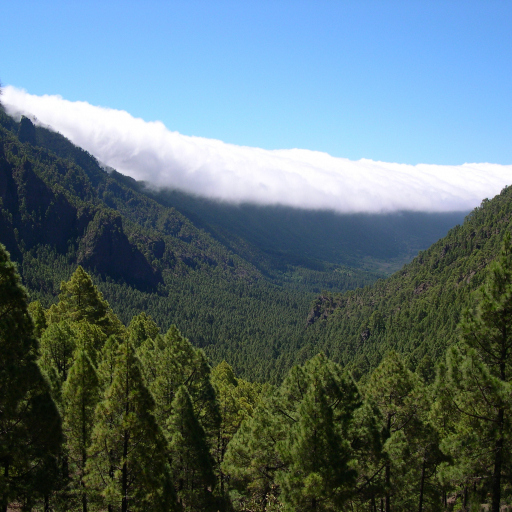
Plant Overview
Known as the "Canary Island Pine," this majestic evergreen is a botanical survivor hailing from the volcanic slopes of the Canary Islands. It is beloved by landscapers for its elegant, weeping silhouette and its incredible ability to "drink" from the clouds by trapping mist in its long needles. In its native habitat, it plays a crucial role in the ecosystem by capturing moisture from fog and channeling it into the groundwater.
🔍 How to Identify
- 🌲 The Needles: Unusually long (up to 12 inches), these bright green needles grow in bundles of three and have a distinctive drooping or "weeping" appearance.
- 🧱 The Bark: As the tree matures, it develops thick, reddish-brown bark that forms deep fissures and plate-like scales, which serve as a protective armor against heat.
- 🍍 The Cones: It produces large, heavy, egg-shaped cones that are a glossy nut-brown color and can stay on the tree for several years.
🏡 In Your Garden
- 💧 Drought Champion: Once established, this pine is exceptionally drought-tolerant. Its secret weapon is a massive taproot that dives deep into the earth, meaning it hates being moved once it has settled into its "forever home."
- 🔥 Fire Survivor: Unlike most conifers that die when their foliage is burned, the Canary Island Pine can sprout new growth directly from its trunk (epicormic shoots) after a fire, appearing almost like a green pillar rising from the ashes.
- 🌤️ Space Requirements: While it grows slowly at first, it eventually becomes a giant. It needs plenty of vertical room and should be planted away from power lines or small structures.
⚠️ Safety & Toxicity
- 🟢 Status: Non-toxic but physically defensive.
- 🌵 Details: While the tree is not poisonous to humans or pets, the needles are very long and sharp. Fallen needles can create a slippery "carpet" on sloped walkways, and the resin (sap) can be a sticky irritant for skin or paws.
✨ Fun Fact
The wood of the Canary Island Pine, known locally as pino tea, is so saturated with resin that it is naturally resistant to rot and wood-boring insects. In historical Spanish architecture, this "tea wood" was used to build balconies and ceilings that have survived for hundreds of years without any chemical treatment!

Detailed Care Instructions
| Mature Size | From 50' To 80' Tall And Will Be About 30' Wide |
| Sun Exposure | Full Sun |
| Hardiness Zones | 9-11 |
To grow a Pinus canariensis (Canary Island pine) plant, you can follow these steps:
- Choose a suitable location: Pinus canariensis prefers full sun and well-draining soil. Ensure that the area provides enough space for the tree to grow, as it can reach heights of 80 feet (24 meters) or more.
- Prepare the soil: The soil should be slightly acidic to slightly alkaline, with a pH range between 5.5 and 7.5. If necessary, improve the soil drainage by adding organic matter such as compost or well-rotted manure.
- Select healthy seedlings: Purchase young Pinus canariensis seedlings from a reputable nursery. Make sure they have a strong root system, healthy foliage, and no signs of disease or pests.
- Dig a planting hole: Dig a hole that is twice the width and depth of the container or root ball of the seedling. This will allow the roots to spread easily.
- Place the seedling in the hole: Gently remove the seedling from its container, or if it is a bare-root seedling, gently separate any tangled roots. Place the seedling in the hole and position it so that the top of the root ball is level with the ground.
- Backfill the hole: Fill the hole with the excavated soil, making sure to eliminate air pockets around the roots. Lightly firm the soil around the base of the seedling to provide stability.
- Water thoroughly: After planting, give the seedling a deep watering to fully moisten the soil. Continue to water regularly, especially during dry periods, to keep the soil consistently moist but not waterlogged.
- Mulch around the base: Apply a layer of organic mulch, such as wood chips or pine needles, around the base of the seedling. This will help conserve moisture, suppress weed growth, and regulate soil temperature.
- Provide ongoing care: Monitor the moisture levels regularly and water as necessary, particularly during the first year of growth. Prune any dead, damaged, or diseased branches. Fertilizing is generally not necessary, as Pinus canariensis is adapted to nutrient-poor soils. However, if the tree shows signs of nutrient deficiency, you can apply a balanced slow-release fertilizer according to the manufacturer's instructions.
- Monitor for pests and diseases: Pinus canariensis is generally resistant to pests and diseases. However, watch out for potential issues such as pine beetles or needle blight. If faced with any problems, consult with a local horticulturist or extension service for appropriate treatment options.
With proper care, Pinus canariensis can grow into a majestic tree, providing beauty and shade in your landscape.

Place in a bright room that is sun drenched almost all day. Or directly in a south-facing window.

To water this type of plant, it is important to ensure that the soil is moist but not waterlogged. The ideal way to water this plant is to deeply water it once or twice a week, depending on the climate and soil conditions. Be sure to allow enough time for the water to soak into the soil. Avoid watering the foliage of the plant and focus on the base, where the roots are located. Additionally, it is recommended to water early in the morning or late in the evening to prevent evaporation and water loss due to high temperatures.
For best growth, the Pinus Canariensis plant should be fertilized regularly with a balanced, slow-release fertilizer. Apply the fertilizer in early spring, just as growth resumes, and again in mid-summer. Avoid over-fertilizing, which can lead to excessive growth and weaker branches. Additionally, it's recommended to first test the soil for nutrient deficiencies before applying fertilizers.
The most suitable type of soil for this plant is well-draining soil that is not waterlogged. The soil should be slightly acidic, with a pH range between 5.5 and 6.5. A sandy loam soil that is rich in organic matter, such as peat or compost, is ideal for this plant. Avoid using heavy clay soils as they can retain too much moisture, causing root rot and other fungal diseases. Additionally, this plant prefers soil that is slightly dry, as it is drought-tolerant and does not like to be over-watered. Therefore, it is advisable to allow the soil to dry out between watering. Fertilizing this plant is optional, as it is not a heavy feeder and can survive in nutrient-poor soils. However, if fertilizing, it is recommended to use a slow-release fertilizer, and to avoid using fertilizers that contain high amounts of nitrogen.
Pinus Canariensis plant propagation can be achieved using seeds or stem cuttings.
For seed propagation, select healthy seeds from mature cones. Prepare a seedbed by loosening the soil and adding compost. Sow the seeds and cover them with a thin layer of soil. Keep the soil moist and provide adequate sunlight. After a few weeks, the seedlings will emerge and can be transplanted into individual containers.
For stem cutting propagation, select a healthy stem from the parent plant and cut a piece of approximately six inches in length. Remove the leaves from the bottom two inches and dip the cut end of the stem into rooting hormone powder. Plant the stem into a moist, well-draining soil mix. Cover the container with plastic to maintain humidity and place it in a shaded area. After a few weeks, roots will start to form, and the stem can be transplanted into a larger container.







