Plant Overview
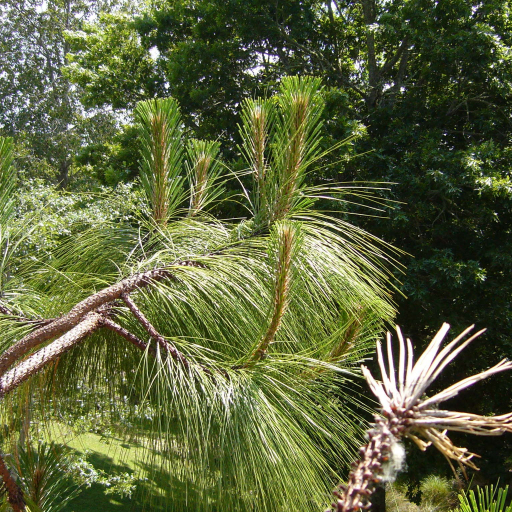
Known as the Michoacán Pine or Devon's Pine, this Mexican native is a true showstopper in the conifer world. It is famous for possessing some of the longest needles of any pine tree, giving it a dramatic, shaggy appearance that looks almost prehistoric. In its natural habitat, it clings to volcanic slopes, standing as a resilient sentinel of the high-altitude forests.
🔍 How to Identify
- 🌲 The Needles: Features exceptionally long, drooping needles that can reach up to 15 inches (40 cm) in length. They grow in bundles of five and hang like graceful, green tassels.
- 🍍 The Cones: Produces massive, woody cones that are among the largest in the genus, often reaching the size of a small loaf of bread and turning a rich, dull brown when mature.
- 🪵 The Bark: The trunk is covered in thick, rough, and deeply fissured bark that ranges from dark brown to nearly black, providing a rugged contrast to its soft-looking foliage.
🏡 In Your Garden
- 🏜️ Drainage is Key: This pine is highly adapted to volcanic soils, meaning it "hates wet feet." It requires extremely well-draining soil and will struggle in heavy clay or boggy areas.
- 🌤️ Sun Seeker: To maintain those iconic long needles and a sturdy trunk, it needs full sun. In Shady spots, the branches may become "leggy" and weak as the tree stretches toward the light.
- 📏 Space Planning: Because of its massive needle spread and potential height, this isn't a tree for a small patio. It needs plenty of "elbow room" to show off its unique silhouette without crowding neighboring plants.
⚠️ Safety & Toxicity
- ✅ Generally Safe: Pinus devoniana is not considered toxic to humans, dogs, or cats.
- 💧 Sticky Resin: The tree produces a thick, aromatic resin. While not poisonous, it is incredibly sticky and can cause mild skin irritation for some people. It is also a nightmare to remove from pet fur!
- 📍 Physical Hazard: The sheer size and weight of the fallen cones can be a tripping hazard, and the dried needles are quite sharp.
✨ Fun Fact
During its "infant" years, this pine goes through a "grass stage." It looks exactly like a clump of thick grass on the forest floor, a clever evolutionary tactic to protect its sensitive growth point from wildfires until it is ready to rapidly "bolt" upward!

Detailed Care Instructions
To grow a Pinus Devoniana plant, you can follow these steps:
- Obtain seeds or seedlings: You can purchase Pinus Devoniana seeds or seedlings from garden centers, plant nurseries, or online stores. Make sure to choose healthy and viable seeds or seedlings.
- Prepare a suitable location: Pinus Devoniana prefers a well-drained soil and full sun exposure. Choose a location with sandy or loamy soil that is not too compacted. Ensure the site has good air circulation and is protected from strong winds.
- Soil preparation: Before planting, prepare the soil by loosening it with a garden fork or tiller. Remove any rocks, weeds, or other debris that may hinder the growth of the plant.
- Planting seeds or seedlings:
- Seed planting: If planting seeds, sow them in early spring or late autumn. Rake the soil gently and sprinkle the seeds evenly over the prepared area. Lightly cover the seeds with a thin layer of soil and water gently.
- Seedling planting: Dig a hole slightly larger than the root ball of the seedling. Place the seedling in the hole, making sure the top of the root ball is level with the soil surface. Backfill the hole with soil, gently firming it around the seedling. Water thoroughly.
- Seed planting: If planting seeds, sow them in early spring or late autumn. Rake the soil gently and sprinkle the seeds evenly over the prepared area. Lightly cover the seeds with a thin layer of soil and water gently.
- Watering and mulching: Water the newly planted seeds or seedlings immediately after planting. Keep the soil consistently moist but not waterlogged. Mulch around the base of the plant with organic matter like wood chips or bark to retain moisture, suppress weed growth, and insulate the roots.
- Pruning: Pinus Devoniana generally does not require much pruning. However, you can remove any dead, damaged, or diseased branches as needed. Pruning for shape and size can be done sparingly.
- Fertilization: Apply a slow-release, balanced fertilizer during the spring or summer to provide essential nutrients for growth. Follow the instructions on the fertilizer packaging for proper application rates.
- Disease and pest control: Monitor your plant regularly for signs of pests or diseases. Treat any issues promptly using appropriate insecticides or fungicides recommended for pine trees, if necessary.
- Maintenance: Maintain weed-free surroundings by regularly removing any competing vegetation. As the plant grows, monitor its health, water needs, and soil conditions regularly.
- Patience: Growing a Pinus Devoniana plant takes time and patience. It can take several years for the plant to reach maturity and display its characteristic beauty. Ensure you provide ongoing care and maintenance to promote healthy growth.
Remember to consult local gardening resources or experts for specific advice related to your region's climate and conditions.

Place in a bright room that is sun drenched almost all day. Or directly in a south-facing window.

To properly water this plant, it is recommended to irrigate it deeply and infrequently. This means that instead of giving it a shallow watering every day, it is better to water it deeply once a week or when the soil feels dry to the touch.
When watering, it is important to avoid getting water on the foliage or needles of the plant as this can lead to fungal diseases. Instead, water directly onto the soil around the base of the plant.
It is also important to make sure the soil has proper drainage to prevent waterlogged conditions that can harm the plant. If the soil does not drain well, consider adding organic matter such as compost to improve drainage.
Finally, it is important to be mindful of the plant's water needs during different seasons. During the summer months or periods of hot, dry weather, it may require more frequent watering than during cooler, wetter months.
To fertilize this plant, use a slow-release granular fertilizer that is specifically formulated for acidic soil-loving plants. Apply the fertilizer evenly around the base of the plant, taking care not to let it touch the trunk. Water the plant well after fertilizing to help the nutrients reach the root zone. Fertilize once a year in the early spring before new growth begins. Avoid fertilizing during the winter months when the plant is dormant.
The best soil to use for the Pinus Devoniana plant is a well-draining soil that is slightly acidic in nature and has a pH level of 5.5 to 6.5. The soil should be enriched with organic matter, such as compost or well-rotted manure, to provide nutrients for the plant. Ideally, the soil should be loamy, with a mixture of sand, silt, and clay. Heavy clay soil should be avoided as it can retain too much water and cause root rot. It's important to ensure the soil is not waterlogged, as this can damage the roots and lead to poor plant health. A layer of mulch applied to the soil surface can help retain moisture and prevent weeds.
To propagate this plant, you will need to collect the cones before they fully open and extract the seeds from them. Soak the seeds in water for several hours to allow them to absorb moisture. After soaking, plant the seeds in a well-draining potting mix and cover them lightly with soil. Keep the soil moist but not waterlogged and place the pot in a warm, bright location.
Germination may take several weeks, but once the seedlings emerge, thin them out to one per pot. As the seedlings grow, gradually increase their exposure to sunlight and provide them with appropriate fertilization. When the seedlings are large enough to transplant, move them into larger pots or directly into the ground.
Propagation can also be done through rooting cuttings or grafting, but these methods are more advanced and require specialized knowledge and equipment.








