Plant Overview
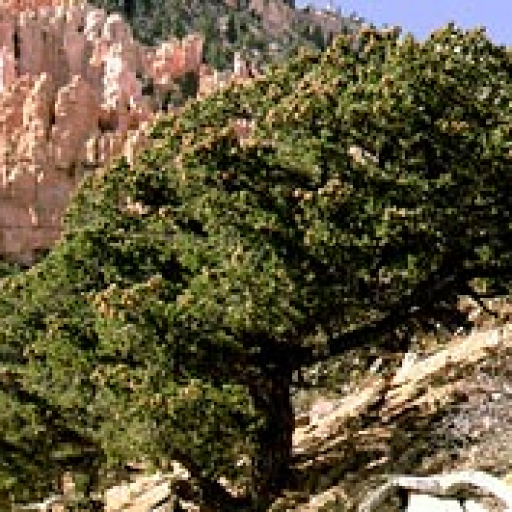
Often called the Colorado Pinyon or the Two-needle Piñon, Pinus edulis is the rugged, aromatic protagonist of the American Southwest. For centuries, it has been a cornerstone of life in the high desert, providing "forest gold"—delicious, buttery pine nuts—to indigenous cultures and local wildlife alike. Its twisted, gnarled trunks and bushy silhouette make it a living symbol of resilience in harsh, arid landscapes.
🔍 How to Identify
- 🧤 The Needle Pair: Look for short, stiff, evergreen needles (about 1–2 inches long) that almost always grow in bundles of two. They are a deep, waxy green and slightly curved.
- 🦉 Chubby Cones: The cones are small, woody, and rounded—resembling a miniature rosebud. Unlike many pines, they lack sharp prickles, making them easy to handle when searching for seeds.
- 👵 Gnarled Habit: This isn't a towering timber tree. It has a rounded, shrub-like crown and a trunk that often twists and forks near the ground, rarely exceeding 35 feet in height.
🏡 In Your Garden
- 🏜️ The Desert Specialist: Because it originates from high-altitude rocky slopes, it requires exceptional drainage. If planted in heavy clay or "wet feet" conditions, the roots will quickly succumb to rot.
- ⏳ Slow-Motion Growth: This tree is an exercise in patience. It grows very slowly—often only a few inches a year—meaning it won't outgrow its space quickly, making it a favorite for permanent xeriscape designs.
- 🐦 Wildlife Magnet: Planting a Pinyon is like installing a natural bird feeder. The high-protein seeds attract Woodhouse’s Scrub-Jays and Pinyon Jays, who help "plant" new trees by caching seeds in the soil.
⚠️ Safety & Toxicity
- ✅ Safe & Edible: Pinus edulis is non-toxic to humans, dogs, and cats. The seeds (pine nuts) are a gourmet delicacy and are perfectly safe to eat raw or roasted.
- 💧 Sticky Resin: The tree produces a thick, fragrant sap (pitch). While not toxic, it is incredibly sticky and can be difficult to remove from pet fur or children’s clothing without using an oil-based cleaner.
✨ Fun Fact
Native American tribes have used the fragrant resin of the Pinyon Pine for centuries as a natural waterproof sealant for baskets and as a medicinal salve for skin irritations. To this day, the scent of burning Pinyon wood is the iconic "smell of winter" in Santa Fe and Albuquerque.

Detailed Care Instructions
| Humidity | Dry |
| Lighting | Full Sun |
| Toxicity | Poisonous |
| Difficulty | Easy |
| Hibernation | Cold Period |
| Hardiness Zones | 5 - 8 |
To grow Pinus edulis, also known as the Colorado piñon pine or the two-needle piñon, you can follow these steps:
- Seed Collection: Collect ripe piñon pine cones from healthy trees in late summer or early fall. Look for cones that are brown and have opened naturally to release the seeds.
- Seed Preparation: Place the collected cones in a warm, dry location for a few days to open fully. Remove the seeds from the cones and break off the wings attached to them.
- Seed Stratification: Pinus edulis seeds require a stratification period to germinate, which simulates the cold winter conditions. Mix the seeds with moist sand or vermiculite in a plastic bag and store it in the refrigerator for 60-90 days. Check on them occasionally to ensure they remain moist and not moldy.
- Soil Preparation: Choose a well-draining location with full sun exposure. Piñon pines are tolerant of various soil types, but they prefer sandy or loamy soils. Make sure the soil is loose and not compacted.
- Planting: After the stratification period, sow the seeds directly into the prepared soil. Plant them about 1 inch deep and 6-10 inches apart. If you are planting multiple trees, space them at least 3-5 feet apart.
- Watering: Keep the soil consistently moist but not waterlogged. Water the young seedlings regularly, especially during dry periods. As the trees mature, they become more drought-tolerant.
- Mulching and Weed Control: Apply a layer of organic mulch around the seedlings to retain moisture and control weeds. Be careful not to pile the mulch against the base of the trees.
- Care and Maintenance: Monitor the growth of the seedlings and protect them from deer or other animals browsing on them. Remove any competing vegetation or grass around the base of the trees.
- Pruning: Prune any dead or damaged branches as the tree grows to maintain its health and shape. Pinus edulis usually has an irregular or rounded crown.
- Patience: Piñon pines are slow-growing trees and may take several years before they reach a noticeable size. Be patient and provide proper care.
Remember to check if there are any specific regulations or permits required for collecting seeds or planting native species in your area.

Place in a bright room that is sun drenched almost all day. Or directly in a south-facing window.

Pinus Edulis is a type of plant that typically grows in arid, dry climates. Therefore, it is important to water this plant appropriately to ensure its health and longevity. To water Pinus Edulis, one should begin by finding the soil line and measuring the distance between the soil and the top of the root ball. This distance will serve as a guide for how much water the plant requires.
One should then slowly and evenly pour water onto the soil around the base of the plant, being careful not to pour too much water at once as it can lead to waterlogging or overwatering. The watering should be done until the soil is evenly wet up to the measured soil line.
It is important not to water Pinus Edulis too frequently, as this can also lead to overwatering and soil saturation. Instead, one should allow the soil to partially dry out before watering again. This will help ensure that the plant gets the appropriate amount of moisture without becoming waterlogged.
Finally, one should also consider the season and climate when watering Pinus Edulis. In the summer months, when temperatures are high and the sun is strong, the plant may require more frequent watering than in the cooler months. Additionally, if the plant is located in a particularly dry or arid climate, it may require more water overall.
The best time to fertilize the Pinus Edulis plant is in early spring before the new growth appears. Use a slow-release fertilizer with a balanced ratio of nitrogen, phosphorus, and potassium, such as 10-10-10. Apply the fertilizer evenly around the plant's drip line, avoiding direct contact with the trunk. Water the plant thoroughly after fertilizing to help the nutrients penetrate the soil. Be careful not to over-fertilize as this can harm the plant and lead to excessive growth.
Pinus Edulis plants prefer well-draining, slightly acidic soil that is rich in organic matter. The soil should not be too heavy or too sandy, as the plant requires a balance of water retention and drainage. It is recommended to use a mix of compost, peat moss, and sand to create the ideal soil for Pinus Edulis plants. It is important to avoid soil that has a high pH or is likely to become waterlogged, as this can harm the plant's roots. When planting Pinus Edulis, it is also important to ensure that the soil is properly aerated and that any potential drainage issues are addressed. Overall, the goal is to create a soil that allows for optimal root growth, nutrient absorption, and water retention, while also preventing the plant from becoming waterlogged or suffering from nutrient deficiencies.
Pinus Edulis is a type of plant that can be propagated using several methods. The first method is through seed propagation, which involves collecting the seeds during the fall season and then placing them in a seed tray filled with a mixture of peat moss and sand. The seeds should be kept moist, and then transferred to individual pots once they have sprouted.
Another method of propagation is through stem cuttings. This method involves taking cuttings from the parent plant during the spring or early summer months. The cuttings should be about 6 inches long, with several leaves attached. They should be dipped into rooting hormone and then planted into well-draining soil. The cuttings should be kept moist, and over time, they will develop roots and transform into new plants.
Lastly, Pinus Edulis plants can also be propagated through layering. This method involves taking a low branch and bending it gently towards the ground. The branch should be left in contact with the soil and held in place with a U-shaped wire. Over time, roots will develop at the point where the branch touches the soil. Once the roots have developed, the new plant can be separated from the parent plant and planted into its own container.
Common pests of the pinyon pine include Scale insect, spider mites, aphids. Make a habit of checking your pinyon pine frequently for pests so that any infestations can be caught and managed early.








