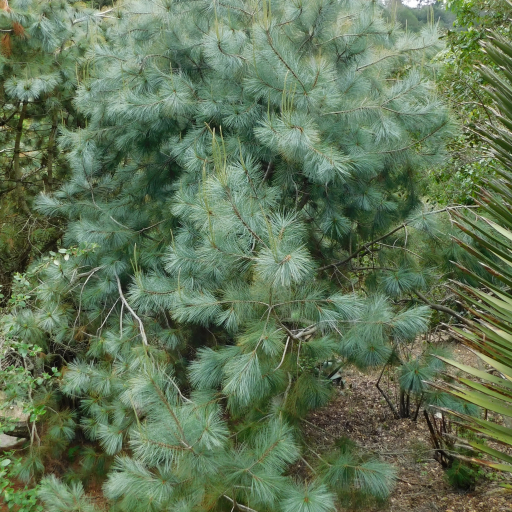
Plant Overview
The Big-cone Pinyon, or Pinus maximartinezii, is a botanical treasure from the rugged mountains of Mexico. Often called the "Martinez Pinyon," it was only discovered by the scientific community in the 1960s and is considered a living relic. It is most famous for producing the largest and heaviest seeds of any pinyon pine, which have been a vital food source for local communities for centuries.
🔍 How to Identify
- 🌲 The Massive Cones: The most striking feature is the cone—massive, woody, and heavy. They can reach the size of a pineapple and weigh up to 2 kilograms when green.
- 🪡 Needle Clusters: Its needles grow in bundles of five and have a distinct glaucous (waxy) blue-green tint, giving the tree a soft, misty appearance from a distance.
- 🌳 Growth Form: Unlike the towering timber pines of the north, this species is relatively short with a broad, rounded crown and a thick, sturdy trunk.
🏡 In Your Garden
- 🏜️ Drainage is Key: This pine evolved on the steep, rocky limestone slopes of the Sierra de Morones. It cannot tolerate "wet feet" and requires extremely well-draining, gritty soil to prevent root rot.
- 🐢 A Legacy Plant: It is an exceptionally slow grower. Planting a Big-cone Pinyon is a commitment to the future, as it may take decades to reach its full, majestic form and begin producing its signature cones.
⚠️ Safety & Toxicity
- ✅ Generally Safe: This tree is non-toxic to humans, dogs, and cats. It is a "friendly" addition to a household landscape.
- 🍴 Edible Seeds: The large seeds (pine nuts) are not only safe but are considered a gourmet delicacy. However, always ensure you have correctly identified the tree before consuming any wild seeds.
- 🍯 Sticky Resin: Like most pines, it produces a thick, fragrant resin. While not poisonous, it is incredibly sticky and can be difficult to remove from pet fur or children's clothing.
✨ Fun Fact
✨ The Rarest of the Rare: For a long time, this tree was thought to grow on only one single mountain in the entire world. While a second small population has since been found, it remains one of the rarest and most geographically restricted pine species on Earth.

Detailed Care Instructions
| Humidity | Normal |
| Lighting | Full Sun |
| Difficulty | Medium |
| Hardiness Zones | 5 - 8 |
To grow Pinus maximartinezii, also known as the Martinez pinyon pine, you can follow these steps:
- Climate and location: Ensure that you live in a suitable climate. Pinus maximartinezii is native to the mountains of Mexico and requires a Mediterranean or dry, subtropical climate. It can tolerate low temperatures but prefers mild winters and hot, dry summers.
- Soil: The plant prefers well-draining soil, so ensure that the soil in your planting area is not excessively heavy or waterlogged. If needed, amend the soil to improve drainage.
- Planting: Obtain Pinus maximartinezii saplings from a reputable nursery or garden center. Dig a hole that is wider and deeper than the root ball. Place the sapling in the hole, ensuring that the top of the root ball is level with or slightly above the soil surface. Backfill the hole with soil and lightly tamp it down around the base of the plant to remove any air pockets.
- Watering: Initially, water the sapling thoroughly to ensure proper establishment. After that, provide regular watering, especially during dry periods. However, avoid overwatering, as excess moisture can lead to root rot.
- Mulching: Apply a layer of organic mulch around the base of the plant to help retain moisture, regulate soil temperature, and suppress weed growth. Leave a gap around the trunk to prevent moisture accumulation.
- Pruning: Pruning is generally not necessary for Pinus maximartinezii. However, you may remove any dead or damaged branches as needed.
- Pest and disease control: Pinus maximartinezii is generally resistant to pests and diseases. However, monitor the plant regularly for any signs of problems such as aphids, scales, or pine beetles. If necessary, consult a local gardening expert for appropriate control measures.
- Protection from cold: In colder regions, provide protection from freezing temperatures during the winter months, especially when the tree is still young. Cover the tree with frost cloth or burlap, or create a temporary shelter around it.
Remember to research and understand the specific requirements of Pinus maximartinezii, as local conditions and preferences may vary.

Place in a dark room with little light, like a dark bedroom or a spot far away from a window or directly in a north-facing window.
The watering needs of this plant may vary depending on the climate and location it is grown in. However, in general, it is important to ensure the soil is adequately moist, but not waterlogged. This can be achieved by watering deeply and regularly, but allowing the soil to dry out slightly between watering sessions. It is recommended to use a drip irrigation system or watering by hand, directing the water at the base of the plant to avoid wetting the foliage. Avoid overwatering as it can lead to root rot and other diseases. During hot and dry weather, the plant may require more frequent watering. It is also important to water the plant in the morning or evening to avoid water evaporation during the hottest hours of the day.
For optimal growth, apply a slow-release fertilizer with high nitrogen content, one to two times per year, during the plant's active growing season. Ensure that the fertilizer is evenly distributed on the soil surface within the dripline of the tree, avoiding contact with the trunk. Water thoroughly after fertilizing to aid in nutrient absorption. Avoid over-fertilizing, as excessive nitrogen can lead to stunted growth and root damage.
The ideal soil for the Pinus Maximartinezii plant is a well-draining, slightly acidic soil with a pH between 5.5 and 6.5. It should be a mix of sand, loam, and organic matter such as peat moss or leaf mold. The soil should be kept moist but not waterlogged, and it should have good air circulation. It is also important to avoid using heavy clay soils or soils with high levels of salt. The Pinus Maximartinezii plant prefers full sun and should be fertilized with a slow-release fertilizer once a year. It is also recommended to mulch the soil around the plant to help retain moisture and protect it from extreme temperatures.
- Collection of cones: The first step in propagating Pinus Maximartinezii plant is to collect the cones that have already fallen from the tree or can be removed using pruning shears. You should make sure to collect healthy cones with intact scales.
- Extraction of seeds: After collecting cones, extract the seeds by opening each cone scale with your fingers or a small knife. The seeds are dark-brown in color and have wings attached to their ends.
- Preparation of soil mixture: The next step is to prepare a soil mixture by mixing sand, peat moss, and perlite in equal parts. Make sure the soil mixture is moist but not too wet.
- Sowing of seeds: Sow the seeds by pressing them gently into the soil mixture and covering them with a thin layer of soil. Keep the soil moist and place the container in a warm, bright spot but out of direct sunlight.
- Germination of seeds: Pinus Maximartinezii plant seeds will start to germinate in 2-4 weeks. Once the seeds start to sprout, place them in a partially shaded area and reduce watering to prevent fungal growth.
- Transplanting: After the seedlings grow to a height of 6-8 inches, transplant them to individual plant pots or the ground. Make sure to place the plants in well-draining, moist soil with plenty of sun exposure.
- Care and maintenance: Once the plants have been transplanted, maintain them by providing adequate water, light, and nutrients. Pinus Maximartinezii plants are generally low maintenance but can be susceptible to pests and diseases, so keep an eye out for any signs of damage or infestation.








