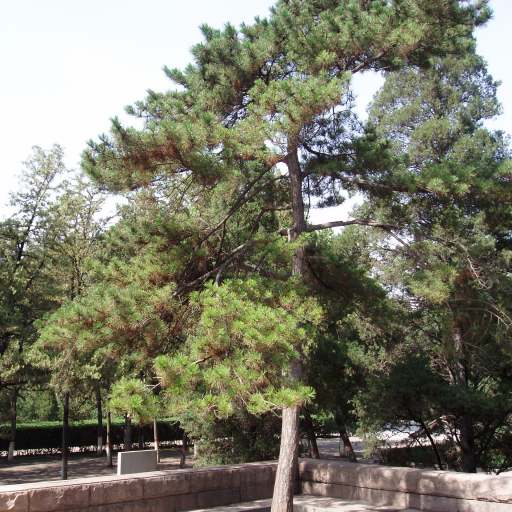
Plant Overview
Known as the Chinese Red Pine or the "Scholar’s Pine," Pinus tabuliformis is a living masterpiece often depicted in traditional Chinese landscape paintings. Its name, tabuliformis, literally means "table-shaped," referring to the broad, flat-topped canopy it develops as it matures. Revered for centuries as a symbol of longevity and resilience, this tree is a staple of ancient temple gardens and rugged mountain vistas.
🔍 How to Identify
- 🌲 The Silhouette: Unlike the conical shape of many pines, older specimens develop a distinctive, horizontal, umbrella-like crown that looks like a natural tabletop.
- 🍂 The Bark: Young trees have smooth, reddish-brown bark, but as they age, it turns dark gray and breaks into thick, square-shaped plates.
- 🪡 The Needles: Its needles grow in pairs (fascicles of two), are quite stiff, and can reach up to 15 cm (6 inches) in length, creating a dense, tufted appearance.
- 🪵 The Cones: It produces small, egg-shaped cones that stay on the branches for several years, even after they have released their seeds.
🏡 In Your Garden
- ⚓ The Taproot Rule: This pine develops a deep, sturdy taproot very early in its life. Because of this, it is notoriously difficult to transplant; it is best to plant it in its "forever home" while it is still a young sapling.
- ☀️ Sun & Soil: It is a sun-worshipper that thrives in full exposure. While it is incredibly hardy against wind and cold, it is sensitive to "wet feet." It requires excellent drainage and actually prefers lean, rocky, or sandy soil over rich, heavy compost.
- ✂️ Bonsai Artistry: Due to its rugged bark texture and ability to withstand heavy pruning, it is one of the most popular species for high-level bonsai enthusiasts looking to create an "ancient" look in a small pot.
⚠️ Safety & Toxicity
- 🟢 Safe for Most: Pinus tabuliformis is generally considered non-toxic to humans and common household pets like dogs and cats.
- 💧 Resin Caution: The tree produces a very sticky resin (sap). While not poisonous, the resin can cause mild skin irritation for some people and is very difficult to remove from pet fur or outdoor clothing.
✨ Fun Fact
In Chinese culture, this tree is part of the "Three Friends of Winter" (alongside bamboo and plum blossoms). These three plants are celebrated for their ability to remain vibrant or bloom even when the weather is harsh and cold, symbolizing a steadfast and virtuous character.

Detailed Care Instructions
To grow Pinus tabuliformis (also known as Chinese lacebark pine), there are several steps you can follow:
- Choose the right location: Pinus tabuliformis prefers full sun to partial shade and well-draining soil. Make sure the planting spot provides enough space for the tree to grow, as it can reach a height of 50-70 feet.
- Prepare the soil: Before planting, ensure the soil is well-draining and slightly acidic. You can amend the soil with organic matter like compost or peat moss to improve fertility and drainage.
- Planting: Dig a hole slightly larger than the container size of the tree. Gently remove the container and place the root ball in the hole. Backfill with soil, making sure to tamp it down around the roots to eliminate air pockets. Water thoroughly.
- Watering: Pinus tabuliformis prefers moderate moisture, so water the tree deeply, but avoid overwatering. As a general rule, water the plant when the top inches of soil feel dry to the touch. During dry periods, ensure the tree receives adequate water.
- Mulching: Apply a layer of mulch around the base of the tree to help retain moisture, prevent weed growth, and regulate soil temperature. Use organic mulch like wood chips or straw, and keep it a few inches away from the trunk to prevent rotting.
- Pruning: Pinus tabuliformis generally requires little pruning, but you can remove any dead, diseased, or damaged branches as needed. Pruning should be done in late winter or early spring.
- Fertilizing: Generally, Pinus tabuliformis doesn't require much fertilizer. However, if the tree shows signs of nutrient deficiency, you can apply a slow-release balanced fertilizer in early spring.
- Protection: Protect the tree from extreme cold or harsh wind by wrapping it with burlap or using windbreaks. This is especially important for young and newly planted trees.
- Monitoring: Regularly check the tree for any pest or disease problems. Be on the lookout for common pine tree pests like pine bark beetles or scales. If you notice any issues, consult a professional arborist or horticulturist for appropriate treatment.
Overall, Pinus tabuliformis is a resilient tree and can adapt well to various growing conditions. By providing the right care and attention, you can enjoy the beauty of this unique pine tree in your landscape.

Place in a bright room that is sun drenched almost all day. Or directly in a south-facing window.

To water this plant, it is important to understand its soil and atmospheric needs. The soil should be well-draining and moist, but not waterlogged. It is best to water deeply and infrequently, allowing the soil to dry out slightly between waterings. Avoid overhead watering as this can lead to fungal issues. Instead, water at the base of the plant, allowing the water to soak in slowly. The plant also prefers a humid atmosphere, so misting the foliage occasionally can be beneficial. It is important to monitor the plant closely for signs of overwatering or underwatering, and adjust watering accordingly.
The Pinus Tabuliformis plant requires a well-draining soil that is slightly acidic. Fertilize the plant once a year in early spring with a slow-release fertilizer formulated for evergreens. Apply the fertilizer around the base of the plant and water thoroughly. Avoid fertilizing the plant during summer months as it may cause burning of the roots. Monitor the plant for signs of nutrient deficiencies and adjust fertilizer application as needed.
The best soil for the Pinus Tabuliformis plant is well-draining, nutrient-rich soil that is slightly acidic. The soil should be loamy and have good aeration to provide adequate oxygen to the roots. The plant prefers a soil with a pH level between 4.0 and 5.5.
Additionally, the soil should have good water retention capacity, but not be too soggy or waterlogged. Adding organic matter such as compost or leaf litter to the soil can help improve its structure and fertility, as well as provide a slow-release source of nutrients.
It's important to remember that the Pinus Tabuliformis plant is adapted to grow in certain soil conditions in its native region, so mimicking these conditions as closely as possible can help ensure the health and growth of the plant.
The process of propagating this type of plant involves a few necessary steps. First, one must gather several cuttings from the mature plant with a sterile, sharp pair of clippers. The cuttings should be taken from the top of the plant and should be about six to eight inches in length.
Next, the cuttings should be treated with rooting hormone and then planted in a pot filled with a soilless potting mix. The cuttings should be buried about half of their length and the soil should be gently tamped down around them. Once planted, they should be watered thoroughly.
The pot of cuttings should then be placed in a warm, bright area where they receive indirect sunlight. Careful attention should be paid to the moisture level of the soil, as it should remain constantly moist without becoming waterlogged.
Over the next several weeks, the cuttings should begin to develop roots and new growth. Once the new growth is several inches long, the plants can be transplanted into larger pots or outdoors into a garden bed. With proper care, the propagated plants should continue to grow and thrive, eventually becoming mature plants themselves.
Common pests of the chinese red pine include Scale insect, spider mites, aphids. Make a habit of checking your chinese red pine frequently for pests so that any infestations can be caught and managed early.








