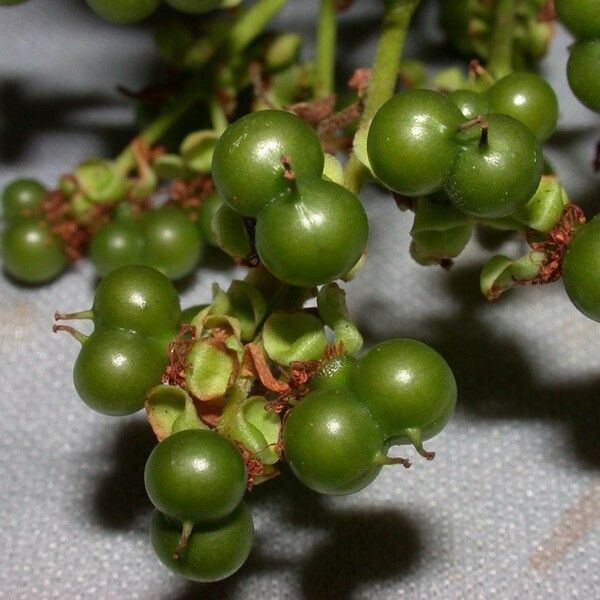
Plant Overview
Known as the "Water Vine" or Bejuco de Agua, Pinzona coriacea is a structural powerhouse of the Neotropical rainforests. Often seen draping from the canopy like living ropes, this woody climber is a favorite of jungle explorers and botanists alike. Its species name, coriacea, refers to its tough, leather-like leaves that are built to withstand the intense tropical sun and heavy rainfall.
🔍 How to Identify
- 🍃 Leathery Foliage: The leaves are thick, stiff, and oval-shaped, often featuring a slightly "sandpapery" texture that helps distinguish it from softer tropical vines.
- 🧶 Woody Liana: As the plant matures, the stem becomes a thick, brown, woody cable that twists around host trees to reach the light of the canopy.
- 🦴 Prominent Veining: The leaf veins are deeply impressed on the top surface and raised on the underside, creating a distinct, ribbed appearance.
🏡 In Your Garden
- 🧗 Climbing Ambition: If grown in a conservatory or a large tropical garden, this vine requires a very sturdy trellis or a mature tree; its weight as it matures can easily collapse flimsy garden structures.
- 💧 Humidity & Soil: It thrives in high-moisture environments with acidic, well-draining soil. It is a "heavy drinker" and prefers its roots to remain consistently moist but never waterlogged.
⚠️ Safety & Toxicity
- 🌿 Skin Sensitivity: While not considered highly toxic, the rough texture of the leaves and the sap can cause mild mechanical skin irritation for those with sensitive skin.
- 🐾 Pet Safety: There is limited data on its toxicity to domestic animals, so it is best kept out of reach of curious cats and dogs to prevent potential digestive upset.
✨ Fun Fact
In survival situations, rainforest travelers often look for this plant because a section of the woody stem, when cut correctly, releases a flow of clear, drinkable water—earning it its famous nickname, the "Water Vine."

Detailed Care Instructions








