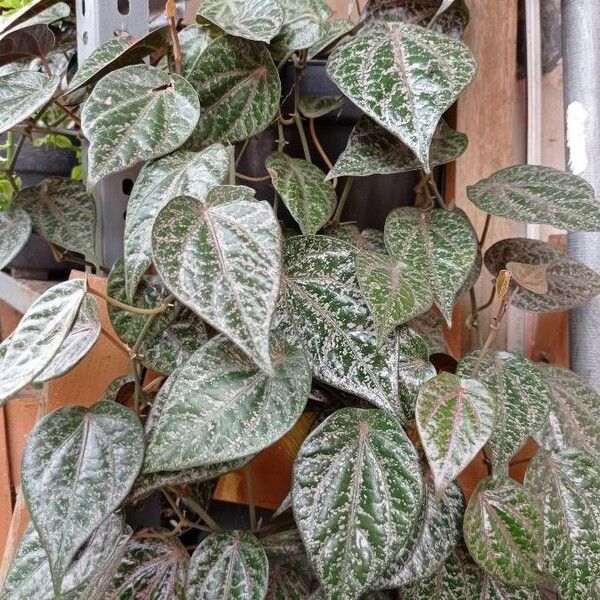
Plant Overview
Often called the Celebes Pepper or the Pink Ornate Pepper, Piper crocatum is a stunning climbing vine that looks more like a piece of living jewelry than a common houseplant. Originating from the lush rainforests of Peru and Indonesia, it is prized for its "painted" foliage that features intricate, shimmering patterns. It is a favorite among terrarium enthusiasts and collectors who want to add a touch of exotic, metallic color to their indoor jungles.
🔍 How to Identify
- 💖 Heart-Shaped Foliage: The leaves are elegantly pointed and heart-shaped, growing in an alternating pattern along the vine.
- 🎨 Pink Veining: The most striking feature is the web of bright pinkish-silver veins that contrast sharply against a dark, olive-green or bronze leaf surface.
- 🍷 Burgundy Undersides: If you flip a leaf over, you’ll find a rich, deep maroon or burgundy color, which helps the plant absorb more light in the dim rainforest understory.
- 🌿 Waxy Texture: The leaves have a glossy, slightly puckered (bullate) texture that feels firm and waxy to the touch.
🏡 In Your Garden
- ☁️ Humidity is Essential: Unlike sturdier vines, this "drama queen" requires high humidity to keep its leaf tips from browning. It thrives in bathrooms, near humidifiers, or inside glass cabinets.
- 🧗 Born to Climb: In its natural habitat, it uses adventitious roots to scale trees. Providing a moss pole or trellis will encourage the plant to produce larger, more vibrant leaves.
- 💧 Sensitive Roots: It is prone to root rot if left in standing water. It prefers a chunky, well-draining aroid mix and should be watered with room-temperature water to avoid shocking its tropical system.
⚠️ Safety & Toxicity
- 🐾 Mildly Toxic: Like many members of the Piperaceae family, this plant contains compounds that can cause irritation if ingested.
- 👄 Irritation: Keep it out of reach of curious cats, dogs, and toddlers. Chewing on the leaves can cause swelling of the mouth, drooling, or digestive upset.
- 🧤 Sap Sensitivity: Some gardeners find the sap slightly irritating to the skin; wearing gloves during heavy pruning is a good precaution for those with sensitive skin.
✨ Fun Fact
While it looks nothing like the spice in your kitchen, Piper crocatum is a direct relative of Piper nigrum—the plant that gives us black, white, and green peppercorns! While this ornamental variety isn't used for cooking, it shares the same spicy, aromatic lineage.

Detailed Care Instructions
| Color | Green And Purple-Magenta Foliage |
| Soil Ph | 6-7 |
| Humidity | Normal |
| Soil Type | Free-Draining Soil |
| Bloom Time | Rare In Cultivation |
| Difficulty | Medium |
| Plant Type | Trailing Or Climbing Evergreen Perennial |
| Mature Size | Up To 15 Feet |
| Native Area | Peru |
| Temperature | 20°C - 35°C |
| Sun Exposure | Bright Indirect Light |
| Hardiness Zones | 12 |
To grow Piper crocatum, also known as cat's tail or cat's whiskers, you can follow these steps:
- Choose a suitable location: Select a spot that receives partial shade or indirect sunlight. This tropical plant prefers warm and humid conditions.
- Prepare the soil: The ideal soil for Piper crocatum should be well-draining and fertile. Mix organic matter like compost or aged manure into the soil before planting to improve its fertility and moisture retention.
- Propagation: You can propagate Piper crocatum from seeds or stem cuttings. Seeds should be soaked in warm water for about 24 hours before sowing. For stem cuttings, take a 6-8 inch cutting from a healthy plant, remove the lower leaves, and place it in a glass of water until roots develop.
- Planting: If using seeds, sow them in a seed tray or small pots filled with well-draining potting soil. Place the seeds 1/4 inch deep in the soil and water gently. For stem cuttings, plant them directly in the prepared soil.
- Watering: Keep the soil consistently moist, but not saturated. Water the plants whenever the top inch of soil feels dry. Avoid overwatering, as it can cause root rot.
- Fertilization: Feed the plants every 2-4 weeks with a balanced liquid fertilizer. Dilute the fertilizer according to the package instructions and apply it to the soil around the plants.
- Pruning: Regularly prune the plants to encourage bushiness and maintain their shape. Pinch off the growing tips to promote lateral branching.
- Pests and diseases: Monitor your plants for any signs of pests like aphids or mites. If detected, use insecticidal soap or neem oil to control the infestation. Avoid overwatering as it can lead to fungal diseases.
- Harvesting: Piper crocatum leaves can be harvested once the plant has matured, usually after 3-4 months. Select mature leaves and snip them off with scissors or sharp pruners.
Remember, this plant may not thrive in colder climates, so it's best suited for tropical or subtropical regions.

Place in a window with dappled sun or a spot in the middle of a room. Or directly in a window facing west or east.

The Piper Crocatum plant is commonly watered by thoroughly drenching the soil until water drains out from the bottom of the pot. It is important to ensure that the entire root ball gets moist during watering. This plant prefers to be kept evenly moist but not waterlogged, so it is crucial to allow the soil to dry out slightly between waterings. Overwatering can lead to root rot and other fungal diseases.
To water the Piper Crocatum plant, place a saucer or tray under the pot to catch excess water. This will allow the plant to absorb the water it needs without sitting in standing water. Check the soil moisture level by inserting your finger about an inch deep into the soil. If it feels dry at this depth, it's time to water.
Using room temperature water, slowly pour it into the soil around the base of the plant, avoiding the foliage. Ensure that the water reaches all areas of the container and allow it to drain completely. Empty the saucer or tray if there is any excess water left after a few minutes.
The frequency of watering may vary depending on factors such as temperature, humidity, and the size of the pot. It is generally recommended to water Piper Crocatum plant once the top inch of soil feels dry. However, it is always best to rely on the plant's moisture needs rather than a fixed schedule.
During the winter months or in low-light conditions, the plant's water requirements may decrease. Adjust the watering accordingly and be mindful not to overwater during these periods.
In summary, to water the Piper Crocatum plant, soak the soil thoroughly, allowing excess water to drain away. Keep the soil consistently moist but avoid waterlogging. Regularly assess the soil moisture and adjust watering frequency accordingly.
To fertilize Piper Crocatum, begin by diluting a balanced liquid fertilizer according to the instructions on the package. This is typically done by mixing the fertilizer with water. Once the solution is prepared, apply it to the soil around the base of the plant, taking care not to pour it directly onto the leaves or stems.
Generally, it is recommended to fertilize Piper Crocatum once every 2-4 weeks during the growing season, which is typically from spring to fall. However, be sure to adjust the frequency and dosage depending on the product you are using and the specific needs of your plant.
Prior to fertilizing, ensure that the plant is adequately watered. Applying fertilizer to dry soil may cause harm to the plant's roots. Always follow the recommended dosage and avoid over-fertilizing to prevent fertilizer burn or toxicity.
Regularly inspect the plant for signs of nutrient deficiencies or excesses, such as yellowing leaves or stunted growth. Adjust the fertilization schedule or type of fertilizer used if necessary.
Remember to store fertilizers in a cool, dry place and keep them out of reach of children and pets. Additionally, follow all safety precautions mentioned on the fertilizer packaging.
The ideal soil composition for Piper Crocatum plants is rich, moist, and well-draining. It is recommended to use a specific type of soil that is suitable for supporting the optimal growth and health of these plants.
The soil mixture should consist of a combination of several components to provide the necessary nutrients, moisture retention, and proper aeration required by the Piper Crocatum plant. A typical soil mix for this plant may include:
- Organic Matter: Adding organic matter such as compost or well-rotted manure to the soil helps enrich it with essential nutrients. Organic matter also improves the soil structure and its water-holding capacity.
- Loam or Sandy Loam: The addition of loam or sandy loam aids in maintaining a well-draining soil structure. This type of soil allows excess water to drain away, preventing waterlogged conditions that can be detrimental to the plant.
- Peat Moss or Coir: Incorporating peat moss or coir helps improve moisture retention within the soil, keeping it sufficiently moist without becoming overly saturated. This is particularly important for Piper Crocatum plants as they prefer consistently moist soil.
- Perlite or Vermiculite: Including perlite or vermiculite in the soil mix helps improve aeration and drainage. These additions create air pockets within the soil, preventing it from becoming compacted and ensuring good root health.
It is worth noting that Piper Crocatum plants generally appreciate slightly acidic to neutral soil pH levels in the range of 6.0 to 7.0. Regularly monitoring the soil pH and adjusting it, if necessary, can further enhance the plant's growth and overall well-being.
Remember that while the provided information is suitable for Piper Crocatum plants, it is always advisable to consider specific requirements for your particular plant and make adjustments accordingly.
Propagation of Piper Crocatum plant can be successfully achieved using various methods. Here is a detailed guide:
- Collecting Seeds: Begin by collecting mature seeds from a mature Piper Crocatum plant. These seeds can be found in small, round clusters on the plant. Ensure the seeds are fully ripe and have turned a deep red or purple color. Harvest the seed clusters and separate the seeds from the pulp.
- Seed Preparation: Once seeds are collected, it's recommended to soak them in water for about 24 hours. This helps to soften their outer coat, making them more receptive to germination. After soaking, remove any remaining pulp or debris from the seeds.
- Prepare Growing Medium: For Piper Crocatum seeds, it's best to use a well-draining, nutrient-rich soil mix. You can create a suitable potting mix by combining equal parts of peat moss, perlite, and vermiculite, or use a good quality commercial potting mix.
- Planting Seeds: Fill small seedling pots or trays with the prepared soil mix. Sow the Piper Crocatum seeds on the surface of the soil, gently pressing them into the soil, but without covering them completely. It is important to keep the seeds slightly exposed to light.
- Moisture and Warmth: Maintain the soil's moisture by misting it gently with water. To provide the ideal conditions for germination, keep the seeds in a warm location with temperatures ranging between 75-85°F (24-29°C). A greenhouse or indoor location with a heating mat can be helpful.
- Germination: Piper Crocatum seeds usually germinate within 2-4 weeks. During this time, it is important to keep the soil consistently moist but not waterlogged. Once germination occurs, you will see tiny green shoots emerging from the soil.
- Transplanting Seedlings: Once the seedlings have developed a few sets of true leaves, they can be transplanted into individual pots. Gently separate each seedling, being careful not to damage their delicate roots. Plant them in their own pots, filled with a similar soil mix described earlier.
- Maintenance: Provide the young Piper Crocatum plants with bright but indirect sunlight. Keep the soil evenly moist, but avoid overwatering. It's also beneficial to occasionally mist the foliage to provide some humidity. As the plants grow, you may need to repot them into larger containers to accommodate their increasing size.
By following these propagation methods, you can successfully propagate your Piper Crocatum plant and enjoy its beautiful features in your garden or indoor space.








