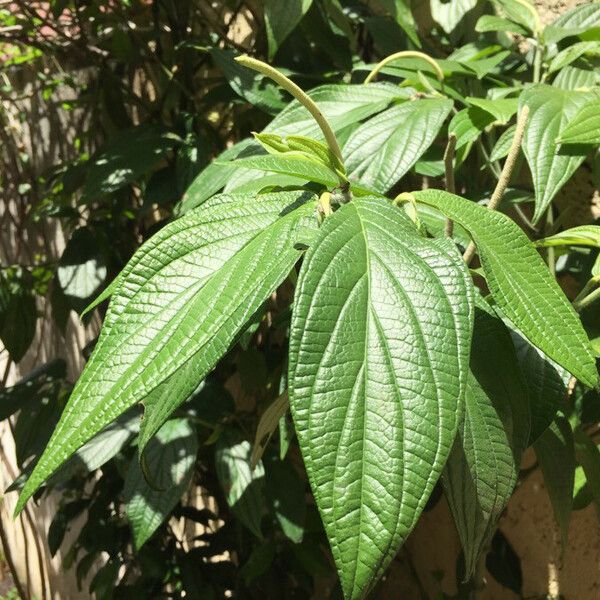
Plant Overview
Often called the Rough-leaved Pepper, this tropical shrub is a hardy wild relative of the black pepper found in your kitchen cupboard. Native to the lush rainforests of Central and South America, it is a "pioneer species," meaning it is often one of the first plants to grow back after a forest has been cleared. It tells a story of resilience, filling empty spaces with its distinctive, sandpaper-textured foliage.
🔍 How to Identify
- 🍃 Sandpaper Texture: The most striking feature is the upper surface of the leaf, which feels rough and bristly to the touch (the word hispidum actually means "bristly" in Latin).
- 📐 Asymmetrical Base: If you look at the base of the leaf where it meets the stem, you’ll notice it is "lopsided"—one side of the leaf blade attaches slightly lower than the other.
- 🕯️ Candle-like Spikes: Instead of traditional flowers with petals, it produces narrow, creamy-white or pale green spikes that stand upright like tiny candles among the leaves.
🏡 In Your Garden
- ☁️ Humidity is Vital: Coming from the Neotropics, this plant craves moisture in the air. In a home setting, it thrives in a bathroom with a window or near a humidifier; otherwise, its leaf tips may turn brown and brittle.
- 🌳 The Understory Habit: In the wild, it grows beneath the canopy. This means it hates direct, scorching afternoon sun. It prefers "dappled" light, mimicking the way sunlight filters through tree branches.
- 🪴 Sensitive Roots: It prefers to stay consistently moist but never soggy. It is prone to root rot if left in standing water, so a pot with excellent drainage is a must.
⚠️ Safety & Toxicity
- 🐾 Pet Caution: While not famously toxic, members of the Piper genus contain essential oils and pungent compounds that can cause drooling or stomach upset if chewed on by cats or dogs.
- 👶 Child Safety: The rough texture of the leaves can be mildly abrasive to sensitive skin. It’s best kept out of reach of toddlers who might find the "sandpaper" leaves curious to touch or taste.
✨ Fun Fact
In many Latin American cultures, Piper hispidum is grouped under the name "Matico." It has a long history in traditional medicine, where the leaves are crushed and applied to minor cuts because they contain natural compounds that help stop bleeding and act as a mild antiseptic.

Detailed Care Instructions
To grow Piper hispidum plants, follow these steps:
- Obtain seeds: You can buy Piper hispidum seeds from a reputable seed supplier or collect them from mature fruits if you have access to a plant. The seeds are small and shiny.
- Soil and pot: Piper hispidum prefers well-draining soil with a neutral pH. Fill a small pot with a mixture of perlite, vermiculite, and peat moss to provide adequate drainage.
- Planting the seeds: Sow the seeds in the pot, covering them lightly with a thin layer of soil or vermiculite. Use a spray bottle to moisten the soil.
- Germination: Place the pot in a warm, well-lit location, ideally with temperatures between 75-85°F (24-29°C). It may take around 2-3 weeks for the seeds to germinate. Ensure consistent moisture levels, but avoid overwatering, as it can lead to root rot.
- Transplanting: Once the seedlings have grown a few inches tall and have a few sets of leaves, they can be transplanted to larger pots. Choose pots that allow for root expansion and use a well-draining soil mix.
- Light and temperature: After transplanting, place the plants in a well-lit area with partial shade. They require bright but indirect sunlight. Maintain the temperature between 70-85°F (21-29°C).
- Watering: Water the plants regularly to keep the soil moist but not waterlogged. Avoid letting the soil dry out completely, as it may cause stress to the plants.
- Fertilizer: Feed the plants every 4-6 weeks with a balanced liquid fertilizer. Follow the instructions on the fertilizer packaging for the correct dosage. Organic fertilizers like compost can also be used.
- Pruning: As the plants grow, regularly prune them to maintain a bushy shape. You can pinch off the tips to encourage branching and fuller growth.
- Pests and diseases: Monitor the plants for any signs of pests such as aphids or spider mites. Treat any infestations promptly using organic pest control methods. Additionally, avoid overwatering to prevent root issues.
By following these steps, you should be able to successfully grow Piper hispidum plants.

Place in a bright room that is sun drenched almost all day. Or directly in a south-facing window.

To properly water this plant, it is important to take into consideration the environment in which it is located. The frequency and amount of water needed depends on several factors such as the temperature, humidity, and light levels. It is important not to over-water, as this can cause root rot and ultimately lead to the plant's demise. The soil should be moist, but never waterlogged. A good way to determine if the plant needs water is to check the soil with a finger. If it feels dry an inch or two down, it is time to water. It is also important to use room temperature water because cold water can shock the roots. When watering, it is best to do so slowly, allowing the soil to absorb the water before adding more. Any excess water that drains from the pot should be discarded, as it can lead to standing water in the saucer or container which can also lead to root rot.
- Choose a balanced fertilizer with equal proportions of nitrogen, phosphorus, and potassium.
- Apply the fertilizer once every four weeks during the growing season, which is typically spring and summer.
- Use a standard dose of fertilizer as indicated on the packaging for the size of the plant.
- Make sure to water the plant thoroughly before and after fertilizing to prevent burning the roots.
- Avoid fertilizing the plant in the fall and winter, as it is dormant during this period.
- If the plant is showing signs of slow growth, yellowing leaves, or poor health, consider fertilizing with a higher nitrogen formulation.
- Always follow the manufacturer's instructions and use protective gear when handling fertilizer.
The recommended soil for Piper Hispidum is a well-draining soil that is rich in organic matter and has a pH range of 5.5 to 7.5. The soil should be loose and airy to allow for proper root growth and nutrient uptake. It is important to avoid heavy soils that retain moisture as this can lead to root rot. Adding compost or organic matter to the soil can help increase the nutrient content and improve soil structure. Additionally, it is best to avoid using soils that contain high levels of salt as this plant is sensitive to salt build-up.
Propagation of this plant can be done through several methods. The easiest method is through stem cuttings. Take a stem cutting measuring about 10-15 cm in length from a healthy plant. Remove the leaves from the bottom part of the stem and dip the cut end in rooting hormone powder. Plant the cutting in a pot filled with well-draining soil and cover it with a plastic bag to maintain humidity levels. Place the pot in a bright but indirect light and water regularly. Within a few weeks, roots should start to form and new growth will appear.
Another method of propagation is through seed. Collect mature seeds from a healthy plant and sow them in a pot filled with well-draining soil. Cover the pot with a plastic bag to maintain humidity levels and place the pot in a bright but indirect light. Water the soil regularly until the seedlings start to grow. Once the seedlings have grown large enough, transfer them to individual pots.
Propagation can also be done through layering. Select a long and flexible stem of a healthy plant and bend it towards the soil. Use a sharp knife to slightly wound the stem where it touches the soil. Cover the wounded area with soil and weigh it down with a stone or a stake. Water the soil regularly to maintain moisture levels. Within a few weeks, roots will start to grow from the wounded area and a new plant will develop. Cut the new plant from the parent plant and transfer it to its own pot.








