Plant Overview
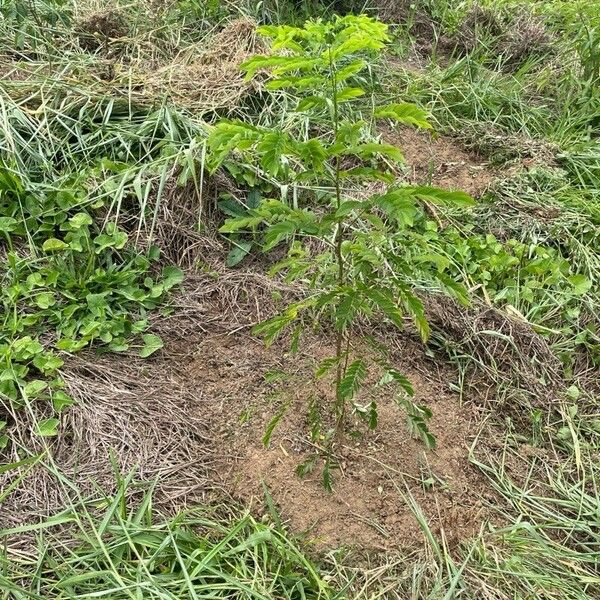
Often called the Angico-Branco or sometimes the Brazilian Feather Tree, Piptadenia paniculata is a striking member of the legume family that brings the lush texture of the South American rainforest to open landscapes. It is celebrated for its incredibly delicate, fern-like foliage that captures the light, earning it a reputation as a "graceful pioneer" in its native Brazil.
🔍 How to Identify
- 🍃 Feathery Foliage: The leaves are bipinnate, meaning they are divided into dozens of tiny, narrow leaflets that give the tree an airy, soft appearance similar to a giant fern.
- ☁️ Cloud-like Blooms: It produces "panicles" (long, branching clusters) of small, white or cream-colored flowers that look like tiny fuzzy pom-poms or soft brushes.
- 🪵 Textured Bark: The trunk features a greyish, slightly rough bark that becomes more furrowed with age, and young branches may occasionally sport small, hooked prickles.
🏡 In Your Garden
- 🌱 Soil Architect: Like many of its cousins in the Fabaceae family, this plant is a nitrogen-fixer. It hosts special bacteria in its roots that pull nitrogen from the air and put it into the earth, essentially "self-fertilizing" and improving the soil for neighboring plants.
- ☀️ Space and Light: This is a fast-growing species that craves the spotlight. It needs full sun and plenty of vertical space, as it prefers to spread its canopy high and wide rather than staying a compact shrub.
⚠️ Safety & Toxicity
- 🌵 Physical Warning: While the plant is not known for being chemically toxic, many Piptadenia species are "armed." The stems and trunk can have small, sharp prickles that can cause painful scratches if you brush against them.
- 🐾 Pet & Child Safety: There is no widespread evidence of high toxicity, but as with many pod-bearing plants, the seeds should not be ingested. The main risk is physical injury from the thorns, so it is best planted away from high-traffic pathways.
✨ Fun Fact
The specific name paniculata describes the plant's "panicles"—a botanical term for its highly branched flower clusters. When in full bloom, the tree appears to be draped in a fine, floral mist, a sight that makes it a favorite for local pollinators like bees and butterflies.

Detailed Care Instructions







