Plant Overview
Known as a resilient relative of the "sensitive plants," Piptadenia retusa is a textured shrub hailing from the sun-drenched landscapes of South America. It is often admired for its delicate, airy foliage that mimics the look of a fine fern, providing a soft aesthetic to rugged environments. In its native habitat, it acts as a hardy survivor, thriving in scrublands and forest edges where other plants might struggle.
🔍 How to Identify
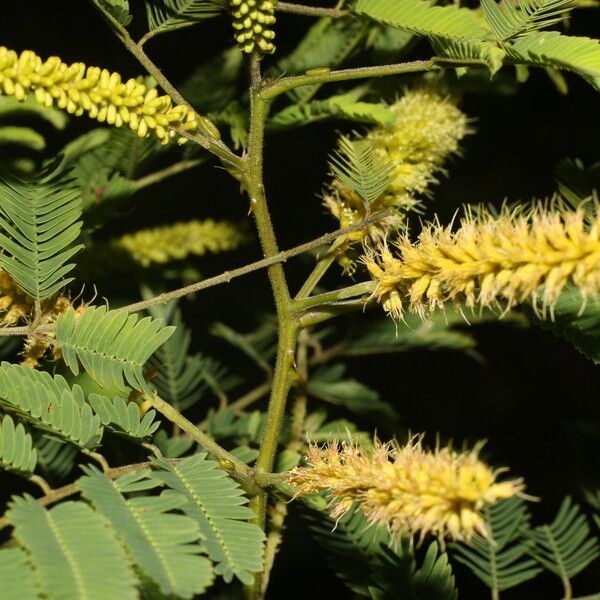
- 🍃 Feathery Foliage: The leaves are bipinnate, meaning they branch out into hundreds of tiny, oval-shaped leaflets that give the plant a light, "see-through" appearance.
- 🦴 Textured Bark: As the plant matures, its branches develop a grayish, slightly fissured bark, occasionally sporting small, defensive prickles.
- ☁️ Cylindrical Blooms: It produces small, pale yellow or creamy-white flowers that gather in elongated, spike-like clusters, resembling tiny bottlebrushes.
🏡 In Your Garden
- 🌱 Nitrogen Powerhouse: Like many members of the legume family, this plant has a symbiotic relationship with soil bacteria. it "fixes" nitrogen from the air into the soil, acting as a natural fertilizer for its neighbors.
- ☀️ Drought Specialist: Once established, it is incredibly tough. It prefers well-draining soil and can handle long periods without water, making it a great choice for low-maintenance or "wild" garden corners.
⚠️ Safety & Toxicity
- 🐾 Pet & Child Caution: While not widely listed as a primary poison, many species in the Piptadenia genus contain bioactive alkaloids. It is best to treat this plant as ornamental and prevent ingestion by pets or curious children.
- 🌵 Prickle Warning: Be careful when pruning; the small thorns along the stems can cause minor scratches if handled without gloves.
✨ Fun Fact
The genus name Piptadenia is derived from the Greek words for "falling gland," referring to the tiny, nectar-secreting glands on the leaf stalks that sometimes drop off as the leaf matures!

Detailed Care Instructions








