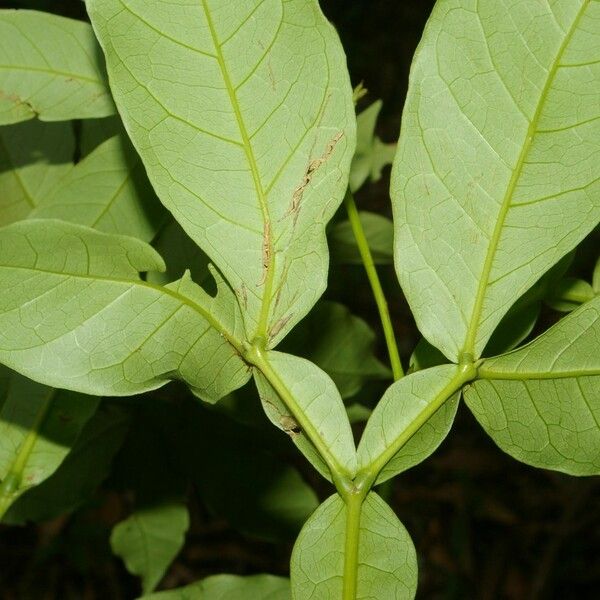
Plant Overview
Known for its whimsical, spiraling seed pods that resemble delicate jewelry, Pithecellobium furcatum is a tropical gem of the legume family. Often found in the lush landscapes of Central and South America, this woody beauty is a close relative of the "Blackbead" and "Monkeypod" trees. It is beloved by collectors for its fine, lace-like foliage and its ability to thrive in coastal or tropical environments where other plants might struggle.
🔍 How to Identify
- 🌿 The Foliage: It features bipinnate, feathery leaves that give the plant a soft, airy appearance. The leaflets are small and arranged symmetrically along the stem.
- 🌸 The "Pom-Pom" Blooms: The flowers are spectacular clusters of long, creamy-white or pale-pink stamens that look like tiny starbursts or powder puffs.
- 🌀 The Coiled Pods: Its most defining feature is the seed pod, which twists and curls into a spiral as it matures. When the pods split open, they reveal dark, shiny seeds often nestled against a bright red or orange interior.
🏡 In Your Garden
- 🌱 Tropical Toughness: This plant is exceptionally hardy in warm climates and is surprisingly salt-tolerant, making it a favorite for seaside gardens. It prefers well-draining soil and can handle periods of drought once its root system is established.
- ✂️ Structural Growth: Because it can grow into a large shrub or a small, spreading tree, it requires occasional pruning to maintain a tidy shape. Its naturally "forked" branching pattern (which gives it the name furcatum) makes it an excellent candidate for large-scale bonsai enthusiasts.
⚠️ Safety & Toxicity
- 🌵 Sharp Defense: Caution is advised when handling, as many members of this genus possess small, sharp spines or thorns hidden at the base of the leaves.
- 🐾 Pet Safety: While not famously lethal, the seeds and pods contain saponins and tannins that can cause stomach upset if ingested by curious cats or dogs. It is best kept as an ornamental rather than an edible-adjacent plant.
✨ Fun Fact
The genus name Pithecellobium literally translates from Greek to "Ape's Earring," a nod to the way the curled seed pods dangle from the branches like eccentric pieces of jungle jewelry!

Detailed Care Instructions








