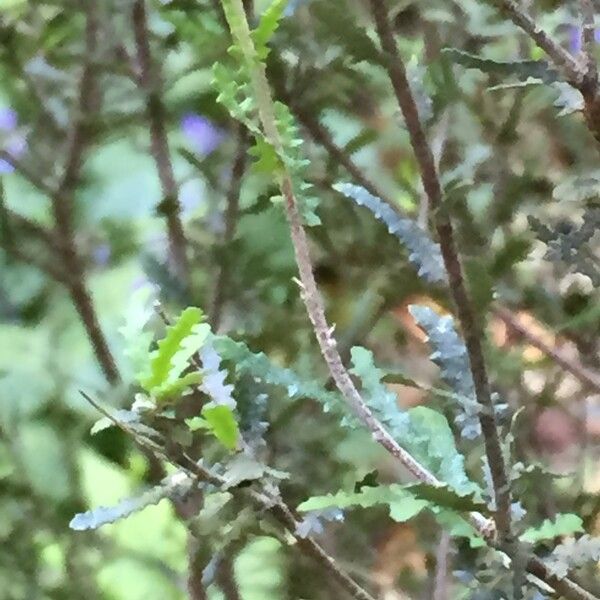
Plant Overview
Often called the "Wire-matted Pittosporum," this New Zealand native looks like a living, tangled sculpture of bronze and deep green. It is a classic example of "divaricating" growth, where branches zig-zag and interlaced to form a protective thicket. While it might look like a pile of copper wire from a distance, it is a sophisticated survivor that evolved alongside giant, flightless birds.
🔍 How to Identify
- 🎋 Branching Pattern: The most striking feature is its "divaricating" habit—the stems grow in a wide-angled, zig-zag fashion, creating a dense, springy interior.
- 🍃 The Leaves: Extremely small (often less than 1cm), dark green to brownish leaves. When the plant is young, the leaves are often deeply lobed, but they become smoother and more oval as the plant matures.
- 🌸 Hidden Blooms: In late spring, it produces tiny, solitary flowers that are so dark they look nearly black. They are easily missed by the eye but can be found by their sweet, honey-like scent in the evening.
🏡 In Your Garden
- 🏗️ Architectural Texture: Because of its stiff, interlaced structure, it is a favorite for minimalist or "Zen" gardens. It provides a unique "see-through" texture that contrasts beautifully against broad-leafed plants.
- 🌬️ Resilient Shelter: This plant is an expert at handling wind and cold. Its dense outer layer of twigs protects the inner foliage, making it an excellent choice for a low-maintenance, wind-resistant hedge or screen.
- ✂️ Slow Growth: It is a slow-growing shrub, meaning it holds its shape for a long time without needing constant pruning. It is also a popular candidate for "cloud pruning" or bonsai.
⚠️ Safety & Toxicity
- 🐾 Pet Safety: Generally considered non-toxic to humans and pets, though it is always best to discourage chewing.
- 🧴 Internal Chemistry: Like many in the Pittosporum family, the plant contains saponins. These are poorly absorbed by the body but can cause mild stomach upset if large quantities of leaves or seeds are eaten.
- 🐝 Pollinator Friendly: The dark flowers are highly attractive to native bees and moths, making it a safe and productive addition to a biodiversity-focused garden.
✨ Fun Fact
The "messy" zig-zag look of Pittosporum divaricatum was actually a defense mechanism! Scientists believe this growth habit evolved to prevent the now-extinct Moa (a giant, flightless bird) from easily reaching and stripping the leaves. The plant effectively turned itself into a cage to protect its own foliage.

Detailed Care Instructions
To grow Pittosporum divaricatum (AKA Wild Irishman or Cheesewood), follow these steps:
- Climate: Pittosporum divaricatum prefers a temperate coastal climate. It can tolerate light frosts and some heat, but not extreme temperatures. Plant it in a location with partial shade or full sun.
- Soil: The plant needs well-draining soil that is rich in organic matter. Amend the soil with compost or well-rotted manure before planting.
- Propagation: Pittosporum divaricatum can be grown from seeds or cuttings. If growing from seeds, soak them in warm water for 24 hours before sowing. Sow seeds in pots or trays filled with potting mix, and keep them moist until germination.
- Planting: Dig a hole slightly larger than the root ball of the plant. Place the plant in the hole, backfill with soil, and firm it gently around the base of the plant. Water thoroughly after planting.
- Watering: Pittosporum divaricatum prefers regular watering. Water deeply and allow the soil to dry slightly between waterings. Avoid overwatering, as this can lead to root rot.
- Mulching: Apply a layer of mulch around the base of the plant to help retain moisture and suppress weed growth. Use organic mulch like wood chips or straw.
- Pruning: Pittosporum divaricatum responds well to pruning, and regular pruning can help maintain a compact shape and promote bushier growth. Prune in late winter or early spring before new growth begins.
- Fertilizing: Feed the plant with a balanced, slow-release fertilizer in spring. Follow the manufacturer's instructions for application rates.
- Pest and Disease Control: Pittosporum divaricatum is generally resistant to pests and diseases. However, keep an eye out for aphids, scale insects, and powdery mildew. Use appropriate organic pest control methods if needed.
- Maintenance: Regularly check for any dead or damaged branches and remove them promptly. Monitor the plant for signs of stress, and address any issues promptly to ensure healthy growth.
By following these guidelines, you should be able to successfully grow Pittosporum divaricatum into a healthy and attractive plant.

Place in a bright room that is sun drenched almost all day. Or directly in a south-facing window.

To properly water Pittosporum divaricatum, it is important to understand the specific requirements of this plant. Here are the steps to watering it effectively:
1. Observe the soil moisture: Check the moisture level of the soil regularly. Insert your finger about an inch deep into the soil near the base of the plant to evaluate the moisture content.
2. Watering frequency: Pittosporum divaricatum prefers well-draining soil, so it is crucial not to let the soil become waterlogged. Water the plant deeply when the top inch of soil feels dry. This frequency may vary depending on factors such as soil type, climate, and the size of the plant.
3. Watering method: Use a watering can or a hose with a gentle spray attachment to water the plant. Avoid using strong water pressure that could damage the delicate branches.
4. Water at the base: Direct the water towards the base of the plant, aiming for the soil rather than the leaves. This ensures that the water reaches the root zone where it is needed most.
5. Slow and thorough watering: Water the plant slowly to allow the water to be absorbed by the soil without causing runoff. Thoroughly saturate the soil around the plant to ensure it is adequately hydrated.
6. Mulching: Apply a layer of organic mulch around the base of the plant, leaving a gap between the mulch and the stem. This helps retain moisture in the soil and reduces water evaporation, meaning you may need to water the plant less frequently.
7. Adjust watering as per weather conditions: During hot, dry weather, Pittosporum divaricatum may require more frequent watering. Conversely, in cooler and wetter periods, reduce the watering frequency to avoid waterlogged conditions.
Remember that while water is essential for Pittosporum divaricatum, overwatering can be detrimental to the plant's health. Monitoring the soil moisture level and adjusting watering accordingly will help ensure the plant thrives.
To fertilize Pittosporum Divaricatum plants, follow these instructions:
- Choose a slow-release, balanced fertilizer with equal ratios of nitrogen (N), phosphorus (P), and potassium (K) such as a 10-10-10 or 14-14-14 formulation.
- Start fertilizing in late winter or early spring, just before the growing season begins.
- Dilute the fertilizer according to the package instructions, usually about 1 tablespoon per gallon of water.
- Water the plant thoroughly a day before applying fertilizer.
- Apply the diluted fertilizer around the base of the plant, ensuring even distribution. Avoid getting the fertilizer on the leaves or stem to prevent burning the plant.
- Gently work the fertilizer into the top layer of soil using a small garden rake or your hands.
- Water the plant immediately after fertilizing to help the nutrients penetrate the soil.
- Repeat the fertilization process every four to six weeks during the growing season, which typically lasts from spring to early fall.
- Adjust the frequency and dosage of fertilization based on the plant's response, but avoid over-fertilization as it can harm the plant.
- Monitor the plant for any signs of nutrient deficiency or excess, such as yellowing leaves or stunted growth. Adjust the fertilizer regimen accordingly.
Remember to always read and follow the specific instructions provided on your chosen fertilizer product, as different brands may have slightly different application rates and guidelines.
When selecting soil for Pittosporum divaricatum, it is important to consider the plant's specific needs in terms of texture, composition, and drainage. Pittosporum divaricatum prefers a neutral to slightly acidic soil pH. The ideal soil should be well-draining, allowing excess water to pass through easily and preventing waterlogging which could lead to root rot.
In terms of texture, Pittosporum divaricatum thrives in loamy or sandy soils that provide adequate drainage while retaining enough moisture for the plant's uptake. The soil should not be too heavy or compacted, as this can hinder root growth and cause waterlogged conditions.
To enhance the soil structure and improve drainage, adding organic matter such as compost or well-rotted manure can be beneficial. This helps to retain moisture while improving soil aeration. Additionally, amending the soil with perlite or sand can aid in promoting drainage and preventing waterlogging.
It is important to regularly monitor the soil moisture level and ensure it doesn't become excessively dry or saturated. Proper watering practices, such as allowing the soil to dry slightly between waterings, will help maintain optimal conditions for Pittosporum divaricatum growth.
When planting Pittosporum divaricatum, it is recommended to incorporate the appropriate soil amendments, ensure proper drainage, and maintain adequate moisture levels for the best results.
Pittosporum divaricatum is a perennial plant that can be easily propagated through various methods. Here is a detailed description of how to propagate this plant:
- Propagation by Seeds:
- Collect ripe seeds from the plant during the autumn season.
- Prepare a pot with fertile and well-draining soil mixed with sand.
- Sow the seeds on the soil surface and lightly cover them with a thin layer of soil.
- Place the pot in a warm, bright location but away from direct sunlight.
- Keep the soil moist by watering regularly, ensuring it doesn't become waterlogged.
- Germination should occur in 2-4 weeks, and once the seedlings are large enough to handle, they can be transplanted into individual pots.
- Collect ripe seeds from the plant during the autumn season.
- Propagation by Cuttings:
- Take 4-6 inch stem cuttings from healthy, mature plants during spring or early summer.
- Remove any lower leaves, leaving only the top few intact.
- Dip the cut end in a rooting hormone powder to enhance root growth.
- Prepare a pot filled with a well-draining, moistened potting mix.
- Insert the cutting into the potting mix, making sure at least two nodes are buried in the soil.
- Place the pot in a warm, bright location with indirect sunlight.
- Mist the cutting regularly to maintain humidity and prevent drying out.
- After 6-8 weeks, the cutting should have developed sufficient roots and can be transplanted into a larger pot or the garden.
- Take 4-6 inch stem cuttings from healthy, mature plants during spring or early summer.
- Propagation by Division:
- Choose a mature Pittosporum divaricatum plant that has multiple stems.
- In early spring, carefully dig up the plant and gently separate the roots into smaller sections, making sure each section has a sufficient root system.
- Trim any damaged or excessively long roots.
- Replant each divided section in individual pots or desired planting locations, ensuring the roots are properly covered with soil.
- Water the divisions thoroughly and keep them in a shaded area to reduce stress and encourage root development.
- Once the divisions establish themselves with new growth, they can be transplanted to their permanent growing positions.
By following these propagation methods, you can easily propagate Pittosporum divaricatum and expand your collection of this beautiful plant.
- Choose a mature Pittosporum divaricatum plant that has multiple stems.








