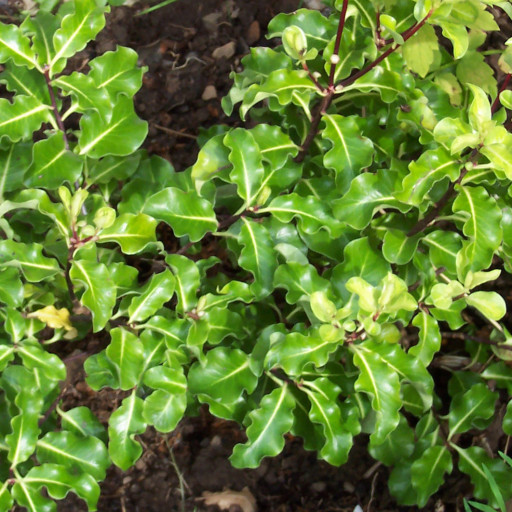
Plant Overview
Commonly known as Kohuhu or Black Matipo, this New Zealand native is a darling of the landscaping world. It is beloved for its striking contrast between its "inky" black stems and shimmering, pale green foliage. In its homeland, it’s often used as a majestic screen or hedge, bringing a sophisticated, structural elegance to any backyard or coastal garden.
🔍 How to Identify
- 🌿 The Foliage: Small, oval leaves with distinctively wavy or "crinkled" edges. They usually have a high-gloss finish that reflects sunlight beautifully.
- 🖋️ The Stems: One of its most famous features is its thin, wiry stems that are a deep, dark purple-black, making the green leaves appear to float in mid-air.
- 🪻 The Blooms: In late spring, it produces tiny, bell-shaped flowers that are so dark purple they look almost black. They are easy to miss by sight but impossible to miss by scent!
🏡 In Your Garden
- ✂️ The Perfect Screen: Kohuhu is a fast grower and responds incredibly well to pruning. Because it naturally maintains a dense, columnar shape, it’s the go-to choice for gardeners wanting a "living wall" that doesn't look too chunky.
- 🌬️ Coastal Warrior: This plant is surprisingly tough against salty sea breezes and wind. While it thrives in well-drained soil, it dislikes "wet feet"—if the roots sit in water for too long, the plant may suddenly drop its leaves in protest.
⚠️ Safety & Toxicity
- 🐾 Pet Safety: Pittosporum tenuifolium is generally considered non-toxic to dogs and cats. However, it contains saponins (natural soap-like compounds), which can cause mild stomach upset if large quantities are munched on.
- 👶 Human Caution: While not high-risk, the berries and leaves are not edible. It's best to keep curious toddlers from snacking on the small, sticky seeds found in the seed pods.
✨ Fun Fact
The name Pittosporum translates literally from Greek as "Sticky Seed." If you crack open one of its woody seed capsules, you'll find the seeds are coated in a thick, resinous goo that was historically used by Māori people as a scent or even a form of birdlime!

Detailed Care Instructions
| Soil Ph | Acid, Alkaline, Neutral |
| Humidity | Normal |
| Lighting | Full Sun |
| Toxicity | Non-Toxic |
| Soil Type | Clay, Dry, Well-Drained, Sandy |
| Bloom Time | Spring |
| Difficulty | Medium |
| Plant Type | Shrub, Evergreen |
| Mature Size | 13-26 Ft. |
| Native Area | Japan |
| Temperature | 12°C - 25°C |
| Sun Exposure | Full Sun To Full Shade |
| Hardiness Zones | 9-10 |
To grow Pittosporum tenuifolium (also known as Kohuhu), you can follow these steps:
- Soil: Pittosporum tenuifolium prefers well-draining soil. It can tolerate a range of soil types but thrives in fertile, slightly acidic soil. Make sure the soil is enriched with compost or organic matter before planting.
- Sunlight: Pittosporum tenuifolium prefers full sun to partial shade. Choose a location with at least 4-6 hours of direct sunlight per day.
- Planting: Dig a hole that is twice as wide and deep as the plant's root ball. Place the plant in the hole and backfill with soil, gently firming it around the roots. Ensure the plant is planted at the same depth it was originally in the container.
- Watering: After planting, water the plant thoroughly to settle the soil and help the roots establish. Water deeply and regularly, especially during dry spells or hot summers. Once the plant is established, it can tolerate some drought, but regular watering will promote healthier growth.
- Mulching: Apply a layer of organic mulch around the base of the plant, leaving a few inches of space around the stem. Mulching helps retain moisture, regulates soil temperature, and suppresses weeds.
- Pruning: Prune Pittosporum tenuifolium to shape and manage its size. After the plant flowers in spring, you can prune it lightly to maintain a desired shape. Avoid severe pruning as it may affect the plant's growth and health.
- Fertilizing: Feed the plant with a balanced organic fertilizer in spring before new growth starts. Follow the instructions on the fertilizer package for the proper application rate.
- Pests and diseases: Pittosporum tenuifolium is generally a hardy plant with few pest or disease issues. However, keep an eye out for common garden pests like aphids, mealybugs, or scales. In case of infestation, treat with appropriate organic insecticides or remove the pests by hand.
By following these steps, you should be able to grow and maintain a healthy Pittosporum tenuifolium plant in your garden.

Place in a bright room that is sun drenched almost all day. Or directly in a south-facing window.

To water this plant, fill a watering can or hose with room temperature water. Gently pour the water around the base of the plant, making sure to thoroughly soak the soil. Avoid getting water directly on the leaves or foliage, as this can encourage fungal growth. Water the plant once a week or when the top inch of soil feels dry to the touch. In hotter or drier climates, the plant may need more frequent watering. It is important not to overwater the plant, as this can lead to root rot.
To fertilize this plant, apply a balanced, slow-release fertilizer with equal amounts of nitrogen, phosphorus, and potassium in early spring or fall. Use a well-draining soil mix and be sure to water thoroughly after fertilizing. Avoid over-fertilizing, as this can damage the plant roots. Follow the manufacturer's instructions for dosage and frequency of fertilization.
Pittosporum Tenuifolium plant prefers a well-draining soil that is rich in organic matter. The ideal soil pH range should be between 6.0 and 7.5. A soil mixture that is composed of equal parts of sand, perlite, and peat moss would provide the plant with the ideal growing environment. Additionally, adding a slow-release fertilizer to the soil mixture can aid in providing the nutrients that the plant needs for healthy growth. The soil should also retain moisture without being waterlogged, meaning the plant should not be overwatered. Overall, a well-aerated soil that is rich in nutrients would be the best for the Pittosporum Tenuifolium plant.
To propagate this plant, take several stem cuttings from healthy parent plants using a clean, sharp tool. Cuttings should be about 6 inches long and have several leaves. Remove the lower leaves and dip the cut end in rooting hormone. Then, plant the cutting in a well-draining pot filled with a mix of soil and perlite or vermiculite. Water thoroughly and cover with a plastic bag to create a mini greenhouse. Keep the cutting in a warm, bright area, but out of direct sunlight. After several weeks, the cutting should start to grow roots and new leaves. Once the plant has established a good root system, it can be transferred to a larger pot or planted outdoors in a sunny, well-drained location.
Common pests of the kōhūhū include Scale insect, mealybugs, spider mites, aphids. Make a habit of checking your kōhūhū frequently for pests so that any infestations can be caught and managed early.








