Plant Overview
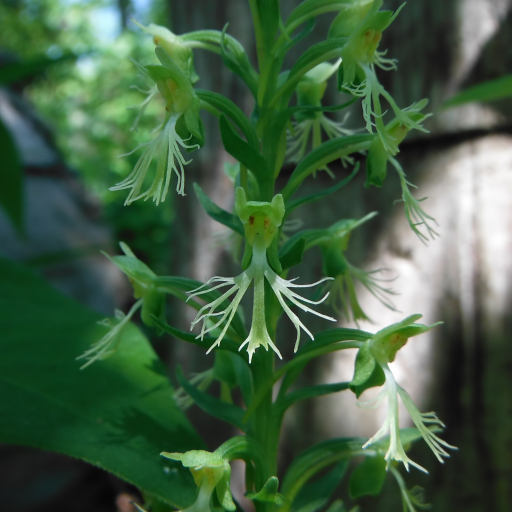
Often called the Ragged Fringed Orchid, this plant is one of nature’s most intricate lace-makers. Found across eastern North America, it looks less like a typical garden flower and more like a collection of delicate, shredded silk hanging from a tall, sturdy stalk. It is a master of camouflage, blending its pale green hues into the surrounding meadow grasses until you catch a glimpse of its ghostly, "torn" petals.
🔍 How to Identify
- ✂️ The "Ragged" Lip: Each individual flower features a prominent lower lip deeply divided into three lobes, which are further shredded into long, thread-like fringes.
- 🌸 Flower Spike: The plant produces a terminal cluster (raceme) that can hold up to 40 small, greenish-white flowers, blooming from late spring to mid-summer.
- 🍃 Lance-Shaped Leaves: The leaves are long, narrow, and alternate up the stem, clasping it tightly at the base and becoming smaller as they reach the flowers.
🏡 In Your Garden
- 💧 Wetland Specialist: This orchid is a "hydrophile," meaning it loves water. In the wild, it is almost exclusively found in wet meadows, bogs, and marshy thickets. It acts as a natural indicator of a healthy, damp ecosystem.
- 🍄 Fungal Friendships: Like most wild orchids, it has a "do not disturb" sign on its roots. It relies on a symbiotic relationship with specific soil fungi (mycorrhizae) to survive. Because of this complex bond, it almost never survives being transplanted into a standard garden bed.
⚠️ Safety & Toxicity
- 🐾 Pet & Child Safety: Platanthera lacera is generally considered non-toxic to humans and common household pets. It does not contain the harsh alkaloids found in more dangerous woodland plants.
- 🛡️ Legal Protection: While not poisonous, it is "ecologically fragile." In many regions, wild orchids are protected by law. Picking the flowers prevents seed production, which can lead to the local extinction of the colony.
✨ Fun Fact
🌙 Night Shift Pollination: This orchid is specifically designed for hawkmoths. To save energy, it saves its sweetest fragrance for the evening. When the sun goes down, it releases a heavy scent to guide long-tongued moths to its nectar spurs in the dark.

Detailed Care Instructions

Place in a bright room that is sun drenched almost all day. Or directly in a south-facing window.

Some plants require more regular watering than others, which should be done every few days. It's critical to maintain the soil moist all of the time. The water requirements of the same plant placed in pots with varying sizes will differ. Because the water in the smaller pot evaporates faster than the water in the larger pot, it will require more watering. Regardless of pot size, the surface should constantly be maintained moist.








