Plant Overview
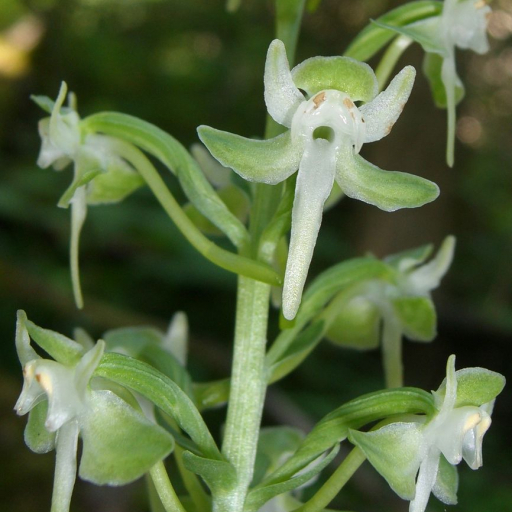
Commonly known as the Large Round-leaved Orchid or the "Dinner Plate Orchid," this botanical gem is a true phantom of the northern deep woods. It is famous for its two massive, succulent leaves that hug the forest floor like green satellite dishes. In mid-summer, it sends up a ghostly, pale flowering spike that seems to glow in the dim light of the understory, making it a prized find for hikers and native plant enthusiasts.
🔍 How to Identify
- 🍃 The Leaves: Features exactly two large, leathery, and perfectly circular leaves that lie flat against the ground. They are often shiny and can grow up to 10 inches in diameter.
- 🍦 The Flowers: A tall, leafless stalk holds a cluster of translucent white to greenish-white flowers that look remarkably like tiny, soaring birds.
- 🏹 The Nectar Spur: Each individual flower has a remarkably long, curved "tail" or spur (up to 1.5 inches long) that holds nectar at the very tip.
🏡 In Your Garden & Habitat
- 🌲 Deep Shade Specialist: This orchid is a "climax species," meaning it only thrives in old, undisturbed forests—usually under the heavy shade of hemlocks, pines, or maples.
- 🍄 Fungal Friendships: Like most wild orchids, it has a complex relationship with soil fungi. It cannot survive without specific microscopic partners in the dirt, which is why it almost never survives being transplanted into a backyard garden.
- 🕯️ Nocturnal Attraction: The flowers are specifically designed to be seen at night. They emit a faint fragrance in the evening to attract long-tongued Hawkmoths, their primary pollinators.
⚠️ Safety & Toxicity
- ✅ Status: Non-toxic and safe for contact.
- 🚫 Look But Don't Touch: While not poisonous to pets or humans, this plant is extremely sensitive. Stepping on the ground near its root system or picking the flowers can kill the plant. In many regions, it is a protected species, and removing it from the wild is often illegal.
✨ Fun Fact
The nectar spur of the Large Round-leaved Orchid is so long that only specific moths can reach the treat. As the moth pushes its head into the flower, the plant’s pollen packets (pollinia) are designed to stick specifically to the moth's eyes, ensuring they are carried to the next flower!

Detailed Care Instructions
To grow Platanthera orbiculata, commonly known as the round-leaved orchid, follow these steps:
- Find suitable growing conditions: Platanthera orbiculata is typically found in moist, shady habitats such as bogs, wet meadows, and damp woodlands. Mimicking these conditions will yield the best results.
- Obtain seeds or seedlings: You can purchase Platanthera orbiculata seeds or seedlings from local native plant nurseries or online sources. Alternatively, you can harvest seeds from existing plants, if allowed and if you have the necessary knowledge.
- Prepare the soil: Platanthera orbiculata prefers a loose, well-draining soil mix. Add organic matter like compost or peat moss to improve drainage and moisture retention.
- Planting seeds or seedlings:
- If using seeds, scatter them on the soil surface and lightly press them into the ground. Do not bury them deeply, as they require light to germinate.
- If using seedlings, dig small holes at an appropriate distance from each other and gently place the seedlings into the holes, making sure the roots are covered with soil.
- If using seeds, scatter them on the soil surface and lightly press them into the ground. Do not bury them deeply, as they require light to germinate.
- Watering: Platanthera orbiculata requires consistent moisture, so keep the soil damp but not waterlogged. Provide water regularly, especially during dry spells.
- Shading: Platanthera orbiculata prefers shade or dappled sunlight. Position the plants where they receive partial shade to protect them from direct sunlight, especially during the hottest part of the day.
- Mulching: Apply a layer of organic mulch, such as wood chips or straw, around the plants. This helps retain soil moisture, regulate temperature, and suppress weed growth.
- Maintenance: Platanthera orbiculata is a relatively low-maintenance plant. Remove any weeds that compete with the plant for resources. Avoid using herbicides near the plants, as they can harm or kill them.
- Propagation: To increase the number of plants, you can divide mature clumps of Platanthera orbiculata. Gently dig up the clump, separate the bulbs or rhizomes, and replant them in suitable locations.
- Support: Depending on the height of the plant, you may need to provide support, such as stakes or cages, to prevent bending or breaking during strong winds or heavy rain.
Remember that Platanthera orbiculata is a native orchid species, so it is important to ensure its conservation. Avoid harvesting plants from the wild, adhere to ethical collecting practices, and follow any applicable local regulations or permits.

Place in a window with dappled sun or a spot in the middle of a room. Or directly in a window facing west or east.

To water this plant, it is important to first consider its habitat and natural watering patterns. This plant typically grows in wetlands, bogs, and other moist environments. Therefore, it requires consistently moist soil in order to thrive.
When watering this plant, be sure to water deeply so that the roots receive moisture. It is better to water deeply and less frequently rather than shallowly and frequently, as the latter can encourage shallow root growth and make the plant more susceptible to drought.
It is also important to make sure the soil is not waterlogged, as this can lead to root rot and other problems. Ensure proper drainage in the pot or planting area by using well-draining soil mixtures and ensuring there are holes in the bottom of the pot or planting area.
During periods of drought or hot weather, consider providing extra water to keep the soil consistently moist. However, be mindful not to overwater, as this plant can also be sensitive to excess moisture.
Overall, when watering Platanthera Orbiculata, it is important to maintain consistently moist soil while also ensuring proper drainage.
To fertilize this plant, use a balanced fertilizer with an N-P-K ratio of 10-10-10. Apply the fertilizer once every two weeks during the growing season, which is typically from spring to fall. Do not over-fertilize, as this can damage the plant. Always follow the manufacturer's instructions for the specific fertilizer you are using.
It is recommended to use a well-draining soil mixture for this plant. The soil should be rich in organic matter and have a slightly acidic pH level. A mixture of peat moss, perlite, and vermiculite can be used to prepare the soil. The plant prefers a moist but not waterlogged soil, so it is important to ensure proper drainage in the pot or planting location. Adding a layer of mulch around the plant can help to retain moisture in the soil and also suppress weed growth.
Propagation of this plant species can be done through several methods, including seed propagation, division, and stem cuttings.
Seed propagation involves collecting mature seeds from the parent plant, which can then be sown into a suitable potting mix and kept moist until germination occurs. This method is best done during the fall season.
Division involves separating the parent plant into smaller sections, each of which can be replanted into a new pot with fresh soil. This method is ideal for established plants that have grown large or have become too crowded.
Stem cuttings entails taking a stem from the parent plant and placing it into a rooting hormone, before planting it into a potting mix. This method requires careful attention to ensure that the cutting remains moist and protected from too much direct sunlight.
Regardless of the chosen propagation method, it is important to ensure that the newly propagated plant is given proper care and attention, including regular watering, fertilizing, and monitoring for pests and disease.








