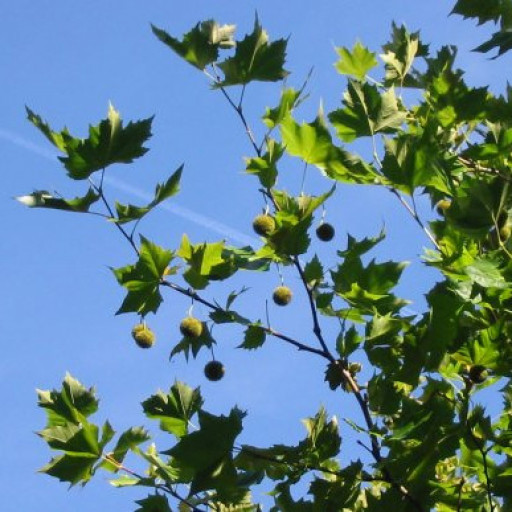
Plant Overview
Often called the "Grand Shadow-Maker" or the "Camouflage Tree," the Platanus genus includes the majestic London Plane and the American Sycamore. These titans of the plant world are famous for their patchy, multicolored bark that looks like a hand-painted landscape. Historically, they have been the center of town squares for centuries, providing deep, cooling shade for philosophers and weary travelers alike.
🔍 How to Identify
- 🎨 Puzzle-Piece Bark: The most iconic feature is the exfoliating bark that peels away in large flakes, revealing a creamy white, olive-green, and tan mosaic underneath.
- 🍁 Leaf Structure: Look for broad, hand-shaped (palmate) leaves that resemble maples but grow in an alternate pattern along the branch rather than opposite each other.
- 🧶 Buttonball Fruit: In autumn and winter, identify them by the dense, fuzzy seed spheres that hang from long stalks like natural Christmas ornaments.
🏡 In Your Garden
- 🏗️ Root Ambition: These trees have incredibly aggressive, thirsty roots. Always plant them far away from sidewalks, sewer lines, or home foundations, as they are known to lift concrete and invade pipes in search of moisture.
- 🌬️ Wind Resistance: Because of their sturdy trunk and flexible branches, they are excellent "windbreak" trees. They prefer deep, rich soil but are famously tolerant of the compacted, poor-quality soil often found in urban environments.
⚠️ Safety & Toxicity
- ✅ Pet Friendly: Platanus species are generally considered non-toxic to dogs, cats, and horses, making them a safe choice for large rural properties.
- 🌬️ The "Sycamore Cough": The tiny, stiff hairs (trichomes) found on young leaves and seed balls can become airborne. This often causes respiratory irritation or "Sycamore Cough" for gardeners and hikers during the spring and fall.
✨ Fun Fact
The London Plane tree became the world’s most popular city tree because it is a "self-cleaning" plant. By shedding its bark in large plates, it effectively sloughs off the soot, grime, and pollutants that would otherwise clog the pores of its trunk and suffocate it!

Detailed Care Instructions
To grow a Platanus plant, follow these steps:
- Choose a suitable location: Platanus plants prefer full sun to partial shade. Ensure that the chosen spot has well-draining soil.
- Planting: Dig a hole that is twice as wide and slightly deeper than the root ball. Place the plant in the hole, ensuring that the top of the root ball is level with the soil surface. Backfill the hole with soil, gently firming it around the plant.
- Watering: Provide ample water after planting to help the plant establish its roots. Water regularly, keeping the soil consistently moist but not overly saturated. Reduce watering during periods of rainfall or in cooler weather.
- Fertilization: Apply a balanced slow-release fertilizer in early spring to provide essential nutrients for growth. Follow the instructions on the fertilizer packaging for the appropriate amount and frequency of application.
- Pruning: Prune Platanus plants in late winter or early spring to remove any dead, damaged, or crossing branches. This will promote healthy growth and maintain an attractive shape.
- Mulching: Apply a layer of organic mulch around the base of the plant to help retain moisture, suppress weed growth, and regulate soil temperature. Ensure the mulch is not directly touching the trunk to prevent rot.
- Monitor for pests and diseases: Regularly inspect the plant for signs of pests, such as aphids or scale insects, and treat accordingly. Platanus plants can also be susceptible to fungal diseases like powdery mildew. If detected, apply appropriate treatments as recommended by a local garden center or horticulturist.
- Winter care: Platanus plants are generally hardy, but young plants may benefit from winter protection, such as wrapping the trunk with burlap to prevent damage from freezing temperature.
By following these guidelines, you should be able to successfully grow a Platanus plant. Remember to provide proper care and attention to ensure its healthy growth.

Place in a bright room that is sun drenched almost all day. Or directly in a south-facing window.

To properly water this plant, you should aim to keep the soil consistently moist but not waterlogged. It is important to let the top layer of soil dry out slightly before watering again to avoid overwatering. When watering, it is best to do so deeply and thoroughly, allowing the water to soak in and reach the root system. Avoid getting the foliage wet as this can lead to disease. During hotter, drier weather, you may need to water more frequently to prevent drought stress.
To fertilize the Platanus plant, start by selecting a balanced fertilizer with an equal ratio of nitrogen, phosphorus, and potassium (NPK). Follow these instructions:
- Choose a suitable time to fertilize, preferably in late winter or early spring before the start of active growth.
- Dilute the fertilizer according to the package instructions. You can typically mix it with water to make a liquid solution.
- Apply the fertilizer evenly around the drip line of the plant. Avoid directly applying it to the trunk or foliage.
- Gently work the fertilizer into the soil using a rake or garden fork. Be careful not to damage the plant's roots.
- Water the area thoroughly after fertilizing, ensuring the nutrients penetrate into the soil.
- Monitor the plant's response to the fertilizer. If needed, you can repeat the process during the growing season, following the same application guidelines.
Remember to always refer to the specific guidelines provided with your chosen fertilizer for optimal usage instructions.
When planting the Platanus plant, it is important to consider the type of soil that will provide the best growth conditions. The ideal soil for this plant should be well-drained and rich in nutrients, with a pH range of 6.0 to 7.5. Avoid heavy clay soils as they can lead to poor drainage and root rot. Additionally, sandy soils may dry out too quickly and cause stress on the plant. It is recommended to add organic matter such as compost or well-rotted manure to the planting hole to improve soil structure and fertility. Regular fertilization during the growing season with a balanced fertilizer will also help maintain healthy growth.
To propagate the Platanus plant, you can utilize a method called asexual propagation. One common technique is known as stem cuttings:
- Start by selecting a healthy and mature Platanus plant from which you'll take the cuttings. Make sure the plant is disease-free and free from any distress signs.
- Use sharp and clean pruning shears to cut a stem from the plant. The stem cutting should be around 6 inches long and should have at least 2-3 leaf nodes.
- Remove the lower leaves from the stem cutting, leaving only a few leaves at the top.
- Optionally, you can also apply a rooting hormone to the cut end of the stem, as it can help promote root growth. However, this step is not essential.
- Prepare a well-draining potting mix or a mixture of peat moss and perlite to plant the stem cutting. Make sure it is moist but not waterlogged.
- Create a hole in the potting mix using your finger or a pencil and gently insert the stem cutting into it. Ensure that at least one or two leaf nodes are below the soil level.
- Press the potting mix around the stem cutting to hold it in place and provide stability.
- Place the pot in a warm location that receives bright, indirect sunlight. Platanus plants prefer warm temperatures for successful rooting.
- Mist the cutting regularly to maintain humidity levels around it. Covering the pot with a plastic bag or a clear plastic dome can also help in retaining moisture.
- Keep an eye on the moisture level of the potting mix and ensure it remains consistently moist but not waterlogged. Over-watering can lead to the development of fungal diseases.
- After a few weeks, gently tug on the stem cutting to check for resistance. If you feel resistance, it indicates that roots have started to develop.
- Once the cutting has developed a healthy root system, you can transplant it into a larger pot or directly into the ground, depending on your preference.
By following these steps, you should be able to successfully propagate your Platanus plant through stem cuttings.







