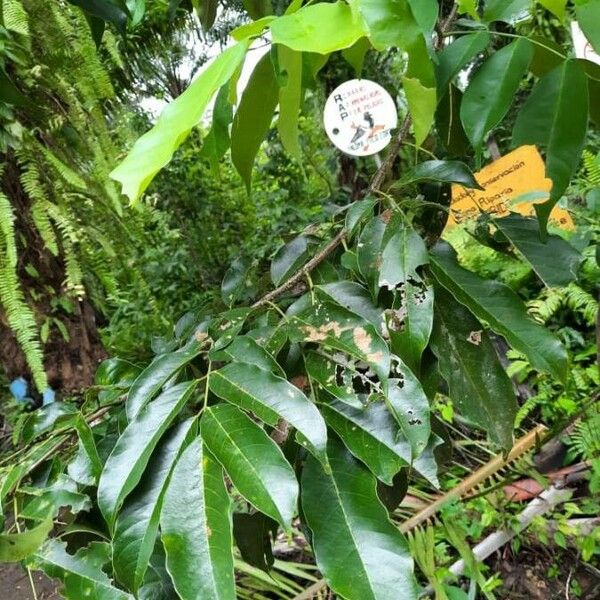
Plant Overview
Known as the Quira or Cristóbal, Platymiscium pinnatum is a majestic Central American hardwood tree that bridges the gap between industrial utility and botanical beauty. In the wild, it is celebrated for its breathtaking explosion of golden-yellow flowers, while in the artisan world, it is prized for producing some of the most vibrant, orange-red timber on the planet.
🔍 How to Identify
- 🍃 Pinnate Foliage: True to its name, the leaves are "pinnate," meaning they grow in pairs along a central stalk, resembling a green feather.
- 🌼 Pea-like Blooms: It produces dense clusters of bright yellow, fragrant flowers that look remarkably like those of a sweet pea, coating the canopy in gold during the dry season.
- 📦 Winged Seed Pods: Unlike typical round beans, its seeds are encased in flat, papery "samaras" that allow them to spin through the air like little helicopters when they fall.
🏡 In Your Garden
- 🌱 Soil Enrichment: As a member of the legume family, this tree is a "pioneer species." It has a symbiotic relationship with soil bacteria to fix nitrogen, actually improving the quality of the earth where it grows.
- ☀️ Tropical Tenacity: It is a sun-lover that thrives in tropical climates. It is highly drought-tolerant once established but requires significant space; this is not a plant for a small backyard, as its root system is as robust as its crown.
⚠️ Safety & Toxicity
- ✅ Low Risk: There are no recorded instances of Platymiscium pinnatum being toxic to humans or common household pets through touch or proximity.
- 🪵 Sawdust Sensitivity: While the living tree is safe, woodworkers should be cautious. The fine dust created when sanding its timber is known to be a respiratory irritant and can cause skin reactions in sensitive individuals.
✨ Fun Fact
The wood of this tree, often called Macacauba, is so resonant and dense that it is a preferred material for high-end musical instruments. If you’ve ever heard the rich, warm tones of a professional marimba or a boutique acoustic guitar, there is a good chance you were listening to the "voice" of the Quira tree!

Detailed Care Instructions
To grow Platymiscium pinnatum (also known as Macaranduba or Maka) plants, follow these steps:
- Climate: Determine if the climate in your region is suitable for growing Platymiscium pinnatum. This tree species is native to tropical regions, so it thrives in warm and humid conditions.
- Selecting Plant: Obtain a healthy Platymiscium pinnatum plant either from a local nursery or by sourcing seeds. Look for a plant with strong stems and vibrant green leaves.
- Pot or Planting Site: If growing in a pot, choose a container with good drainage holes. Ensure the pot is large enough to accommodate the plant's growing root system. If growing in the ground, choose a well-drained location with abundant sunlight.
- Soil Requirements: Platymiscium pinnatum prefers well-draining soil that is rich in organic matter. A mixture of compost, sand, and loam works well. Make sure the soil pH is around neutral, ideally between 6 to 7.5.
- Planting: Dig a hole in the soil or place the plant gently into the pot. Ensure the depth is suitable for the plant's root ball. Backfill the hole or pot with soil, gently pressing it down to eliminate any air pockets. Water thoroughly after planting.
- Watering: Platymiscium pinnatum requires regular watering, especially during dry periods. Water the plant deeply, allowing the soil to dry slightly between waterings. Be careful not to overwater, as this can lead to root rot.
- Fertilizing: Apply a balanced slow-release organic fertilizer during the growing season (spring and summer). Follow the instructions on the fertilizer packaging for the appropriate dosage. Avoid fertilizing during winter months.
- Pruning: Prune Platymiscium pinnatum to maintain its shape and remove any dead or diseased branches. Pruning can be done in late winter or early spring.
- Protection: Protect young plants from extreme heat or cold by providing shade or covering during extreme weather conditions.
- Pests and Diseases: Monitor the plant for pests like aphids or scale insects. Treat with appropriate insecticides if necessary. Platymiscium pinnatum is generally resistant to diseases.
- Patience: Platymiscium pinnatum is a slow-growing tree, so be patient as it takes time to reach its full potential. With proper care and attention, it will grow into a beautiful and rewarding plant.
Remember to check local regulations and consider potential invasiveness concerns before planting Platymiscium pinnatum, especially if you live in a non-native region.
Platymiscium Pinnatum plant requires a moderate amount of water, but it is essential to avoid over-watering it. The best way to determine when to water the plant is by checking the top inch of soil. If the soil feels dry to the touch, it's time to water the plant. Before watering, make sure that the pot has good drainage to avoid waterlogging.
Water the plant thoroughly until water drains from the holes at the bottom of the pot. Avoid letting the plant sit in standing water as it could lead to root rot. It's also important to note that the plant is drought-tolerant, so it's better to underwater than overwater.
In the winter months, when the plant is dormant, it requires less water. You can reduce the watering frequency to once every two weeks or when the soil feels dry.
Overall, Platymiscium Pinnatum plant should have a consistent watering routine, and it's important to pay attention to its specific needs. Too much or too little water can harm the plant's growth and health.
To properly fertilize the Platymiscium Pinnatum plant, begin by selecting a balanced fertilizer that contains equal parts nitrogen, phosphorus, and potassium. Dilute the fertilizer at the recommended concentration, keeping in mind the age and size of the plant. Apply the fertilizer to the soil around the base of the plant, being careful not to get any on the leaves. Water the plant thoroughly after fertilizing, and adjust the frequency of fertilization based on the plant's growth rate. Avoid over-fertilizing, as this can damage the plant's roots. Periodically test the soil to ensure that the pH is within the optimal range for the plant's growth.
When planting Platymiscium Pinnatum, it is recommended to use a well-draining soil that is rich in organic matter. The soil should have a pH between 5.5 and 6.5 and should be moist but not waterlogged. A mixture of peat moss, perlite, and compost would be ideal for this plant. It is important to avoid using soils that are high in clay, as they can hold too much water and cause root rot. Additionally, adding a slow-release fertilizer or organic matter to the soil can help provide nutrients for the plant. Prior to planting, it is recommended to loosen the soil and remove any rocks or debris to create a good environment for the roots to grow.
There are several ways to propagate Platymiscium Pinnatum plants. One method is through seed propagation. To do this, collect mature seeds from the plant and remove any debris or flesh from them. Soak the seeds in water for a couple of hours and then plant them in a mixture of sand and soil. Keep the soil moist and warm, and the seeds should sprout in a few weeks.
Another method is through stem cuttings. Take stem cuttings from the parent plant and make sure they have at least two or three nodes, where leaves attach to the stem. Dip the cuttings in rooting hormone and plant them in a well-draining potting mix. Cover the pot with plastic and keep the soil moist and warm. The cuttings should root in a few weeks.
Grafting is another method of propagation. Choose a healthy rootstock and a scion, which is a piece of the parent plant. Make a diagonal cut on both the rootstock and the scion, and then place them together, making sure that the cambium layers align. Wrap the graft with grafting tape and keep the plant in a warm, humid area until it starts to grow.
Lastly, air layering is a method of propagation that involves creating a new plant on the parent plant. Identify a healthy branch and make a small incision in the bark. Place a rooting hormone on the wound and wrap it with damp sphagnum moss. Wrap the moss with plastic and secure it with tape. Keep the moss moist and wait for roots to form. When roots have formed, cut the branch below the moss, and plant it in soil.








