Plant Overview
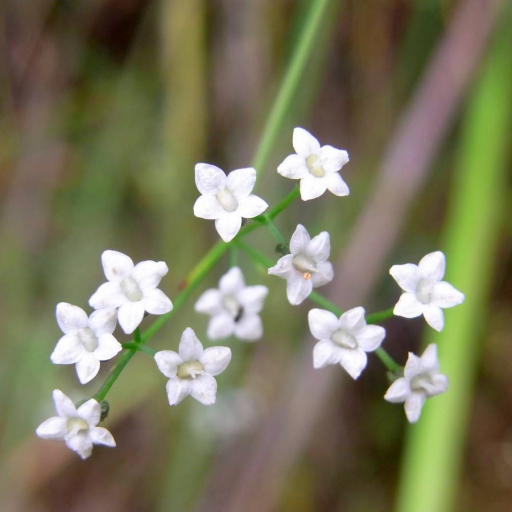
Known affectionately as "Narrow-leaf Platysace" or "Carrot Tops," this dainty Australian native brings a touch of fine-textured elegance to the rugged bushland. Found primarily along the sandy coastlines and sandstone ridges of Eastern Australia, it is often seen dancing in the breeze, looking far more fragile than its hardy nature suggests. It belongs to the same family as carrots and parsley, a lineage visible in its intricate, lacy flower clusters.
🔍 How to Identify
- 🌿 The Foliage: True to its name (linearifolia), the leaves are very thin, needle-like, and narrow. They are arranged alternately along wiry, reddish-brown stems.
- ❄️ The Blooms: It produces tiny, star-shaped white flowers grouped into flat-topped clusters called "umbels." From a distance, these look like delicate puffs of sea foam.
- 📏 Growth Habit: It typically grows as a small, upright shrub, reaching about 1 to 1.5 meters in height, often maintaining a neat, airy silhouette.
🏡 In Your Garden
- 🏖️ Soil Preferences: This plant is a specialist in "starvation" soils. It thrives in sandy, well-drained, or rocky substrates. If planted in heavy clay, it may struggle with root rot, as it demands excellent drainage.
- 🛡️ Hardiness: Once established, it is remarkably drought-tolerant. It has evolved to survive the harsh Australian sun, making it a perfect candidate for a low-maintenance "water-wise" or coastal garden.
- 🐝 Pollinator Magnet: The nectar-rich white umbels are a favorite for native bees, hoverflies, and small butterflies, making it an excellent choice for a biodiversity-focused backyard.
⚠️ Safety & Toxicity
- 🟢 Status: Generally considered non-toxic.
- 🐾 Details: There are no documented reports of Platysace linearifolia being harmful to humans, cats, or dogs. However, because it is part of the Apiaceae family (which contains some look-alike toxic species in the wild), it is always best to discourage pets or children from grazing on ornamental plants.
✨ Fun Fact
Despite its delicate appearance, the Platysace genus has a history of traditional use; the tubers of some related species were historically used as a food source by Indigenous Australians, who referred to them as "Native Parsnips" or "Yams."

Detailed Care Instructions








