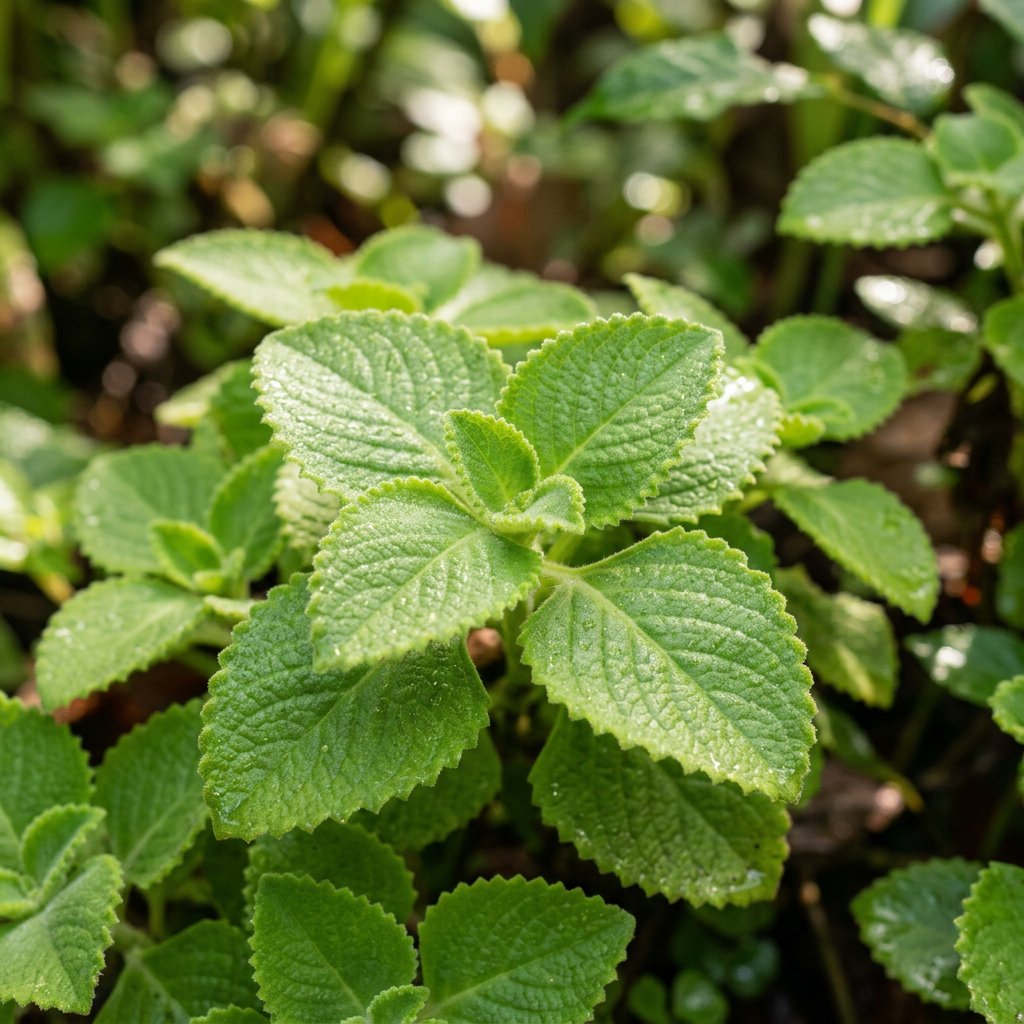
Plant Overview
Often called the "Mexican Mint," "Cuban Oregano," or "Indian Borage," this plant is a bit of a global traveler with a confusing list of nicknames. Despite its names, it is actually a semi-succulent perennial native to Southern and Eastern Africa. It is beloved by gardeners for its incredibly pungent, spicy fragrance—reminiscent of oregano and thyme—and its velvety, plush leaves that feel like living felt.
🔍 How to Identify
- 🌿 The Foliage: The leaves are thick, succulent, and heart-shaped with distinct scalloped (crenated) edges. They are covered in a fine, soft "fuzz" or downy hair that gives them a grayish-green, matte appearance.
- 👃 The Scent: When bruised or even lightly touched, the leaves release a powerful, spicy aroma that bridges the gap between oregano, mint, and pungent sage.
- 🌱 The Stems: The plant features square-shaped stems (a hallmark of the Mint family) that are quite brittle and snap easily, especially as the plant becomes heavy with growth.
🏡 In Your Garden
- ☀️ The Light Balance: While it loves brightness, its succulent-like leaves can scorch in intense, direct midday sun. It thrives best in "dappled" light or morning sun, which keeps the foliage lush and prevents the colors from washing out.
- 💧 Drought Strategy: Because it stores water in its thick leaves and stems, it is very forgiving if you forget to water it. In fact, overwatering is its biggest enemy; it prefers its soil to dry out significantly between drinks to avoid root rot.
- ✂️ Growth Habit: This plant has a sprawling, creeping habit. It is perfect for hanging baskets where it can trail over the edges, but be mindful that its stems are fragile—place it away from high-traffic areas where people or pets might bump into it.
⚠️ Safety & Toxicity
- 🐾 Pet Warning: While used as a culinary herb by humans in many cultures, it contains essential oils (like carvacrol) that are toxic to cats, dogs, and horses. Ingestion can lead to vomiting, diarrhea, or skin irritation in pets.
- 👶 Human Use: For humans, it is generally considered safe and is often used in cooking or traditional teas. However, because the leaves are so hairy and pungent, some individuals with sensitive skin may experience mild contact dermatitis when handling the plant extensively.
✨ Fun Fact
In parts of Southeast Asia, this plant is known as the "Soup Mint." Because the flavor is so intense, a single leaf is often enough to season an entire pot of black bean soup or a meat stew, earning it a reputation as one of the most powerful herbs in the gardener’s toolkit!

Detailed Care Instructions
| Humidity | Normal |
| Lighting | Full Sun |
| Difficulty | Medium |
| Temperature | 18°C - 25°C |
| Hardiness Zones | 9B - 11B |
To grow Plectranthus amboinicus, also known as Cuban oregano or Indian borage, you can follow these steps:
- Obtain a healthy plant: Either purchase a Plectranthus amboinicus plant from a nursery or obtain a cutting from an established plant.
- Select a suitable location: Plectranthus amboinicus prefers bright, indirect sunlight, so choose a spot in your garden or near a window that receives partial shade or filtered sunlight.
- Prepare the soil: Ensure the soil is well-draining and loose. You can add compost or well-rotted manure to improve its fertility and drainage.
- Planting process:
a. If using a cutting, remove the lower leaves from the stem, leaving only a few on the top.
b. Plant the cutting or the established plant in a hole slightly larger than the root ball.
c. Gently firm the soil around the plant and water thoroughly.
- Watering: Water the plant regularly to keep the soil moist but not waterlogged. Always allow the top inch of soil to dry out before watering again. Plectranthus amboinicus is relatively drought-tolerant, but it prefers consistent moisture.
- Fertilization: Apply a balanced, water-soluble fertilizer every 4-6 weeks during the growing season, following the instructions on the fertilizer package. This will help promote healthy growth.
- Pruning: Trim the plant regularly to encourage branching and bushier growth. This will also help to promote dense foliage. You can use the pruned leaves for culinary purposes or dry them for future use.
- Pests and diseases: Plectranthus amboinicus is generally resistant to pests and diseases. However, if you notice any issues, such as aphids or fungal infections, treat them accordingly using organic pest control methods or appropriate fungicides.
- Harvesting: Once the plant has grown sufficiently, you can start harvesting leaves as needed. Pinch off the leaves individually or cut off a few stems at a time. Make sure to leave enough leaves on the plant to maintain its health and growth.
By following these guidelines, you should be able to successfully grow Plectranthus amboinicus in your garden or even as a potted plant indoors.

Place in a bright room that is sun drenched almost all day. Or directly in a south-facing window.

To water this plant, first check the soil moisture level by sticking your finger into the soil up to your first knuckle. If it feels dry, it's time to water. Use room temperature water and pour it slowly into the soil until water starts to drain out of the bottom of the pot. Avoid overwatering, as this plant prefers slightly drier soil. Wait until the soil dries out slightly before watering again. It's important to not let the soil completely dry out, as this can damage the plant's roots. Additionally, make sure the pot has drainage holes to allow excess water to escape.
To fertilize this plant, use a balanced fertilizer with equal amounts of nitrogen, phosphorus, and potassium. Apply the fertilizer once a month during the growing season, which is typically from spring to fall. Be sure to follow the instructions on the fertilizer label carefully and avoid over-fertilizing, as this can damage the plant. Additionally, it is important to water the plant well before and after fertilizing to help the nutrients penetrate the soil and reach the roots.
The ideal soil for this particular plant should be well-draining and loamy with a slightly acidic to neutral pH. It should also have good water retention properties to ensure the plant has access to adequate moisture. A blend of perlite, peat moss, and sand can be used as a good potting mix. When planting in the ground, it is important to amend the soil with organic matter such as compost or aged manure to improve its fertility and structure. Avoid using heavy clay soils or soils that are prone to waterlogging. Additionally, it is recommended to fertilize the plant with a balanced fertilizer regularly to ensure it receives all the necessary nutrients for optimal growth.
To propagate this plant, you will need to take a stem cutting from the mother plant. The cutting should have at least three nodes and be approximately 5-7 inches in length. Remove the lower leaves from the stem, leaving only a few on the top. Dip the cut end of the stem in rooting hormone powder.
Prepare a pot with well-draining potting soil. Create a hole and gently insert the stem cutting, ensuring that the bottom nodes are in contact with the soil. Water the cutting thoroughly and cover it with a transparent plastic bag or dome to create humidity.
Place the pot in bright, indirect sunlight and keep the soil moist but not waterlogged. After a few weeks, you should begin to see new growth emerging from the stem cutting. Once the new plant has established roots and is growing well, you can transplant it into a larger pot or outside.
Common pests of the indian borage include Mealybugs, spider mites, thrips. Make a habit of checking your indian borage frequently for pests so that any infestations can be caught and managed early.








