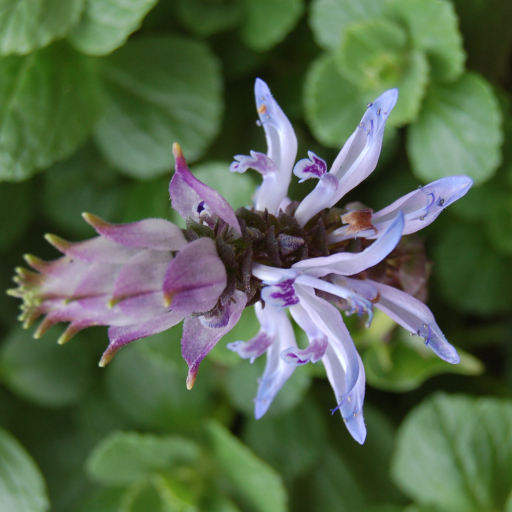
Plant Overview
Known widely as the "Scaredy Cat Plant," this hardy, succulent-like herb acts as the garden’s unofficial security guard. Native to Southern and Eastern Africa, it is famous—or perhaps infamous—for its pungent aroma, which many claim can ward off unwanted feline and canine visitors. While its effectiveness as a repellent is a subject of much debate among gardeners, its resilient nature and vibrant purple blooms make it a fascinating, low-maintenance addition to sunny borders.
🔍 How to Identify
- 🍃 Fleshy Foliage: The leaves are thick, rounded, and grey-green, often covered in soft, fine hairs that give them a velvety, succulent-like texture.
- 🪻 Flower Spikes: In late summer and autumn, it produces attractive, upright spikes of small, tubular flowers in shades of lavender, electric blue, or violet.
- 👃 The "Skunk" Scent: The most distinct identifier is the smell; when brushed against or heated by the sun, the foliage releases a strong, musky odor reminiscent of a skunk or dog urine.
🏡 In Your Garden
- ☀️ Sun-Loving Sentinel: This plant thrives in full sun, which actually helps intensify the oils responsible for its scent. If you are using it as a deterrent, place it in the brightest spots, but keep it away from windows or patio seating where the smell might bother you!
- 🌵 Drought Resilience: Because of its semi-succulent leaves, it is incredibly forgiving of neglect. It prefers gritty, well-draining soil and hates "wet feet," making it perfect for rock gardens or forgotten corners.
- ✂️ Spreading Habit: It has a low-growing, sprawling growth habit. It works well as a groundcover, but it can become "leggy" if left unpruned. Simply pinch back the stems to encourage a bushier, more compact shape.
⚠️ Safety & Toxicity
- 🐾 Pet Safety: Despite its reputation for repelling animals, the plant is generally considered non-toxic to dogs and cats if accidentally nibbled.
- 🧤 Skin Sensitivity: The essential oils and fine hairs on the leaves can cause mild skin irritation or "contact dermatitis" in some people. It is a good idea to wear gloves when pruning or transplanting.
✨ Fun Fact
The Plectranthus caninus was the center of a massive marketing craze in the late 1990s. It was sold under the trademarked name "Coleus Canina" and billed as a "miracle plant" that would create an invisible "no-go zone" for pets, leading to it being one of the most talked-about plants in gardening history!

Detailed Care Instructions
To grow Plectranthus Caninus (also known as Coleus Canina or "scaredy cat" plant), follow these steps:
- Choose the ideal location: Plectranthus Caninus thrives in bright, indirect sunlight. Select a location that receives partial sun or dappled shade.
- Planting medium: Use well-draining soil or potting mix for planting. Ensure the soil is rich in organic matter.
- Watering: Provide regular watering but do not overwater. It is crucial to keep the soil moist but not waterlogged.
- Temperature: Plectranthus Caninus prefers temperatures between 60-75°F (15-24°C). Protect the plant from frost or extreme temperatures.
- Fertilizer: Apply a balanced liquid fertilizer once a month during the growing season (spring and summer). Do not fertilize during winter.
- Pruning: Trim the plant regularly to encourage bushy growth and maintain its shape. Pinch off the tips of the stems to promote branching.
- Propagation: Plectranthus Caninus can be propagated through stem cuttings. Take 4-5 inch long cuttings, remove the lower leaves, and plant them in moist soil or water until roots develop.
- Pests: This plant is known for its repellent effect on cats and dogs. However, it can still be susceptible to some pests like aphids or whiteflies. Monitor the plant regularly and treat any infestations accordingly.
- Container gardening: If growing in a container, choose a pot with drainage holes and ensure it is large enough to accommodate the plant's root system.
- Overwintering: In colder climates, bring Plectranthus Caninus indoors before the first frost. Place it near a sunny window and reduce watering during the dormant period.
By following these guidelines, you can successfully grow Plectranthus Caninus and enjoy its unique features.

Place in a window with dappled sun or a spot in the middle of a room. Or directly in a window facing west or east.

Plectranthus Caninus is a plant that needs regular watering to thrive. To water this plant, you should start by checking the soil moisture level. Insert your finger about an inch into the soil around the plant to see if it feels moist or dry. If the soil feels dry, it is time to water the plant.
When watering Plectranthus Caninus, it is important to avoid getting water on the leaves as it can cause damage. Instead, direct the water towards the soil around the base of the plant. Use a watering can or hose with a gentle sprayer attachment.
Make sure to give the plant a thorough watering, so the soil becomes evenly moist. However, be careful not to overwater the plant, as this can lead to root rot. Once you have finished watering, allow any excess water to drain away from the pot or ground.
In general, Plectranthus Caninus requires watering about once a week. However, this can vary depending on factors such as temperature, humidity levels, and soil type. Always keep an eye on the soil moisture and adjust your watering schedule as needed to ensure the plant stays healthy and hydrated.
To fertilize this plant, use a balanced fertilizer with equal parts nitrogen, phosphorus, and potassium. Apply the fertilizer once every two weeks while the plant is actively growing. Dilute the fertilize in water as per the manufacturer's instructions and apply it to the soil around the plant, being careful not to get any on the leaves. Avoid fertilizing during winter months or when the plant is in a state of dormancy.
Plectranthus Caninus plant requires well-drained soil with good fertility. The ideal soil pH level is between 6.0 and 7.5. It also prefers soil that is rich in organic matter and has good moisture retention. The soil should not be waterlogged, as this can lead to fungal diseases and root rot. It is recommended to add compost or other organic materials to the soil before planting to help improve soil quality. Additionally, regular fertilization with a balanced fertilizer is important for the plant's growth and development.
To propagate this plant, first select a healthy stem that is at least 4 inches long and has several sets of leaves. Using a sharp gardening tool, make a clean cut at a 45-degree angle just below a leaf node. Remove any leaves that are close to the cut area.
Fill a small container with a well-draining soil mix, such as a combination of perlite and peat moss. Water the soil thoroughly before making a hole in the center for the stem.
Dip the cut end of the stem into rooting hormone powder to encourage root growth. Gently insert the stem into the soil, making sure it is standing straight and that the bottom of the stem is in contact with the soil.
Place the container in a warm, bright, and humid location. Cover it with a plastic bag or a clear plastic dome to create a greenhouse effect. Keep the soil moist but not waterlogged, and mist the stem occasionally to maintain humidity.
Within a few weeks, new roots should start growing from the bottom of the stem, and tiny new leaves may appear. At this stage, remove the plastic covering and gradually acclimate the young plant to normal environmental conditions.
Once the roots have developed sufficiently, the plant can be transplanted to a larger container or directly into the ground. Keep it well-watered and avoid direct sunlight until it is established.
Common pests of the dog hullwort include Mealybugs, spider mites, thrips. Make a habit of checking your dog hullwort frequently for pests so that any infestations can be caught and managed early.








