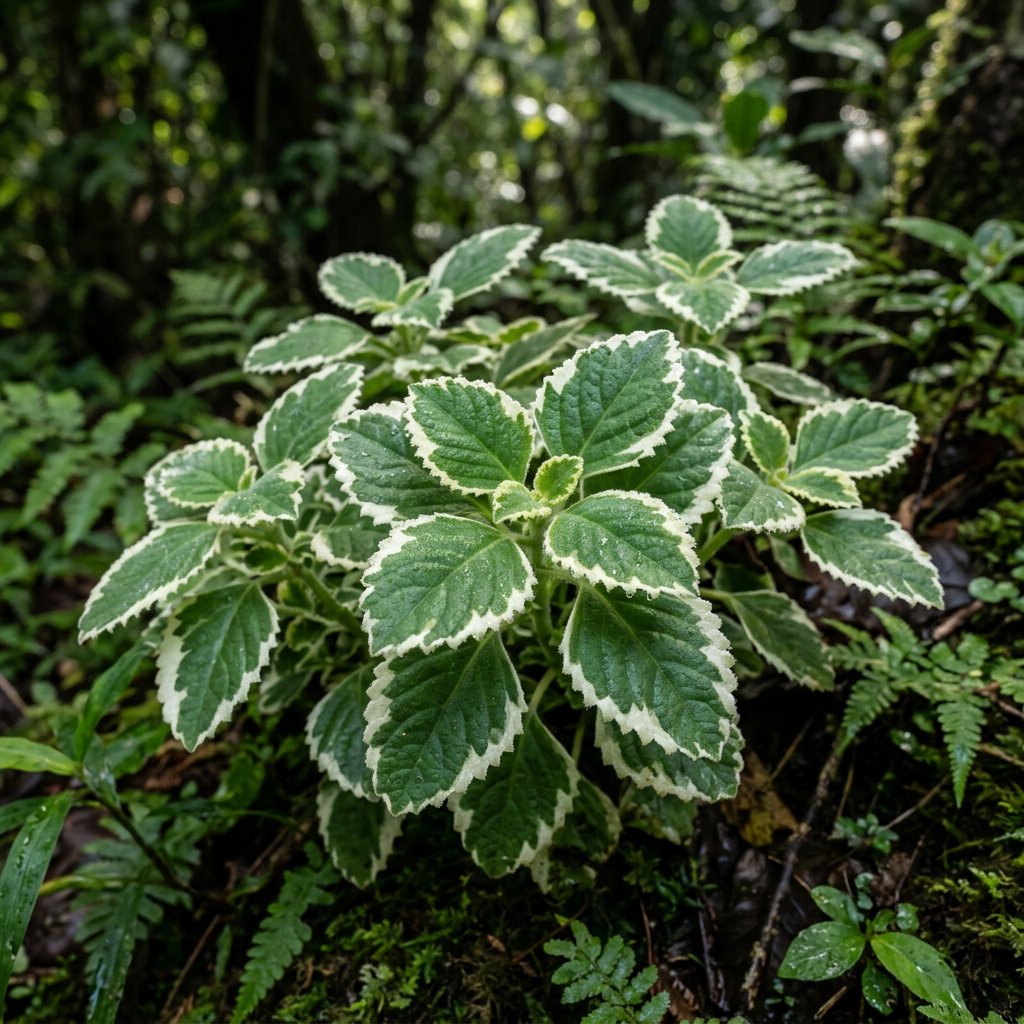
Plant Overview
Affectionately known as Forster’s Plectranthus or simply "Variegated Plectranthus," this plant is a favorite for those who love trailing greenery with a splash of color. While it shares a lineage with the common Swedish Ivy, its striking white-edged leaves make it a standout in hanging baskets. In many cultures, its rapid growth and resilience have earned it a reputation as a "beginner’s best friend."
🔍 How to Identify
- 🍃 Scalloped Leaves: The leaves are heart-shaped to oval with deeply "toothed" or scalloped edges that give them a ruffled appearance.
- ⚪ Creamy Variegation: Most common varieties feature a bright green center framed by a distinct, irregular border of creamy white or silver.
- 🟦 Square Stems: As a member of the Mint family (Lamiaceae), its stems are uniquely four-sided and square to the touch, often turning slightly purple or woody as they age.
🏡 In Your Garden
- ✂️ The "Pinch" Technique: This plant has a natural tendency to become "leggy" and long. To keep it looking like a lush, dense bush, you should regularly pinch off the growing tips to encourage side-branching.
- ☀️ Light vs. Color: While it can survive in low light, its beautiful white variegation will fade to a dull green if it's kept in the dark for too long. However, harsh afternoon sun can scorch its delicate, felt-like leaves.
- 💧 Thirst Signals: It is quite expressive; the leaves will lose their turgidity and start to limp slightly when it’s thirsty, making it easy to know exactly when to water.
⚠️ Safety & Toxicity
- 🐾 Pet Sensitivity: While not considered high-risk like Lilies or Sago Palms, the essential oils in Plectranthus can cause mild digestive upset, drooling, or vomiting in cats and dogs if ingested in large quantities.
- 🧤 Skin Irritation: The tiny hairs on the leaves and the sap released during pruning can cause a mild itchy rash for individuals with sensitive skin. Wearing gloves while grooming is a good precaution.
✨ Fun Fact
If you rub the leaves of Plectranthus forsteri, you’ll notice a distinct, spicy aroma. This is because the plant is a close relative of Oregano and Coleus, and it uses these aromatic oils as a natural defense mechanism against hungry herbivores!

Detailed Care Instructions
To grow a Plectranthus Forsteri plant, also known as Swedish ivy or silver spurflower, you can follow these steps:
- Location: Choose a spot with bright, indirect sunlight for your Plectranthus Forsteri plant. It can tolerate some shade but requires several hours of indirect light each day.
- Soil: Use well-draining soil that retains some moisture. A mix of regular potting soil and perlite or sand works well.
- Container: Select a pot or container that is slightly larger than the current root ball of the plant. Make sure it has drainage holes to prevent waterlogging.
- Planting: Gently remove the plant from its nursery pot and loosen the roots. Place it in the new container and cover the roots with soil. Ensure that the soil level is slightly below the rim of the pot to avoid water runoff.
- Watering: Water the Plectranthus Forsteri plant thoroughly until the water drains from the bottom of the pot. Allow the top inch of soil to dry out before watering it again. Overwatering can lead to root rot, so it's best to keep the soil evenly moist but not waterlogged.
- Fertilizer: Apply a balanced, water-soluble fertilizer every two to four weeks during the growing season (spring and summer). Follow the instructions on the fertilizer package for the correct dosage.
- Pruning: Regularly pinch back the growing tips of your Plectranthus Forsteri plant to encourage bushier growth. You can also trim any leggy or damaged stems to maintain a compact shape.
- Temperature and humidity: Plectranthus Forsteri plants prefer temperatures between 65-75°F (18-24°C). They can tolerate slightly cooler temperatures but should be protected from frost. Moderate humidity levels are ideal, but they can adapt to average home humidity.
- Propagation: You can propagate Plectranthus Forsteri plants by taking cuttings from the stems. Remove a section with several leaf nodes, remove the lower leaves, and place the cutting in a glass of water or directly into the soil. Once roots develop, transfer it to a pot with soil.
- Pests and diseases: Monitor your Plectranthus Forsteri plant for common pests like spider mites, aphids, and mealybugs. Treat any infestations promptly with an appropriate insecticide. Watch out for diseases like root rot, which can occur due to overwatering.
By following these guidelines, you can successfully grow and care for your Plectranthus Forsteri plant.

Place in a window with dappled sun or a spot in the middle of a room. Or directly in a window facing west or east.

To water this plant, make sure that you are using lukewarm water. Do not use cold water as it can shock the roots. The soil should be allowed to dry out slightly between waterings, but never completely dry. Water thoroughly until the water comes out the drainage holes in the bottom of the pot. Avoid getting water on the leaves as it can cause spotting or fungal diseases. Water less frequently in the winter months when the plant is not actively growing.
To fertilize this plant, it is best to use a balanced fertilizer with an equal amount of nitrogen, phosphorus, and potassium. The fertilizer should be applied every two weeks during the growing season, which is typically during the spring and summer months. Be sure to follow the instructions on the fertilizer package for the proper amount to use. Avoid over-fertilizing, as this can lead to salt build-up in the soil and burn the roots of the plant. Water the plant well after fertilizing to ensure that the nutrients reach the roots.
The soil preferred for Plectranthus Forsteri plants should be well-draining and rich in nutrients. It is recommended to use a potting mix that contains a blend of organic matter such as peat moss, compost, and perlite or vermiculite. The soil pH level should be between 6.0 to 7.5, which is slightly acidic to neutral. The plant prefers to grow in moist soil, but it should not be waterlogged, as this may lead to root rot. It is important to ensure adequate drainage to prevent the soil from becoming waterlogged. The soil should be regularly fertilized to provide the plant with the necessary nutrients it needs to grow and thrive. Overall, a well-draining and nutrient-rich soil mix will best support the growth and health of Plectranthus Forsteri plants.
Plectranthus Forsteri plant can be propagated through stem cuttings. First, select a healthy stem without any damage or disease. Cut the stem at an angle, about 4-6 inches long. Remove any leaves or flowers from the bottom third of the stem. Dip the cut end of the stem in rooting hormone powder to encourage root growth.
Prepare a pot with moist soil, and make a hole in the center of the soil using a pencil or your finger. Insert the stem cutting into the hole and press the soil gently around it. Water the soil well and cover the pot with a plastic bag to create a mini greenhouse effect.
Place the pot in a bright spot without direct sunlight, and keep the soil moist but not waterlogged. After a few weeks, you should notice new growth and roots starting to form. Once the plant has established itself, you can plant it in a larger pot or outdoors.
Overall, propagating Plectranthus Forsteri plant from stem cuttings is an easy and effective way to grow new plants without buying seeds or mature plants.
Common pests of the swedish-ivy include Mealybugs, spider mites, thrips. Make a habit of checking your swedish-ivy frequently for pests so that any infestations can be caught and managed early.








