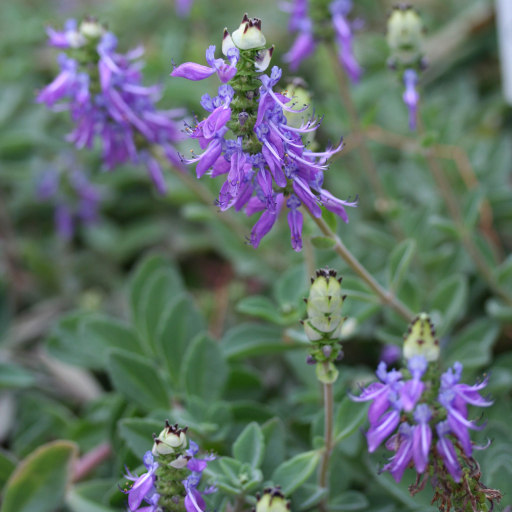
Plant Overview
Often nicknamed the "Scaredy Cat Plant" or "Dog Bane," Plectranthus ornatus is a hardy, semi-succulent herb with a secret weapon. Originating from Southern and Eastern Africa, this plant has gained worldwide fame not just for its pretty lavender blooms, but for its pungent, skunky aroma that supposedly sends neighborhood cats and dogs packing. It is a rugged survivor that thrives where other plants might wilt under the sun.
🔍 How to Identify
- 🍃 The Foliage: The leaves are thick, fleshy, and oval-shaped with gently scalloped edges. They are covered in a fine, velvety fuzz that feels soft to the touch until the scent is released.
- 🪻 The Blooms: It produces striking upright spikes of two-lipped flowers in shades of pale blue to deep violet. These spikes often resemble small lobsters, leading to its other nickname, the "Lobster Flower."
- 🌱 Growth Habit: This is a low-growing, spreading sub-shrub. It creates a dense mat of greenery that works perfectly as a groundcover or a trailing beauty in a hanging pot.
🏡 In Your Garden
- ☀️ Drought Specialist: Because of its thick, succulent-like leaves, this plant stores its own water. It hates "soggy feet," so it is essential to use a gritty, well-draining soil mix to prevent root rot.
- 🐈 The "Invisible Fence": Many gardeners plant this as a decorative border around vegetable patches or flower beds. When brushed against by a passing animal, the leaves release a strong odor that many creatures find offensive, discouraging them from using your garden as a litter box.
⚠️ Safety & Toxicity
- 🐾 Status: Non-toxic but irritating.
- 👃 Details: While not considered poisonous to humans or pets, the plant's intense essential oils can cause mild stomach upset if ingested in large quantities. The main "danger" is the smell—if you plant it too close to an open window or a patio seating area, the "skunky" scent might be a bit overwhelming for your guests!
✨ Fun Fact
Despite its reputation for repelling cats and dogs, the effectiveness of Plectranthus ornatus is a bit of a biological gamble; while some animals loathe the smell, others are completely indifferent to it, making it one of the most debated "functional" plants in the gardening world!

Detailed Care Instructions
To grow a Plectranthus Ornatus plant, you can follow these steps:
- Choose a suitable location: Plectranthus Ornatus prefers bright, indirect light, so find a spot in your home or garden that receives filtered sunlight or partial shade.
- Prepare the soil: The plant thrives in well-draining soil, so ensure that the potting mix or garden soil is loose and has good drainage. You can add organic matter like compost or peat moss to improve the soil quality.
- Planting: If you're starting from seed, sow them in a seed tray or small pots filled with moist soil. Maintain a temperature of around 65-75°F (18-24°C) for optimal germination. Once the seedlings have grown a few inches tall, you can transplant them into larger pots or directly into the garden.
- Watering: Plectranthus Ornatus likes consistently moist soil but can't tolerate waterlogged conditions. Water the plant regularly, allowing the top inch of soil to dry between waterings. Adjust the frequency depending on the climate and season.
- Fertilizer: Feed the plant with a balanced, water-soluble fertilizer every two to four weeks during the growing season (spring and summer). Follow the package instructions for the proper dilution and application.
- Pruning: You can pinch back the tips of the plant to encourage bushier growth and prevent legginess. Regularly remove any dead or yellowed leaves to maintain the plant's health.
- Overwintering: Plectranthus Ornatus is not frost-tolerant, so if you live in a cold climate, you'll need to bring the plant indoors before the first frost. Place it near a bright window and reduce watering during the winter months.
- Propagation: You can propagate Plectranthus Ornatus by taking stem cuttings. Cut a few inches of healthy stems, remove the lower leaves, and place them in a container with moist soil or water until they develop roots. Once rooted, transplant them into pots or your garden.
Remember to monitor your plant for signs of pests or diseases and take appropriate action if necessary. Enjoy watching your Plectranthus Ornatus flourish!

Place in a bright room that is sun drenched almost all day. Or directly in a south-facing window.

Plectranthus Ornatus plant should be watered regularly, but not excessively. The soil should be allowed to dry out slightly between waterings, as overwatering can lead to root rot. When watering, it is important to avoid getting the leaves wet as this can encourage fungal growth. Water should be applied directly to the soil around the base of the plant, and any excess water should be drained away to prevent waterlogging. The frequency of watering will depend on a variety of factors including the temperature, humidity, and size of the plant, so it is important to monitor the soil moisture levels and adjust watering accordingly. Additionally, Plectranthus Ornatus plants may benefit from occasional misting to increase humidity levels.
To fertilize this plant, use a water-soluble, balanced fertilizer every two weeks during its growing season. Dilute the fertilizer to half strength before applying it to the soil. Be sure to water the plant with plain water before and after fertilizing to prevent root burn. Avoid fertilizing during the plant's dormant season.
The best soil to use with this plant needs to be well-draining and rich in organic matter. It should have a pH range of 6.0 to 7.0. Soil with low air porosity should be avoided, as this plant does not like excess moisture. A mix of peat moss, coarse sand, and perlite is a suitable choice of soil for this plant. It is important to ensure that the soil is not compacted and is well-aerated to allow proper root growth. Avoid using heavy clay soil as it drains poorly and retains water for extended periods, which may cause root rot and other soil-borne diseases.
Plectranthus ornatus can be easily propagated through stem cuttings. To do this, you need to:
- Choose a healthy stem with several leaves from the parent plant.
- Cut the stem at a 45-degree angle using a clean and sharp knife. Make sure the cutting is at least 4-6 inches long.
- Remove the leaves from the lower half of the cutting.
- Dip the cut end of the stem into rooting hormone powder.
- Plant the stem cutting in a pot containing a well-draining potting mix. Insert the cutting into the soil at least 2 inches deep.
- Water the cutting thoroughly and cover it with a plastic bag or wrap. This will create a humid environment for the cutting to root.
- Place the pot in a warm and bright area, but avoid direct sunlight.
- Water the cutting regularly to keep the soil moist, but not soaked.
- After a few weeks, check the cutting for roots by gently tugging on the stem. If it resists, roots have formed.
- Once the cutting has rooted, remove the plastic bag and transplant it to a larger pot or directly into the garden soil.
Common pests of the plectranthus ornatus include Mealybugs, spider mites, thrips. Make a habit of checking your plectranthus ornatus frequently for pests so that any infestations can be caught and managed early.








