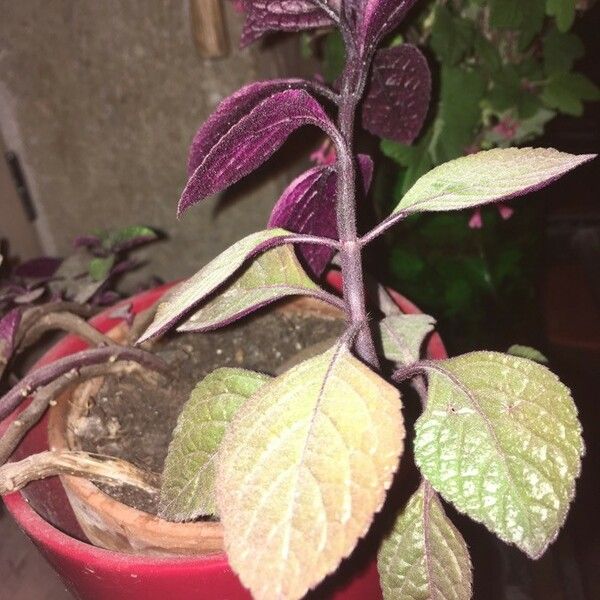
Plant Overview
Known as the "Royal Spurflower" or "Purple Swedish Ivy," this South African native is a showstopper for hanging baskets and rock gardens. Its leaves feel like living velvet, offering a striking contrast between deep forest green and royal violet. Despite the name, it isn't actually from Sweden, but gained its "Swedish Ivy" moniker after becoming a beloved staple in Scandinavian interior design during the mid-20th century.
🔍 How to Identify
- 💜 Bi-Colored Foliage: The most striking feature is the leaves—deep, velvety green on top with a rich, matte purple underside.
- 🌿 Texture and Shape: The leaves are small, oval, and slightly succulent with "scalloped" or tooth-like edges.
- 📐 Square Stems: Like many members of the Mint family, it features distinct square-shaped stems that trail gracefully as they grow.
🏡 In Your Garden
- ☀️ Light Sensitivity: This plant is a bit of a "Goldilocks"—too little light and the purple undersides will fade to a dull green; too much direct afternoon sun and the delicate velvet leaves may scorch.
- 💧 Drainage is Key: Because it has a relatively shallow root system, it is highly susceptible to root rot. It thrives in "airy" potting mixes (like those with perlite) and prefers to dry out slightly between waterings.
- ✂️ Pruning Habit: It can become "leggy" or stretched out over time. Regularly pinching off the tips encourages the plant to grow bushier rather than just longer.
⚠️ Safety & Toxicity
- 🟢 Status: Non-toxic to humans and generally considered safe for pets.
- 🐱 Pet Context: While not listed as a poisonous plant by the ASPCA, the essential oils in the leaves can cause mild stomach upset or drooling in cats and dogs if ingested in large quantities. It’s best kept in a hanging basket out of reach.
✨ Fun Fact
The Plectranthus genus is a close cousin to common kitchen herbs like Mint, Oregano, and Basil. If you gently rub the leaves of the Purple Spurflower, you may catch a faint, spicy, herbal aroma, though this specific variety is grown for its royal colors rather than its flavor!

Detailed Care Instructions
To grow Plectranthus purpuratus, also known as the Swedish ivy, you can follow these steps:
- Purchase a Plectranthus purpuratus plant from a nursery or garden center. Alternatively, you can also propagate it from cuttings.
- Choose a suitable location for your plant indoors or outdoors. Plectranthus purpuratus prefers bright, indirect sunlight but can tolerate some shade. If growing indoors, place it near a window that receives filtered sunlight.
- Ensure the soil is well-drained and rich in organic matter. Use a potting mix that contains peat moss, perlite, and compost. If planting it outdoors, ensure the soil drains well to prevent waterlogging.
- Water the plant regularly, keeping the soil slightly moist but not soggy. Allow the top inch of soil to dry out between watering to avoid overwatering.
- Plectranthus purpuratus benefits from higher humidity levels. If the air is dry, you can mist the plant regularly or use a humidifier nearby.
- Feed your plant with a balanced, water-soluble fertilizer once a month during the growing season (spring to fall). Follow the package instructions for proper dilution and application.
- Pinch or trim the plants regularly to encourage bushier growth. This will also help prevent them from becoming leggy.
- If growing the plant indoors, it is important to provide a cool winter location (around 50-60°F or 10-15°C). This perennial plant has a natural dormant period during the winter when it requires less water and lower temperatures.
- Keep an eye out for pests such as aphids, spider mites, or mealybugs. If you notice any infestations, take appropriate measures to control them, such as using organic insecticidal soap or neem oil.
- Lastly, Plectranthus purpuratus can be propagated easily from stem cuttings. Simply cut a healthy stem, remove the lower leaves, and place it in a container with moist potting soil. Keep it in a warm, bright location and water it regularly until roots form.
By following these steps, you should be able to successfully grow Plectranthus purpuratus.

Place in a window with dappled sun or a spot in the middle of a room. Or directly in a window facing west or east.

To water this plant, you should first check the top layer of soil to ensure it is dry before watering. If the soil is still moist, wait a few days before checking again. When it is time to water, thoroughly saturate the soil until water drains out of the bottom of the pot. Do not let the plant sit in standing water, as this can lead to root rot. Allow the soil to dry partially before watering again. It is important to note that this plant prefers well-draining soil and may suffer if it is kept too wet.
For successful growth of the aforementioned plant, it is essential to fertilize it appropriately. This can be achieved by using a well-balanced liquid fertilizer that has a high nitrogen content. The plant should be fertilized every two weeks during the growing season. However, it is important to avoid over-fertilizing as this can lead to damage to the roots and leaves. Additionally, ensure that the plant is watered well before and after fertilization. Follow these instructions diligently, and your plant will grow healthy and vibrant.
When looking to grow a particular plant, it is important to consider the type of soil that will best support its growth. For Plectranthus Purpuratus, a well-draining, nutrient-rich soil is ideal. The soil should be loose, crumbly and not compacted.
To achieve this type of soil, you can mix in a few different soil components. A good starting point would be a high-quality potting mix, which will provide basic nutrients and structure. You could then add in some sand or perlite to improve drainage and prevent the soil from becoming too waterlogged.
A few other soil amendments that could benefit Plectranthus Purpuratus include compost, vermiculite, and coconut coir. These will all help to improve the soil's texture and provide additional nutrients.
When planting the Plectranthus Purpuratus, make sure to allow ample space for root growth. It is also important to ensure that the soil remains moist but not waterlogged. Proper soil preparation and maintenance will go a long way in supporting the growth and health of this plant.
Propagation of this plant can be done easily through stem cuttings. Choose a healthy stem that is at least 3-4 inches long and has a few leaves on it. Make a clean cut just below a leaf node using a sharp, sterilized knife or scissors.
Remove the leaves from the bottom 2-3 inches of the stem, leaving only a few leaves at the top. Dip the cut end of the stem into rooting hormone powder to encourage root growth.
Prepare a pot or container filled with well-draining soil. Insert the cutting into the soil, ensuring that the bottom of the stem is submerged at least 1 inch deep. Water the soil well and cover the pot with a plastic bag or container to create a humid environment.
Place the pot in a warm, bright location, but out of direct sunlight. Make sure to keep the soil moist but not waterlogged. After a few weeks, roots should start to develop. You can then remove the plastic cover and gradually expose the plant to more light.
Once the plant has established roots and is growing well, you can transplant it into a larger pot or into your garden.
Common pests of the purple swedish ivy include Mealybugs, spider mites, thrips. Make a habit of checking your purple swedish ivy frequently for pests so that any infestations can be caught and managed early.








