Plant Overview
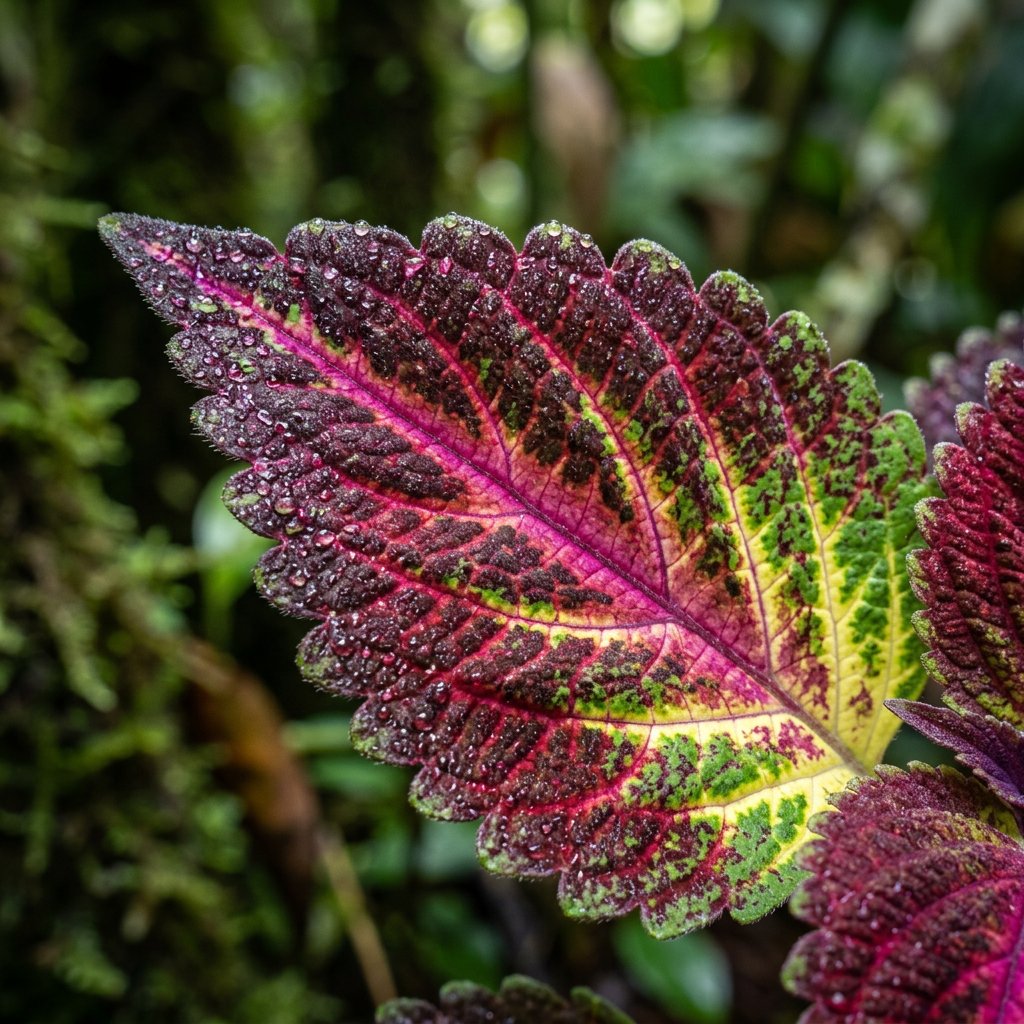
Often called the "Painted Nettle" or "Poor Man’s Croton," this vibrant beauty is a staple in both Victorian-style estates and modern windowsills. Native to Southeast Asia and Australia, it is beloved not for its blooms, but for its flamboyant, psychedelic foliage that looks as if it were hand-painted by an artist. Whether in deep burgundies, neon greens, or hot pinks, it adds a tropical flair to any space with very little "diva" behavior.
🔍 How to Identify
- 🍃 Ornate Foliage: The leaves are typically heart-shaped or oval with serrated, "toothed" edges, boasting intricate patterns of lime, maroon, cream, and violet.
- 🧊 Square Stems: True to its membership in the mint family, its stems are distinctly four-sided, fleshy, and quite brittle.
- 🪻 Flower Spikes: It occasionally produces tall, thin stalks of tiny, tubular blue or lavender flowers that shoot up from the center of the plant.
🏡 In Your Garden
- 🎭 The Light Chameleon: The intensity of the leaf colors is a direct result of light exposure. While many older varieties prefer dappled shade, modern "Sun Coleus" types require bright light to prevent their neon hues from fading into dull greens.
- ✂️ Pinch for Success: To keep the plant from becoming "leggy" or sparse, you should regularly pinch off the flower spikes and stem tips. This redirects energy back into the leaves, encouraging a much bushier, more compact shape.
- 💧 The Drama Queen: This plant is a master of communication; if it gets too dry, it will wilt completely flat to the ground. Don't panic—it usually "resurrects" within an hour of receiving a thorough watering.
⚠️ Safety & Toxicity
- 🐾 Pet Warning: Coleus is considered toxic to dogs, cats, and horses. It contains diterpene esters that can cause gastrointestinal distress, vomiting, or even skin irritation if brushed against frequently.
- 🧤 Skin Sensitivity: The sap in the stems can cause mild dermatitis in humans with sensitive skin. It’s a good idea to wear gloves if you are doing a heavy pruning session.
✨ Fun Fact
During the "Coleus Craze" of the late 19th century, new and rare leaf patterns were so highly prized that Victorian gardeners would trade cuttings like high-stakes currency, leading to the creation of thousands of cultivars that we still enjoy today!

Detailed Care Instructions
| Humidity | Normal |
| Lighting | Part Sun |
| Difficulty | Easy |
| Temperature | 21°C - 31°C |
| Hardiness Zones | 10A - 11 |
To grow a Plectranthus Scutellarioides plant, also known as Coleus, you can follow these steps:
- Select a location: Choose a spot that receives partial shade to full sun, depending on the variety of Coleus you have. The soil should be well-draining and rich in organic matter.
- Planting: Plant Coleus in spring after the last frost or at the beginning of summer. Dig a hole that is slightly larger than the root ball of the plant and place it in the hole. Backfill the hole with soil, and gently pat it down around the stem to ensure stability.
- Watering: Water the plant deeply immediately after planting and then regularly to keep the soil moist but not waterlogged. Coleus requires regular watering, especially during dry spells, so check the soil regularly and adjust watering accordingly.
- Mulching: Apply a layer of organic mulch, such as wood chips or compost, around the base of the plant. This helps retain moisture, control weeds, and provides nutrients as it breaks down.
- Fertilization: Feed your Coleus plant every 6-8 weeks with a balanced, soluble fertilizer to promote healthy growth and vibrant leaf color. Follow the instructions on the fertilizer packaging for application rates.
- Pruning: To encourage bushier growth and prevent legginess, pinch back the tips of the plant when it reaches about 6 inches in height. You can also remove any dead or yellowing leaves regularly to maintain an attractive appearance.
- Propagation: Coleus plants can be easily propagated through stem cuttings. Take a cutting from a healthy stem, remove the lower leaves, and place it in a glass of water or directly into moist potting soil. Keep the cutting warm and moist until roots develop.
- Overwintering: In cooler climates, Coleus is often grown as an annual plant. However, if you live in a region with mild winters, you can bring your Coleus indoors or take cuttings to overwinter. Keep the plant in a well-lit room away from drafty windows and provide adequate humidity.
By following these steps, you can successfully grow a Plectranthus Scutellarioides/Coleus plant and enjoy its colorful foliage throughout the growing season.

Place in a window with dappled sun or a spot in the middle of a room. Or directly in a window facing west or east.

To water the plant in question, it is recommended to first check the soil moisture level by inserting a finger about an inch into the soil. If the soil feels dry, it is time to water the plant.
It is best to use room temperature water and to avoid getting water on the leaves, as this can lead to fungal growth. Water the plant slowly and evenly until water begins to drain out of the bottom of the pot.
It is also important to not let the plant sit in standing water, as this can lead to root rot. Empty any excess water out of the saucer under the pot after watering.
The frequency of watering will depend on factors such as indoor temperature, humidity, and the size of the pot. It is generally recommended to water Plectranthus Scutellarioides when the top inch of soil feels dry to the touch.
To properly fertilize this plant, use a balanced fertilizer with equal amounts of nitrogen, phosphorus, and potassium. Apply the fertilizer every two to three weeks during the growing season, which is typically from spring to late summer. Avoid over-fertilizing as it can lead to burnt roots and an unhealthy plant. Be sure to follow the instructions on the fertilizer package and dilute it to the recommended strength before applying it to the soil. If the plant shows signs of nutrient deficiency, such as yellowing leaves or stunted growth, increase the frequency of fertilization or switch to a specialized fertilizer for the specific nutrient deficiency.
For optimal growth of this plant, it is recommended to use a well-draining soil with a pH of around 6.0 to 7.5. The soil should be rich in organic matter and nutrients, such as nitrogen, phosphorus, and potassium. A mixture of potting soil, compost, and perlite or vermiculite can be used to create a suitable growing medium. It is important to ensure that the soil is kept evenly moist, but not waterlogged, as this plant does not tolerate drought or waterlogging. Additionally, adding a slow-release fertilizer to the soil every few months can help promote healthy growth and vibrant foliage.
One way to propagate this plant is by taking stem cuttings. To do this, first, select a healthy mature plant and use sharp, clean scissors to make a clean cut just below a node (where leaves emerge from the stem). The cutting should be around 4-6 inches long. Remove the leaves from the bottom one-third to one-half of the stem to expose the nodes.
Next, plant the cutting in a well-draining potting mix and water it lightly. Keep the pot moist, but not waterlogged, and place it in a bright spot out of direct sunlight. You can cover the pot with a plastic bag or dome to create a humid environment that will encourage root growth.
Check the plant regularly and mist or water it as needed to keep the soil moist. After a few weeks, new growth should appear, indicating that roots have formed. At this point, you can gradually acclimate the plant to brighter light and lower humidity.
Another method of propagation is by dividing the parent plant. Carefully remove the entire plant from its pot and gently separate the roots and stems into smaller sections. Replant each section in its own pot with fresh soil and water thoroughly.
Propagation by seed is also possible but can be more challenging, as the seeds are very small and require a warm, moist environment to germinate.
Common pests of the coleus include Mealybugs, spider mites, fungus gnats, thrips. Make a habit of checking your coleus frequently for pests so that any infestations can be caught and managed early.








