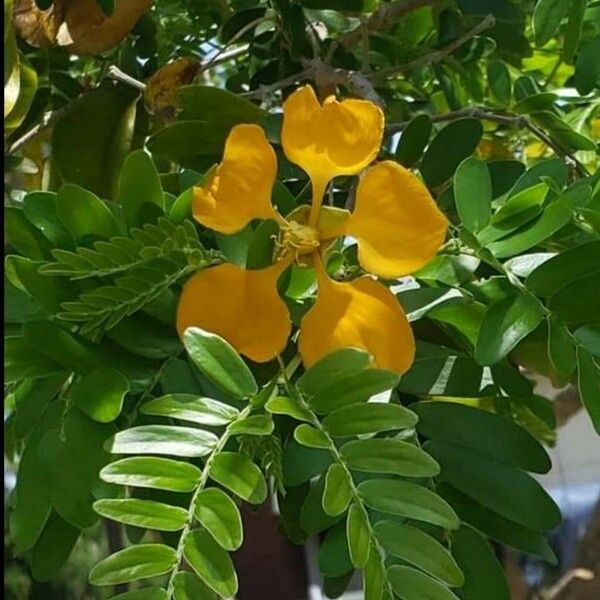
Plant Overview
Often called Verawood or the "Maracaibo Lignum Vitae," this stunning tropical evergreen is famous for its vibrant golden canopy and its incredibly dense, aromatic wood. Hailing from the coastal regions of Colombia and Venezuela, it is a favorite for warm-climate landscapes due to its umbrella-like shape and extreme resilience. In its native lands, it’s celebrated not just for its beauty, but for its "iron-like" strength, once used in the most demanding mechanical parts.
🔍 How to Identify
- 🌼 The Flowers: Clusters of brilliant, orange-yellow blossoms that completely cover the canopy during peak bloom, creating a "sunshine" effect.
- 🍃 The Foliage: Small, feather-like (pinnate) leaves that are dark green and glossy, providing a fine-textured, airy appearance.
- 🪵 The Bark: A distinctive grayish-brown bark that becomes deeply fissured and textured as the tree matures, adding architectural interest to the trunk.
🏡 In Your Garden
- 🌱 Root Stability: Because this tree develops a deep, sturdy taproot, it is exceptionally wind-resistant. However, this means it hates being moved; choose its "forever home" carefully to avoid transplant shock.
- ☀️ Drought Warrior: Once the root system is established, Verawood is incredibly drought-tolerant. It thrives in well-draining soil and actually prefers a period of dryness over "wet feet," which can lead to root rot.
⚠️ Safety & Toxicity
- ✅ Status: Generally considered non-toxic to humans and common household pets.
- 🧤 Irritant Note: While the living plant is safe, the sawdust from the wood is highly resinous. If you are pruning or working with the wood, wear gloves and a mask, as the oils can cause mild skin or respiratory irritation in sensitive individuals.
✨ Fun Fact
The wood of the Verawood tree is so dense and heavy with natural resins that it sinks in water. Because of its self-lubricating oils and hardness, it was historically used to make the propeller shaft bearings for ships and even the internal gears of early clocks!

Detailed Care Instructions








