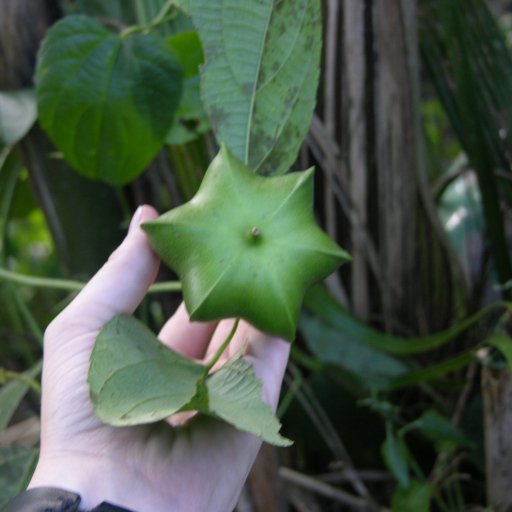
Plant Overview
Known as the "Inca Nut" or "Mountain Peanut," Plukenetia volubilis is a lush, climbing vine native to the tropical rainforests of the Amazon. While it isn’t a true nut, its seeds are prized globally as a "superfood" for their incredible concentration of Omega-3 fatty acids. This ancient plant has been a staple of indigenous diets for centuries, blending the beauty of a tropical climber with the utility of a protein powerhouse.
🔍 How to Identify
- 🍃 Heart-Shaped Foliage: The plant features large, vibrant green leaves with a distinct heart shape (cordate) and finely serrated edges that grow alternately along the vine.
- ⭐ Star-Shaped Fruit: Its most iconic feature is the bright green, star-shaped fruit. These pods usually have 4 to 6 points and transition from fleshy green to a dry, woody dark brown as they ripen.
- ⚪ Inconspicuous Blooms: It produces small, delicate white flowers that grow in clusters. While not particularly showy, they are the precursors to the famous star-shaped seed pods.
🏡 In Your Garden
- 🪜 Vigorous Climber: As a woody vine, Sacha Inchi requires a sturdy support system. It loves to scramble up trellises, fences, or even large trees, making it a great choice for vertical "edible" landscaping in warm climates.
- 💧 Rainforest Roots: Coming from a tropical environment, it thrives in high humidity and consistently moist, well-draining soil. It is sensitive to frost and will struggle if the temperature drops significantly.
- ☀️ Light Requirements: To maximize fruit production, this plant needs plenty of bright, indirect light or full sun. In its natural habitat, it reaches for the canopy to soak up the sun's energy.
⚠️ Safety & Toxicity
- 🍳 Must Be Roasted: The raw seeds contain alkaloids and lectins that can cause digestive upset or allergic-like reactions. They are only safe for human consumption after being thoroughly roasted or cooked.
- 🐾 Pet Caution: While the roasted seeds are a common health food, the raw plant material and seeds contain saponins. It is best to keep curious pets away from the foliage to prevent any potential stomach irritation.
✨ Fun Fact
- 🏺 Ancient Legacy: Sacha Inchi is a true "heirloom" of the Americas. Archeologists have discovered depictions of the star-shaped fruit on burial pottery from the Inca civilization, proving it has been cultivated and revered for over 3,000 years!

Detailed Care Instructions
To grow the Plukenetia volubilis plant, also known as Sacha Inchi or Inca Inchi, you can follow these steps:
- Choose the right location: Plukenetia volubilis plants thrive in warm, tropical climates. They prefer full sun but can tolerate partial shade. Ensure that the location has well-draining soil.
- Prepare the soil: Plukenetia volubilis prefers slightly acidic to neutral soil. Before planting, improve the soil by adding organic matter like compost or well-rotted manure, and ensure good drainage.
- Obtain seeds: You can buy Plukenetia volubilis seeds from nurseries or online suppliers. Make sure to buy fresh, viable seeds for better germination rates.
- Germination: Start by germinating the seeds indoors in seed trays or small pots. Sow the seeds at a depth of around 1/2 inch and keep the soil consistently moist. Maintain a temperature between 68-86°F (20-30°C) for optimal germination. Germination may take around 2-4 weeks.
- Transplanting: Once the seedlings have developed a few sets of true leaves, typically after 4-6 weeks, they can be transplanted into larger pots or directly into the garden. Ensure adequate spacing between plants, usually around 3-4 feet apart.
- Watering: Plukenetia volubilis plants require regular watering, especially during dry periods. Keep the soil evenly moist but avoid waterlogging, which can lead to root rot.
- Fertilization: Apply a balanced, organic fertilizer regularly during the growing season to promote healthy growth. Follow the manufacturer's instructions for the appropriate dosage and timing.
- Pruning and support: Plukenetia volubilis is a climbing vine, so it benefits from support such as trellises or stakes. Regularly prune the plant to promote bushier growth and to prevent it from becoming too unruly.
- Pest and disease management: Monitor the plants for common garden pests like aphids, caterpillars, or spider mites. Treat them promptly using organic insecticides or other safe remedies. Ensure good air circulation around the plants to prevent fungal diseases.
- Harvesting: Plukenetia volubilis plants take around 6-12 months to mature and produce seeds. Harvest the seed pods when they turn brown and begin to split open. Collect the seeds and allow them to dry thoroughly before storage or use.
Remember that Plukenetia volubilis plants may not be suitable for all climates, especially cold regions. Ensure you are familiar with your local climate conditions before attempting to grow this plant.

Place in a bright room that is sun drenched almost all day. Or directly in a south-facing window.

To water this plant, allow the top layer of soil to dry out before watering. When watering, pour water directly onto the soil around the base of the plant, avoiding getting water on the leaves or flowers. If growing in a pot or container, ensure there are drainage holes to allow excess water to escape. Water regularly, but do not over water as this can lead to root rot. During the growing season, fertilize the plant with a balanced fertilizer every 2-3 weeks.
To fertilize this plant, you should use a balanced fertilizer with equal amounts of nitrogen, phosphorus, and potassium. Apply the fertilizer once a month during the growing season, which is typically from spring to fall. It's important not to over-fertilize, as this can lead to nutrient burn and damage the plant. Follow the instructions on the fertilizer package carefully, and be sure to water the plant thoroughly after applying the fertilizer. If the plant starts showing signs of nutrient deficiency, consider supplementing with a specific fertilizer or adjusting the pH of the soil.
When planting Plukenetia Volubilis, it is recommended to use a well-draining soil that is rich in organic matter. The soil should have a slightly acidic to neutral pH level, between 6.0 and 7.5. Good options include a sandy loam soil or a soil mix that contains a combination of peat moss, perlite, and vermiculite. It is also important to ensure that the soil is kept consistently moist, but not waterlogged, as overly wet soil can lead to root rot and other issues. Regular fertilization with a balanced fertilizer can also help promote healthy growth and vigor in Plukenetia Volubilis plants.
Plukenetia volubilis is a flowering plant that can be propagated by various means. The most popular methods of propagation include sowing seeds, dividing existing plants, and taking stem cuttings. Here are some steps on how to propagate Plukenetia volubilis:
- Sowing seeds: To grow Plukenetia volubilis from seed, you need to collect ripe seeds from a healthy plant. These seeds should be sown in pots or trays containing moist soil. Cover the seeds with a layer of the soil mix and keep the pots in a warm, sunny location. The seeds will germinate in 1-2 weeks, and you can transfer the seedlings to bigger containers as they grow.
- Dividing plants: This method of propagation involves dividing an existing plant into smaller portions and planting them separately. To divide a Plukenetia volubilis plant, carefully remove it from the soil and separate the roots into many sections. Each section should have its own stem and a good root system. Replant these divisions in pots filled with well-draining soil and keep them in a shaded area for a few weeks until they are established.
- Taking stem cuttings: Another method of propagation is by taking stem cuttings. Choose a healthy, mature stem and cut it off just below a leaf node. Remove the lower leaves to reveal a 3-4 cm section of stem. Dip this section in rooting hormone powder and plant it in a small pot filled with soil. Keep the cutting moist and in a warm location until it develops roots.
Plukenetia volubilis is a hardy plant that can tolerate different growing conditions. With proper care, it can thrive and produce edible seeds that are rich in nutrients.








