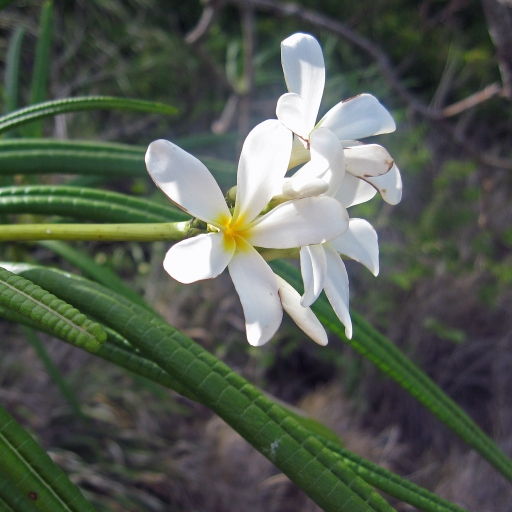
Plant Overview
Known as the "Frangipani" or "West Indian Jasmine," Plumeria alba is the olfactory soul of the tropics. Originating from the Caribbean and Central America, its velvety white blossoms with glowing yellow centers are synonymous with island paradise and ancient romance. In many cultures, these flowers symbolize immortality and new beginnings because they can produce beautiful blooms even from a severed branch.
🔍 How to Identify
- 🌼 The Blooms: Five waxy, overlapping petals of pure white, featuring a brilliant "sunny-side-up" yellow center and a fragrance that intensifies at night.
- 🍃 The Foliage: Long, narrow, lance-shaped leaves with a prominent midrib and distinct veins that curl slightly at the edges.
- 🪵 The Structure: Thick, succulent-like gray branches that look somewhat "stumpy" and prehistoric when the plant drops its leaves in winter.
- 🥛 The Sap: A thick, milky white latex that oozes immediately if a leaf is plucked or a branch is nicked.
🏡 In Your Garden
- ☀️ Sun Seeker: This plant is a solar battery; it requires at least 6 to 8 hours of direct sunlight to fuel the energy needed for its heavy, fragrant flowering.
- 💧 Drainage Queen: Plumeria alba hates "wet feet." It is highly susceptible to root rot, so it thrives best in gritty, cactus-like soil mixes that allow water to pass through quickly.
- 🍂 Winter Slumber: It is a deciduous shrub. Do not be alarmed if it drops every single leaf in the autumn—it is simply resting and should be watered very sparingly during this dormant phase.
⚠️ Safety & Toxicity
- 🧴 Irritant Sap: The milky latex contains alkaloids that can cause skin redness, itching, or rashes. Always wash your hands after pruning or taking cuttings.
- 🐾 Pet & Child Safety: While not usually fatal, the plant is considered mildly toxic. If ingested, the sap can cause stomach pain, vomiting, and diarrhea in dogs, cats, and small children.
✨ Fun Fact
Plumeria flowers are masters of deception! They emit a powerful, seductive fragrance at night to lure Sphinx moths, but they actually produce no nectar. They trick the moths into moving from flower to flower in a desperate search for a reward, achieving pollination through "empty promises."

Detailed Care Instructions
| Color | White |
| Soil Ph | 6.5 To 7.0 |
| Lighting | Full Sun |
| Soil Type | Rich, Well-Drained Loam |
| Bloom Time | Spring To Fall |
| Plant Type | Deciduous Flowering Tree |
| Mature Size | 15 To 25 Feet Tall And Wide |
| Native Area | Puerto Rico, Lesser Antilles |
| Sun Exposure | Full Sun |
| Hardiness Zones | 10 To 12 |
To grow Plumeria Alba plants, follow these steps:
- Obtain a healthy Plumeria Alba cutting or seeds. You can purchase them from a nursery or take cuttings from an existing Plumeria Alba plant. Make sure the cutting is about 12-18 inches long and has at least three nodes.
- Prepare the planting medium. Use well-draining soil or a mix containing equal parts of sand, perlite, and peat moss.
- If using a cutting, let it dry out for a few days to allow the cut end to callus. This helps prevent rotting once planted.
- Plant the cutting or seeds in a pot or directly in the ground in a sunny location. The pot should have drainage holes to allow excess water to escape.
- If using a cutting, insert it about 3-4 inches deep into the soil. If using seeds, plant them about 1 inch deep.
- Water the plant regularly but avoid overwatering. Plumeria Alba plants prefer slightly dry conditions. Water deeply once the top inch of soil feels dry.
- Apply a balanced fertilizer every 2-3 months during the growing season. Use a fertilizer specifically formulated for flowering plants and follow the instructions on the package.
- Prune the plant in early spring to remove any dead or damaged branches. This promotes new growth and helps maintain a desired shape.
- Protect the plant from frost or cold temperatures. Plumeria Alba is sensitive to cold and should be moved indoors or provided with a frost cover during winter in colder regions.
- Enjoy the beautiful fragrant blooms of Plumeria Alba! It may take a couple of years for the plant to start flowering, but with proper care, you can have a thriving Plumeria Alba plant in your garden or home.

Place in a bright room that is sun drenched almost all day. Or directly in a south-facing window.

To water this plant, you should first check the soil for moisture. Stick your finger about an inch into the soil and see if it feels dry. If it does, it's time to water. Use a watering can or hose to slowly water the soil around the plant until it's moist but not soaking wet. Be sure to avoid getting water on the leaves or flowers, as this can cause damage or rot. Allow the soil to dry slightly between waterings, but don't let it completely dry out. Water more frequently during hot, dry weather or if the plant is in a container.
To fertilize this plant, use a balanced fertilizer with a NPK ratio of 20-20-20. Apply the fertilizer once a month during the growing season, which is typically from spring to fall. Be sure to dilute the fertilizer according to the package instructions before applying it to the soil around the plant. It is important to avoid over-fertilizing as this can damage the roots and foliage. Water the plant thoroughly after applying fertilizer to help it absorb the nutrients.
Plumeria Alba prefers a well-draining soil mix that includes some sand or perlite to increase drainage and aeration. The soil should also be slightly acidic with a pH between 6.0 and 7.0. Adding organic matter such as compost or peat moss can improve the soil's structure and nutrient content. It is important to avoid soil mixes that retain too much moisture as this can lead to root rot. A gritty mix of sand, perlite, and a high-quality potting soil is an ideal option for growing Plumeria Alba in containers.
- Start by selecting a healthy parent plant with a sturdy stem and healthy leaves. Make sure the plant is mature enough to produce strong cuttings.
- Locate a branch that is at least 12 inches long and cut it off using sterile pruning shears. Make sure the cut is clean and smooth.
- Remove all the leaves from the bottom half of the stem. This will encourage new root development.
- Allow the cutting to dry in a shaded area for 2-3 days. This will help prevent rotting when planted.
- Fill a small pot with a well-draining potting mix. Make a hole in the center to accommodate the cutting.
- Dip the cut end of the stem in rooting hormone powder, tapping off any excess.
- Plant the cut end of the stem into the prepared potting mix. Firm the soil gently around the stem to ensure the cutting is stable.
- Water the cutting thoroughly and place it in a shaded area. Keep the soil moist but not waterlogged.
- After a few weeks, the cutting should start to develop new roots. Once the roots are well-established, the cutting can be transplanted into a larger pot or planted in the ground.
- To ensure the plant thrives, provide it with plenty of sunlight, well-draining soil, and regular fertilization. Prune the plant as needed to encourage a bushy growth habit.








