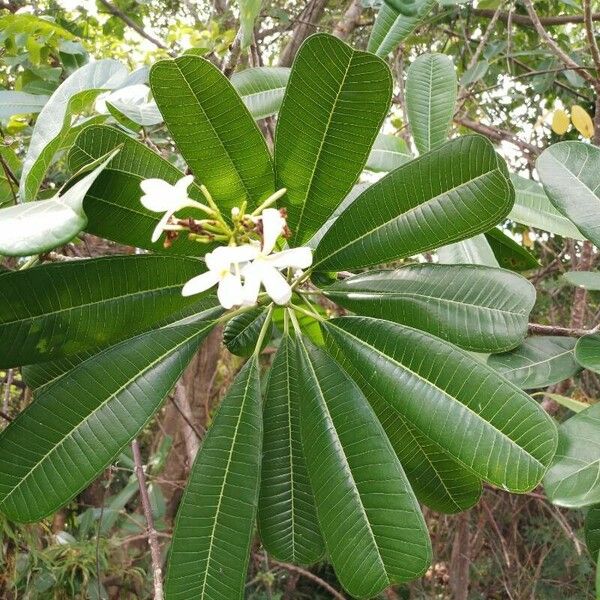
Plant Overview
The Plumeria Magna, often celebrated as the "Queen of the Tropics," is a magnificent variety of the beloved Frangipani. Famous for its oversized, waxy blooms and a scent so intoxicating it has inspired perfumes for centuries, this plant is the literal embodiment of a Caribbean sunset. In many cultures, particularly in Hawaii and across Southeast Asia, it is considered a symbol of immortality because it can produce exquisite blossoms even after being uprooted.
🔍 How to Identify
- 🌸 Grand Blooms: Features large, pinwheel-shaped flowers with thick, waxy petals that typically transition from a creamy white edge to a deep, golden-yellow center.
- 🍃 Elliptical Foliage: The leaves are remarkably large, leathery, and dark green, often clustered at the very tips of the branches, giving the plant a lush, umbrella-like canopy.
- Stubby Architectural Branches: The stems are thick, greyish-green, and succulent-like; they appear almost "sausage-shaped" and exude a milky white sap if nicked or broken.
🏡 In Your Garden
- ☀️ Sun Seeker: This plant is a true worshiper of the sun. To get those iconic blooms, it requires at least six hours of direct sunlight. Without enough light, the branches become "leggy" and the flowers stay hidden.
- 💧 Drought Specialist: Plumeria stores water in its thick stems, making it incredibly drought-tolerant. The biggest danger to this plant is overwatering; it prefers a "soak and dry" routine and must be planted in gritty, fast-draining soil to prevent root rot.
- 😴 Winter Dormancy: Don't panic if your Plumeria drops all its leaves in late autumn! It is entering a natural hibernation. During this time, stop watering almost entirely until new growth appears in the spring.
⚠️ Safety & Toxicity
- 🚫 Irritant Status: Mildly toxic to humans and pets.
- 🧪 The Sap Factor: The milky white latex found inside the stems and leaves contains alkaloids that can cause skin irritation or rashes (dermatitis). If ingested by dogs, cats, or curious toddlers, it may cause vomiting or lethargy. It is best to wear gloves when pruning.
✨ Fun Fact
Plumeria flowers are most fragrant at night to trick their primary pollinators—Sphinx moths. The flowers actually produce no nectar; they simply lure the moths in with their incredible scent, leading the "fooled" moths to move from flower to flower in a desperate, albeit successful, search for a snack!

Detailed Care Instructions
Plumeria Magna plants can be grown from cuttings, seeds, or by grafting. Here are some tips for growing Plumeria Magna plants:
- Choose a sunny location with well-draining soil: Plumeria Magna plants require at least 6-8 hours of sunlight per day and well-draining soil to thrive. Make sure the soil is slightly acidic with a pH of around 6.0-7.5.
- Propagate from cuttings: Take a cutting from a healthy, mature Plumeria Magna plant and let it dry out for a few days. Plant the cutting in a pot with well-draining soil and place it in a warm, sunny location. Water the cutting sparingly until roots start to form.
- Plant seeds: Plumeria Magna seeds can be planted directly in the soil or in pots filled with well-draining soil. Keep the soil moist but not waterlogged, and place the seeds in a warm, sunny location. Germination can take anywhere from a few weeks to a few months.
- Grafting: Grafting is a more advanced method of propagation where a cutting from one plant is attached to the rootstock of another plant. This method is often used to create hybrids or improve rootstock vigor.
- Watering and fertilizing: Plumeria Magna plants should be watered regularly, especially during the growing season. Use a balanced fertilizer every 2-4 weeks to promote healthy growth and flowering.
- Pruning: Prune your Plumeria Magna plant to remove dead or damaged branches and encourage new growth. Pruning can also help promote flowering and maintain the shape of the plant.
- Protect from pests and diseases: Keep an eye out for pests such as aphids, mealybugs, and spider mites, and treat them promptly with insecticidal soap or neem oil. Also, be on the lookout for fungal diseases such as powdery mildew and treat them with fungicides if necessary.
By following these tips, you can successfully grow and care for a beautiful Plumeria Magna plant in your garden or home.
Plumeria Magna plants require regular watering to thrive, especially during the growing season. To water this plant, ensure that the soil is moist but not waterlogged. Water deeply, allowing the water to penetrate the roots. It is important to let the soil dry out slightly between waterings to prevent root rot. Additionally, avoid watering the foliage to prevent diseases and ensure the water reaches the roots effectively. Adjust the watering frequency based on environmental conditions, such as temperature and humidity, to keep the plant healthy and hydrated.
Plumeria Magna should be fertilized with a balanced, low-nitrogen fertilizer specifically formulated for flowering plants. Fertilize the plant every 2-4 weeks during the growing season, starting in early spring and ending in late summer. Be sure to follow the instructions on the fertilizer label for the correct dosage and application method. Avoid over-fertilizing, as this can lead to nutrient imbalances and damage to the plant. Water the plant thoroughly after fertilizing to help the nutrients penetrate the soil and reach the plant's roots.
Plumeria Magna plants prefer well-draining soil that is slightly acidic to neutral in pH. A mix of equal parts cactus mix or succulent mix and perlite or pumice can be used to create a suitable growing medium for these plants. This type of soil blend allows for adequate drainage and prevents the soil from becoming waterlogged, which can lead to root rot. Additionally, adding a small amount of organic matter, such as compost or peat moss, can help provide nutrients to the plant and improve overall soil structure. It is important to repot Plumeria Magna plants every 2-3 years to replenish nutrients in the soil and prevent the roots from becoming overcrowded.
To propagate the Plumeria Magna plant, you can follow these steps:
- Start by taking cuttings from a mature and healthy plant. Cut 6-12 inch sections of the plant, making sure to include at least one node on each cutting.
- Allow the cuttings to dry and callus over for a few days. This will help prevent rotting when you plant them.
- Fill a pot with well-draining potting mix and plant the cuttings in the soil. Make sure the node is buried in the soil and the cutting is secure.
- Water the cuttings lightly and place the pot in a warm and bright location, but not in direct sunlight.
- Keep the soil lightly moist but not too wet, as this can cause the cutting to rot.
- Within a few weeks, you should start to see new growth on the cuttings. This is a sign that the cutting has taken root and is ready to be cared for as a mature plant.
- Once the cutting has established roots and is growing well, you can transplant it into a larger pot or into the garden if the weather is warm enough.
By following these steps, you can successfully propagate the Plumeria Magna plant and enjoy its beautiful flowers in your garden.








