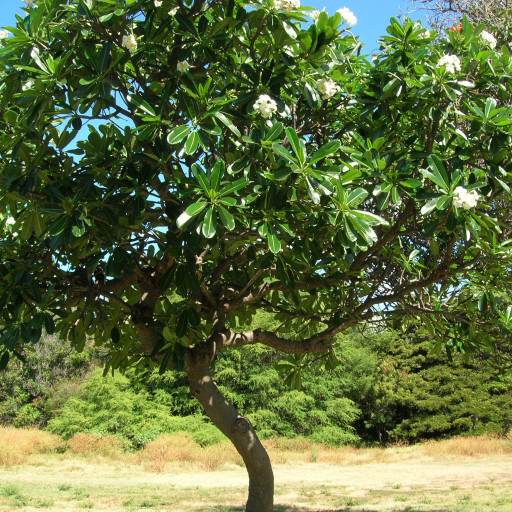
Plant Overview
Often called the "Singapore Graveyard Flower" or "White Frangipani," Plumeria obtusa is the tropical superstar behind many of the world’s most fragrant floral traditions. Unlike its cousins with pointed leaves, this species is prized for its glossy, evergreen foliage and its intoxicatingly sweet perfume that intensifies as the sun sets. It carries a sense of timeless elegance, often seen adorning temple grounds and coastal resorts alike.
🔍 How to Identify
- 🍃 Rounded Foliage: True to its name "obtusa," the leaves are blunt and rounded at the tips rather than pointed. They are dark green, leathery, and have a polished, glossy sheen.
- 🌼 Pinwheel Flowers: The blossoms are snowy white with a vibrant yellow "eye" at the center. The five waxy petals overlap slightly, creating a perfect pinwheel shape.
- 🪵 Succulent Stems: The branches are thick, greyish-green, and somewhat "fleshy," designed to store water during dry periods.
🏡 In Your Garden
- ☀️ Sun Seeker: This plant is a literal sun-worshipper. Without at least 6 to 8 hours of direct sunlight, the plant will become "leggy" (stretched out) and will likely refuse to produce its iconic flowers.
- 🚿 The Drainage Rule: It is highly susceptible to root rot if left in standing water. It prefers "drought-then-drench" watering cycles and must be planted in a gritty, well-draining soil mix similar to what you would use for a cactus.
- 🌡️ Frost Phobia: Plumeria obtusa is more cold-sensitive than other varieties. If temperatures drop toward freezing, it must be moved indoors or protected, as the fleshy stems can turn to mush overnight in a frost.
⚠️ Safety & Toxicity
- 🧪 Irritant Sap: Like many members of the Apocynaceae family, this plant bleeds a milky white latex sap when cut. This sap can cause skin irritation or a rash for those with sensitive skin.
- 🐾 Pet & Child Safety: The plant is considered mildly toxic. If ingested, the sap can cause stomach upset, vomiting, or diarrhea in cats, dogs, and humans. It’s best kept as a "look but don't taste" centerpiece.
✨ Fun Fact
- 🦋 A Fragrant Trick: Plumeria flowers are masters of deception. They release their strongest scent at night to attract Sphinx moths for pollination, but the flowers actually contain no nectar! The moths end up pollinating the plant while searching in vain for a sugary reward that isn't there.

Detailed Care Instructions
| Lighting | Full Sun |
| Hardiness Zones | Min 10A |
To grow Plumeria Obtusa plant, you can follow these steps:
- Choose the right location: Plumeria Obtusa plants prefer full sun, so select a spot in your garden that receives at least 6-8 hours of direct sunlight daily.
- Prepare the soil: Plumeria plants require well-draining soil. Ensure that the soil is enriched with organic matter and has a pH range between 6.0 to 7.5.
- Propagation: Plumeria Obtusa can be propagated through stem cuttings. Take a stem cutting of about 12-18 inches long from a healthy parent plant. Let the cutting dry for a few days in a cool, dry place before planting.
- Planting: Dig a hole in the prepared soil that is deep enough to accommodate the stem cutting. Gently place the cutting into the hole and backfill it with the soil, making sure the cutting is secure and upright.
- Watering: Water the newly planted cutting thoroughly to settle the soil. After that, water the plant deeply once every week, allowing the soil to dry out slightly between waterings.
- Fertilizing: Apply a balanced, slow-release fertilizer specially formulated for blooming plants once every two months during the growing season. Follow the instructions on the fertilizer packaging for proper application.
- Pruning: Prune the plant in early spring to remove dead, damaged, or overcrowded branches. This will promote healthier growth and better flowering.
- Protection: Protect the Plumeria Obtusa plant from extreme cold temperatures, as it is sensitive to frost. If you live in a colder climate, consider growing it in a pot that can be moved indoors during winter.
- Pests and diseases: Monitor the plant for any signs of pests like aphids or spider mites. Treat with insecticidal soap or neem oil if necessary. Be cautious of fungal diseases like powdery mildew and rust, ensuring good air circulation around the plant and avoiding overwatering.
- Patience: Plumeria plants generally take a couple of years to mature and produce flowers. So, be patient and provide proper care, and eventually, you will be rewarded with beautiful blossoms.
Remember to regularly monitor your plant's health, provide adequate care, and enjoy the tropical beauty of your Plumeria Obtusa plant.

Place in a bright room that is sun drenched almost all day. Or directly in a south-facing window.

To water this plant, it is important to make sure that the soil is completely dry before watering. When watering, pour the water slowly and evenly onto the soil around the base of the plant, avoiding getting water on the leaves or flowers. Make sure that the plant is not sitting in water, as this can cause root rot. Additionally, this plant prefers well-draining soil, so adding perlite or sand to the soil mix may be beneficial. It is also recommended to fertilize with a balanced fertilizer every two weeks during the growing season, and reduce watering during the winter months when the plant may become dormant.
Plumeria Obtusa plant requires fertilization every month during its growing season, which is generally spring and summer. Use a balanced fertilizer with equal amounts of nitrogen, phosphorus, and potassium, and a micronutrient mix. Apply the fertilizer according to the package instructions, being careful not to over-fertilize, which can damage the plant. Water the plant before and after fertilizing to ensure that the nutrients are thoroughly absorbed. Avoid fertilizing during the plant's dormant season, which is typically in the fall and winter.
Plumeria Obtusa plants prefer well-draining soil with good aeration. A mixture of sand, perlite, and peat moss is ideal for this plant. The sand helps with drainage, the perlite retains moisture and provides aeration, and the peat moss helps with water retention.
It is important to ensure that the soil is not compacted and that there is adequate drainage to prevent the roots from sitting in water, as this can lead to root rot. The soil should also be rich in nutrients, but not overly fertilized as this can cause leaf burn. A balanced fertilizer can be applied once a month during the growing season to help promote healthy growth.
Overall, Plumeria Obtusa plants thrive in loose, well-draining soil that provides good aeration and moisture retention while also being rich in nutrients. So, the soil composition needs to be balanced to support the plant's growth.
To propagate this plant, begin by selecting a healthy parent plant and carefully removing a stem cutting that is around 12-18 inches long. Make sure to use a sharp, sterilized pruning shears or knife to avoid damaging the plant.
Next, remove the leaves from the bottom third of the stem cutting and allow the wound to dry for several days. This will help prevent the cutting from rotting when it is planted.
Once the cutting has dried, dip the cut end into rooting hormone powder and plant it in a pot filled with well-draining soil mix. For best results, water lightly and keep the soil moist but not waterlogged.
Finally, place the pot in a warm, bright location that is protected from direct sunlight and strong winds. After a few weeks, roots should start to form and the plant can be gradually acclimated to full sunlight and outdoor conditions.
Common pests of the singapore graveyard flower include Scale insect, mealybugs, spider mites, thrips, whiteflies. Make a habit of checking your singapore graveyard flower frequently for pests so that any infestations can be caught and managed early.








