Plant Overview
Often mistaken for its famous cousin, Kentucky Bluegrass, Poa angustifolia is the elegant, wiry alternative that thrives where others wither. Known for its incredibly fine texture, this grass is a staple of wild meadows and rugged roadsides across the Northern Hemisphere. It is the "minimalist" of the grass world, prioritizing deep-rooted resilience over lush, thirsty blades.
🔍 How to Identify
- 📏 The Narrow Blade: True to its name, the leaves are remarkably thin (often less than 2mm wide) and are typically folded or rolled inward, giving them a delicate, needle-like appearance.
- 🎨 Color Palette: It displays a deep, matte green that can take on a slightly grayish or "glaucous" tint, especially during dry spells as it protects itself from the sun.
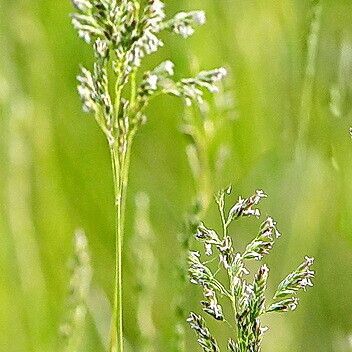
- 🌾 The Seed Head: In late spring, it produces a loose, pyramid-shaped cluster (panicle) of tiny spikelets that seem to shimmer or "mist" over a field when caught in the light.
🏡 In Your Garden
- 🏜️ Drought Specialist: This grass is a champion of dry, well-drained soils. It is often found in the "forgotten" corners of a garden, such as rocky slopes or sandy patches where standard turf grasses struggle to survive.
- 🌱 Rhizome Runner: It spreads through underground creeping stems called rhizomes. This makes it a fantastic choice for naturalized meadows or erosion control, as it creates a hidden, sturdy net beneath the soil surface.
⚠️ Safety & Toxicity
- ✅ Safe for All: Narrow-leaved Meadow-grass is non-toxic to dogs, cats, and horses. In fact, it is a high-quality forage grass for many wild animals.
- 🤧 Pollen Warning: Like most meadow grasses, it produces wind-borne pollen during its flowering peak in May and June. Those with seasonal hay fever should take note if planting it near windows.
✨ Fun Fact
- 🧬 The Identity Crisis: Botanists have spent decades debating whether this plant is its own unique species or simply a rugged, "skinny" subspecies of Kentucky Bluegrass that adapted specifically to live in harsher, drier conditions!

Detailed Care Instructions







