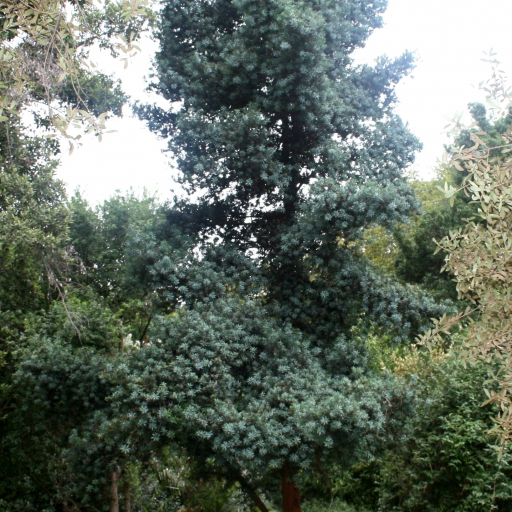
Plant Overview
Often called the Breede River Yellowwood, this South African native is the rarest of the yellowwood species and a true "blue-blood" of the botanical world. Unlike its towering forest relatives, it takes on a more graceful, spreading form, showcasing a stunning palette of powdery blue and silver-green foliage that looks almost frost-kissed even in the heat of summer.
🔍 How to Identify
- 💙 The Foliage: Features long, narrow leaves that are remarkably soft to the touch, coated in a distinctive glaucous (waxy) blue-gray finish that shimmers in the sun.
- 🌳 Growth Habit: Rather than a single straight trunk, this plant often develops a multi-stemmed, rounded shape, spreading its branches wide like a large, architectural umbrella.
- 🧥 The Bark: The trunk is dressed in thin, grayish-brown bark that may peel or flake in narrow strips as the tree matures, providing a lovely textural contrast to the smooth leaves.
🏡 In Your Garden
- 🪴 Space & Pacing: Because it grows more slowly and stays smaller than other yellowwoods, it is an excellent choice for medium-sized gardens or as a dramatic "specimen" plant in a large patio container.
- 💧 Watering Logic: Originating near riverbanks, it loves a deep drink during the summer months, but its established root system is surprisingly resilient to dry spells once it feels at home in your soil.
- 🌬️ Coastal Toughness: It is remarkably wind-tolerant and handles salty air well, making it a favorite for coastal gardeners looking for a privacy screen that isn't the standard bright green.
⚠️ Safety & Toxicity
- 🐾 Pet Safety: While the foliage is generally considered low-risk, the seeds (which sit on small, fleshy receptacles) can cause digestive upset if swallowed by dogs or cats.
- 👶 Human Caution: The "fruit-like" parts of the plant are not for snacking. It is best to keep small children away from fallen seeds to prevent any accidental ingestion.
✨ Fun Fact
Although most Yellowwoods are known for being massive timber giants, Podocarpus elongatus is the only species in its entire family that has adapted to thrive in the South African "Fynbos"—a unique shrubland biome famous for having the highest concentration of plant species in the world!

Detailed Care Instructions
To grow Podocarpus elongatus, also known as African yellowwood, you can follow these steps:
- Choose a suitable location: Podocarpus elongatus thrives in full sun to partial shade conditions. It prefers well-draining soil that is rich in organic matter.
- Propagation: The plant can be grown from seeds or cuttings. If you have access to seeds, plant them in a seed tray filled with a seed-starting mix. Keep the soil moist and place the tray in a warm location. The seeds should germinate in a few weeks. If using cuttings, take a 4-6 inch cutting from a healthy tree. Remove the lower leaves, dip the cut end in rooting hormone, and plant it in a pot filled with a well-draining soil mix.
- Planting: Once the seedlings or cuttings are established, transplant them into larger pots or directly into the garden. Dig a hole twice the size of the plant's root ball. Place the plant in the hole, backfill with soil, and firm it gently around the base of the plant. Water thoroughly after planting.
- Watering: Podocarpus elongatus needs regular watering but avoid overwatering as it can lead to root rot. Water deeply to encourage deep root growth, especially during dry periods. Ensure the soil remains slightly moist but not waterlogged.
- Fertilization: Feed your Podocarpus elongatus with a balanced, slow-release fertilizer in the spring and again in the fall. Follow the package instructions for the proper dosage.
- Pruning: Regular pruning can help maintain the desired shape and encourage thicker growth. Prune in late winter or early spring before new growth starts. Remove any dead, diseased, or damaged branches. You can also prune for size control or to shape the plant.
- Pest and disease control: African yellowwood is generally resistant to pests and diseases. However, keep an eye out for aphids, scale insects, or spider mites. If you notice any infestations, treat them with an appropriate insecticide or try natural remedies like neem oil or insecticidal soap.
- Mulching: Apply a layer of organic mulch around the base of the plant to help retain soil moisture, suppress weed growth, and regulate soil temperature.
Remember to monitor your plant regularly, provide adequate care, and make adjustments as needed. With proper attention, your Podocarpus elongatus should grow into a beautiful and healthy plant.

Place in a bright room that is sun drenched almost all day. Or directly in a south-facing window.

To provide adequate hydration to the Podocarpus Elongatus plant, follow these watering guidelines:
1. Evaluate soil moisture: Prior to watering, assess the soil moisture level. Insert your finger about an inch deep into the soil near the base of the plant. If the soil feels dry at this depth, it is an indication that watering is required.
2. Water quantity: When watering, ensure that you provide enough moisture to saturate the entire root zone of the plant. Estimate the size of the root ball and apply water accordingly. A general rule is to give the plant a deep watering until water starts to seep out from the drainage holes.
3. Watering frequency: The frequency of watering will depend on various factors such as climate, temperature, humidity, and the moisture retention capability of the soil. As a guideline, water the plant deeply whenever the top inch of soil feels dry. Avoid over-watering, as it can lead to root rot and other moisture-related problems.
4. Time of day: Watering in the early morning or late afternoon is recommended, as it allows the excess moisture to evaporate before evening, reducing the risk of fungal diseases. Avoid watering during the hottest part of the day, as rapid evaporation can cause the water to not reach the plant's roots effectively.
5. Watering technique: Pour water directly into the soil around the plant's root zone rather than sprinkling water on the foliage. This allows the water to reach the roots where it is needed most.
6. Soil drainage: Podocarpus Elongatus plants prefer moist but well-draining soil. Opt for a soil mixture with good drainage properties, or amend the existing soil with materials like organic matter or sand to improve drainage if needed. Frequent watering in poorly draining soils can lead to waterlogged conditions, potentially harming the plant.
7. Monitor plant's response: Keep an eye on the plant's condition and growth. If the leaves start to droop, curl, or turn yellow, it may indicate over or under-watering. Adjust your watering routine accordingly to address any signs of water stress.
Remember, these watering guidelines serve as general recommendations. Adjustments may be necessary based on specific environmental conditions and the plant's individual needs. It is always beneficial to observe the plant closely and make adjustments as required to maintain optimal moisture levels for the Podocarpus Elongatus plant.
Here are the fertilizing instructions for Podocarpus Elongatus plant:
- Choose a balanced, slow-release granular fertilizer specifically formulated for evergreen plants.
- Read the instructions on the fertilizer package to determine the recommended amount for the size of your Podocarpus Elongatus plant.
- Start fertilizing in early spring, when the plant begins to actively grow.
- Sprinkle the fertilizer evenly around the base of the plant, avoiding direct contact with the stems.
- Gently work the fertilizer into the top layer of soil using a garden fork or your hands.
- Water the plant thoroughly after applying the fertilizer to ensure proper absorption.
- Repeat the fertilization process once every three to four months during the growing season.
- Avoid over-fertilizing, as it can lead to nutrient burn and damage the plant.
- Monitor the plant's response to the fertilizer and adjust the amount as needed.
- Always follow the manufacturer's instructions on the fertilizer package for best results.
Remember, individual plant requirements may vary, so it's always a good idea to consult a local gardening expert or nursery for specific recommendations based on your plant's needs.
When choosing the appropriate soil for Podocarpus Elongatus plant, it is important to consider its natural habitat and growth requirements. This species is native to a specific region and therefore requires specific soil conditions to thrive.
Podocarpus Elongatus generally prefers a well-draining soil that is rich in organic matter. It is crucial to select a soil mix that retains some moisture, but also allows excess water to drain away effectively. This can prevent the plant from suffering from overwatering issues.
In terms of pH, Podocarpus Elongatus commonly prefers slightly acidic to slightly alkaline soil, with a pH range of around 6.0 to 7.5. This pH range promotes optimal nutrient uptake and overall growth of the plant.
Additionally, as an evergreen plant, Podocarpus Elongatus benefits from soil that is rich in nutrients. It is advisable to use a soil mix that contains organic matter such as compost or well-rotted manure. This addition of organic matter in the soil can enhance its fertility and provide essential nutrients to support healthy growth.
Furthermore, the soil should have good water retention capacity to help sustain the plant during dry periods. However, it should not be excessively compacted, as this could restrict root development and affect the overall health of the plant. Loose and well-aerated soil is ideal for the Podocarpus Elongatus plant.
In summary, the suitable soil for Podocarpus Elongatus should be well-draining, slightly acidic to slightly alkaline, rich in organic matter, and possess good water retention capacity without becoming too compacted.
Propagation of Podocarpus Elongatus can be accomplished using various methods such as seeds, cuttings, and grafting. Here are some detailed steps for each propagation method:
- Propagation through Seeds:
- Harvest ripe seeds from mature Podocarpus Elongatus cones.
- Clean the seeds by removing any pulp or fleshy covering from their surface.
- Soak the seeds in water for about 24 hours to soften the outer layer.
- Sow the seeds in a well-draining seed-starting mix, ensuring they are barely covered with the soil.
- Place the seed tray in a warm location with temperatures around 70-80°F (21-27°C).
- Keep the soil consistently moist, but not waterlogged.
- It may take several weeks to months for the seedlings to emerge.
- Once the seedlings have developed their true leaves, they can be transplanted into individual pots.
- Harvest ripe seeds from mature Podocarpus Elongatus cones.
- Propagation through Cuttings:
- Take semi-hardwood cuttings during the late summer or early fall when the plant is actively growing.
- Select a healthy stem that is about 4-6 inches (10-15 cm) long.
- Remove the lower leaves from the cutting, leaving only a few at the tip.
- Dip the bottom end of the cutting in a rooting hormone powder to promote root development.
- Plant the cutting in a well-draining potting mix or a mixture of peat moss and perlite.
- Place the pot in a warm, bright location, away from direct sunlight.
- Keep the soil moist but not waterlogged.
- After a few weeks, the cuttings should develop roots. To check for root development, gently tug on the cutting; if you feel resistance, it means roots have formed.
- Once the cutting has established a good root system, it can be transplanted into a larger container or outdoors.
- Take semi-hardwood cuttings during the late summer or early fall when the plant is actively growing.
- Propagation through Grafting:
- Select a healthy, mature Podocarpus Elongatus plant to serve as the rootstock.
- Take a scion, which is a young shoot or twig, from a desired and compatible Podocarpus Elongatus cultivar.
- Make a diagonal cut on both the rootstock and scion, ensuring that the cuts match up.
- Join the two pieces by placing the cut surfaces together and bind them firmly using a grafting tape or grafting clip.
- Carefully monitor the grafted plant, ensuring it receives appropriate light, temperature, and humidity levels.
- After a successful grafting, the union between the rootstock and scion will start to form.
- Once the graft has firmly united, typically after a few months, remove the binding material.
- Gradually acclimate the grafted plant to outdoor conditions before planting it in the desired location.
Remember that while propagating Podocarpus Elongatus can be an exciting endeavor, it may require patience and careful attention to detail.
- Select a healthy, mature Podocarpus Elongatus plant to serve as the rootstock.








