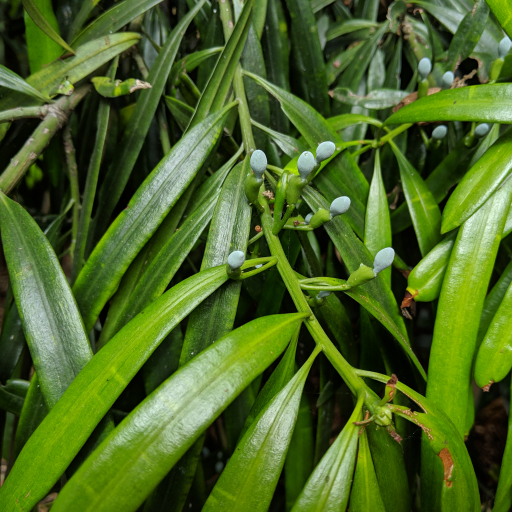
Plant Overview
Known as the Gray’s Plum Pine, this elegant Australian native is a living link to the ancient supercontinent of Gondwana. Unlike the needle-like foliage of many northern conifers, this "Plum Pine" boasts lush, broad leaves that give it a tropical, sophisticated appearance. It is a slow-growing masterpiece that brings a sense of ancient rainforest serenity to any collection.
🔍 How to Identify
- 🌿 The Foliage: The leaves are long, leathery, and sword-shaped (linear-lanceolate), featuring a prominent central midrib that runs the length of the blade.
- 🌲 Growth Habit: While it can become a massive tree in the wild, in a garden or pot, it maintains a graceful, upright, and somewhat columnar shape with slightly weeping branch tips.
- 🫐 The "Fruit": It doesn't produce flowers but develops unique, fleshy blue-black receptacles (the "plum") with a green seed sitting proudly on top, resembling a strange piece of jewelry.
🏡 In Your Garden
- 💧 Moisture Consistency: Originating from the rainforests of North Queensland, this plant dislikes drying out completely. It prefers a humid environment and soil that stays consistently moist but never waterlogged.
- 🧤 Root Sensitivity: Like many members of the Podocarpus family, Gray's Plum Pine has a sensitive root system. It prefers to stay in its pot for as long as possible, as frequent transplanting can lead to "sulking" or stalled growth.
- ☀️ Light Nuance: While it can handle full sun in cooler climates, it performs best in dappled shade or bright indirect light, especially in hotter regions where the afternoon sun might scorch its deep green leaves.
⚠️ Safety & Toxicity
- 🐾 Pet Warning: Most Podocarpus species are considered toxic to dogs and cats. If ingested, the leaves and seeds can cause vomiting and diarrhea.
- 👶 Kid Safety: The fleshy blue-black "fruit" looks enticingly like a berry to small children. Keep this plant out of reach, as the seeds and stems contain diterpenoid glycosides which are harmful if eaten.
✨ Fun Fact
The Podocarpus genus is so ancient that its ancestors were likely grazed upon by dinosaurs. While they look like modern flowering plants, they are actually "gymnosperms," making them closer relatives to Pine trees and Cycads than to Maples or Oaks!

Detailed Care Instructions
- Make sure to check the soil moisture level of the plant before watering.
- Water the plant thoroughly, ensuring that water reaches the roots.
- Avoid over watering, as this can lead to root rot.
- Water the plant regularly, but do not allow the soil to become waterlogged.
- Use a watering can or hose with a gentle spray nozzle to water the plant.
- Water the plant during the cooler times of the day, such as in the morning or late afternoon, to prevent water evaporation.
- Provide adequate drainage in the planting container or in the soil to prevent water accumulation.
- Watch for signs of underwatering, such as wilting leaves or dry soil, and adjust your watering schedule accordingly.
The optimal soil for the Podocarpus Grayae plant is well-draining, slightly acidic, and rich in organic matter. This will provide the plant with adequate moisture retention while also allowing excess water to drain, preventing root rot. Soil with a pH range of 5.5 to 6.5 is recommended for optimal growth and nutrient absorption. Additionally, a mixture consisting of peat moss, perlite, and fine-grade bark will promote healthy root development and ensure adequate aeration. It is important to avoid using heavy soils or those with high clay content, as these can lead to waterlogging and root suffocation. Regular fertilization with a balanced, slow-release fertilizer will also promote vigorous growth and enhance the plant's overall health.








