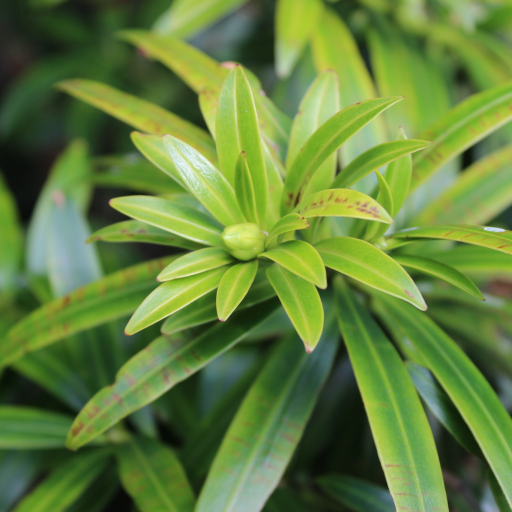
Plant Overview
Known as the Guatemalan Yellowwood or Cipresillo, this ancient evergreen is a living relic from a lineage of conifers that dates back to the era of the dinosaurs. Native to the mist-shrouded forests of Central America, it offers a lush, feathery texture that bridges the gap between a rugged pine and a graceful tropical willow. It is a favorite for gardeners seeking a structural, architectural plant that feels both prehistoric and sophisticated.
🔍 How to Identify
- 🍃 Leaf Shape: Features long, narrow, lance-shaped leaves that are thick, leathery, and arranged spirally around the stems.
- 🪵 The Bark: The trunk is covered in thin, fibrous, reddish-brown bark that tends to peel away in long, narrow strips as the tree matures.
- 🫐 Seed Cones: Unlike typical "pine cones," it produces small, fleshy, berry-like structures (receptacles) that turn a dark purple or blue when mature, each holding a single seed.
🏡 In Your Garden
- 🌿 Versatile Growth: While it can become a massive tree in the wild, in a garden setting, it is highly prized as a dense privacy screen or hedge. It responds exceptionally well to shearing, allowing you to "sculpt" it into precise geometric shapes.
- 🌤️ Light Nuance: Unlike many of its sun-loving conifer cousins, the Guatemalan Yellowwood is surprisingly shade-tolerant. It thrives in that "difficult" middle ground of dappled light where other evergreens might become thin and leggy.
- 💧 Root Resilience: It prefers consistently moist, well-draining soil. It is more tolerant of humid, tropical environments than most other Podocarpus species, making it a sturdy choice for warm-climate coastal gardens.
⚠️ Safety & Toxicity
- 🐾 Status: Mildly toxic to pets and humans.
- 🚫 Details: The fleshy "fruits" and seeds contain diterpenoid compounds. If ingested by dogs, cats, or children, they can cause significant digestive upset, including vomiting and diarrhea. The foliage is generally safe to touch, but it’s best kept away from curious nibblers.
✨ Fun Fact
The genus name Podocarpus literally translates to "stalked fruit" in Greek. This refers to the strange, fleshy base that supports the seed, which was once a primary food source for ancient birds and small mammals that helped spread the tree across the supercontinent of Gondwana!

Detailed Care Instructions
To successfully grow a Podocarpus guatemalensis plant, also known as Guatemalan fir, follow these steps:
- Climate and soil requirements: Podocarpus guatemalensis prefers a warm and humid climate. The plant thrives in well-draining soil with a pH level between 6.0 to 7.5.
- Sunlight: Place the plant in a location where it can receive partial shade to full sun. However, it can tolerate more shade than direct sunlight.
- Planting: Choose a suitable planting location, either in the ground or in a container, depending on your preference and available space. If planting in the ground, dig a hole twice the size of the root ball. Add organic matter or compost to the existing soil to improve drainage and fertility. If planting in a container, ensure it has drain holes and use a well-draining potting mix.
- Watering: Podocarpus guatemalensis requires regular watering, especially during the first year of growth. Keep the soil consistently moist but not waterlogged. Decrease watering frequency once the plant is established, but still ensure it receives sufficient moisture.
- Fertilizing: Apply a balanced, slow-release fertilizer in early spring to promote healthy growth. Follow the manufacturer's instructions for proper application. Additionally, apply organic compost or well-rotted manure around the base of the plant once or twice a year.
- Pruning: Regular pruning helps maintain the desired shape and size of the plant. Prune any dead or diseased branches as soon as you notice them. Additionally, remove any crossing branches to improve air circulation and reduce the risk of diseases.
- Pests and diseases: Podocarpus guatemalensis is relatively resistant to pests and diseases. However, keep an eye out for common garden pests like aphids, scale insects, or spider mites. Treat any infestations promptly using organic or chemical insecticides if necessary.
- Mulching: Applying a layer of organic mulch around the base of the plant helps retain moisture, suppress weeds, and improve soil fertility. Use materials like wood chips or bark mulch, keeping the mulch a few inches away from the trunk to prevent rotting.
Remember, Podocarpus guatemalensis is a slow-growing plant, so be patient as it establishes and grows over time.
To properly water Podocarpus Guatemalensis, follow these guidelines:
- Watering frequency: Determine how often to water your plant by checking the moisture levels in the soil. Stick your finger about an inch into the soil – if it feels dry, it's time to water. Avoid watering excessively or too frequently as it may lead to root rot.
- Water quantity: When watering, provide a thorough soak to ensure water reaches the root zone. Apply water until it starts to flow through the drainage holes. This helps flush out accumulated salts and encourages proper root growth.
- Deep watering: Ensure the water penetrates deep into the soil to encourage the roots to grow and establish deeper into the ground. This helps the plant become more resilient and less prone to moisture stress.
- Watering method: While a watering can or hose works well, drip irrigation is highly recommended for efficient water distribution. Drip irrigation systems deliver water directly to the root zone, minimizing water loss due to evaporation.
- Mulching: Apply a layer of organic mulch around the base of the plant, extending to its drip line. Mulching helps retain moisture in the soil, reduces weed growth, and stabilizes soil temperature. This is particularly beneficial during hotter months.
- Rainwater harvesting: Consider collecting rainwater to water your plant. This not only conserves water but also provides the plant with natural, untreated water that is ideal for its growth.
- Seasonal adjustments: During periods of active growth, typically spring and summer, the plant may require more frequent watering. In winter or dormant periods, reduce watering as the plant's water requirements decrease.
- Signs of underwatering/overwatering: Monitor your plant for signs of underwatering, such as drooping leaves or dry soil, and increase watering frequency accordingly. Overwatering may lead to yellowing leaves, wilting, or root rot, so be cautious not to exceed the plant's needs.
Remember, while these guidelines are general, it is essential to observe your specific plant to provide the best care. Adjust the watering routine based on environmental factors such as temperature, humidity, and light conditions, as they can influence the plant's water requirements.
To fertilize the plant, you will need a balanced, slow-release fertilizer that is specifically formulated for use on broadleaf evergreen plants. Here are the general fertilizing instructions for the Podocarpus Guatemalensis plant:
- Choose the right time: The best time to fertilize the plant is during the growing season, typically in spring and early summer.
- Dilute the fertilizer: Mix the fertilizer with water according to the instructions provided on the product label. Follow the recommended ratio to avoid over-fertilizing the plant, which can lead to damage.
- Apply evenly: Pour the diluted fertilizer mixture around the base of the plant, making sure to distribute it evenly. Avoid pouring the fertilizer directly onto the foliage or stems.
- Water thoroughly: After applying the fertilizer, water the plant thoroughly. This helps to carry the nutrients down to the plant's roots and prevents potential fertilizer burn.
- Monitor and adjust: Keep an eye on the plant's response to fertilization. If you notice any signs of over-fertilization, such as leaf burn or wilting, reduce the amount of fertilizer in the next application.
- Repeat as needed: Depending on the specific fertilizer used, you may need to repeat the application every few months during the growing season. Follow the instructions provided by the manufacturer for the ideal frequency of fertilization.
Remember, specific fertilizing instructions may vary depending on the product you choose and the specific needs of your plant. Always read and follow the instructions provided by the fertilizer manufacturer to ensure the best possible results.
When selecting the proper soil for Podocarpus Guatemalensis, it is important to consider the plant's specific needs and characteristics. Podocarpus Guatemalensis typically thrives in well-draining soil that retains moisture but does not become waterlogged. The ideal soil composition for this plant is a mix of loam and organic matter, providing a balanced texture while retaining necessary nutrients. Loam-based soil ensures adequate drainage to prevent waterlogged conditions, which can be harmful to the plant's roots.
Adding organic matter to the soil mix aids in moisture retention and nutrient availability while promoting beneficial microbial activity. This can be achieved by incorporating compost or well-rotted manure into the soil, improving its fertility and overall structure. The organic matter helps retain moisture for the roots to absorb, reducing the risk of drying out.
Additionally, the soil pH should be slightly acidic to slightly alkaline, ideally between 6.0 and 7.5, to accommodate the plant's preferences. Testing the pH level of the soil can help determine if any amendments are necessary.
It is essential to ensure that the soil is well-draining and doesn't become compacted, as this can hinder root growth and lead to drainage issues. Amending the soil with perlite or sand can help improve its drainage properties, ensuring excess water can escape.
Regularly monitoring soil moisture levels and adjusting watering routines accordingly is crucial in maintaining the health of Podocarpus Guatemalensis. Proper soil moisture levels help prevent water stress or root rot, both of which can be detrimental to the plant.
In summary, choosing a well-draining soil mixture that incorporates loam, organic matter, and suitable amendments while maintaining a slightly acidic to slightly alkaline pH range is crucial for the successful cultivation of Podocarpus Guatemalensis.
Podocarpus guatemalensis, a plant native to Central America, can be propagated through several methods. Here's a detailed explanation of how to propagate this plant:
- Seed Propagation:
a. Collect mature fruits from the plant. The fruits are usually small and fleshy.
b. Remove the outer flesh covering the seed using your fingers or a small knife.
c. Soak the seeds in water for 24 hours to soften the seed coat.
d. Fill a seed tray or a small pot with well-draining potting mix.
e. Place the seeds on the surface of the soil, and cover them lightly with a thin layer of soil.
f. Water the tray/pot gently, ensuring the soil is moist but not waterlogged.
g. Place the tray/pot in a warm, partially shaded location, ideally around 70-80°F (21-27°C).
h. Keep the soil moist by regular misting or light watering.
i. Germination may take around 4-8 weeks. Once the seedlings have grown a few inches tall, you can transfer them to individual pots.
- Stem Cutting Propagation:
a. Select a healthy branch from the parent plant. The stem should be about 6-8 inches long and should not be flowering.
b. Make a clean cut just below a node (the point where a leaf grows from the stem).
c. Remove the lower leaves, leaving only a few leaves at the top.
d. Dip the cut end of the stem into a rooting hormone powder or liquid.
e. Prepare a small pot filled with a well-draining potting mix or a mixture of peat moss and perlite.
f. Create a small hole in the soil using a pencil or a stick.
g. Place the cutting into the hole, ensuring that the bottom nodes are covered with soil.
h. Gently press the soil around the stem to make it stable.
i. Water the cutting thoroughly and place it in a warm, partially shaded location.
j. Cover the cutting with a plastic bag or a clear plastic dome to create a humid environment.
k. Mist the cutting regularly to maintain moisture.
l. After a few weeks, check for root growth by gently tugging the stem. If there is resistance, it indicates that rooting has occurred.
m. Once rooted, remove the plastic covering and gradually expose the new plant to more sunlight to acclimate it.
Propagation of Podocarpus guatemalensis can require patience and attention to detail, but with proper care, you can successfully propagate this plant and enjoy its beauty in your own space.








