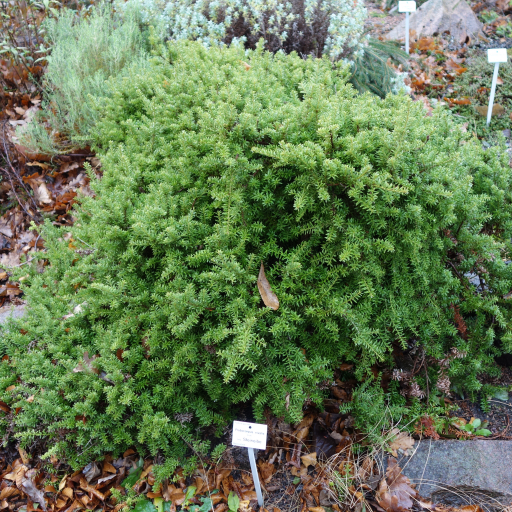
Plant Overview
Known as the Mountain Totara, this New Zealand native is a master of the high-altitude landscape. While its cousins grow into towering forest giants, Podocarpus nivalis stays low to the ground to survive freezing winds and heavy snow. It is a favorite for rock gardens and enthusiasts looking for a "prehistoric" look that requires very little maintenance.
🔍 How to Identify
- 🌿 Foliage: Short, leathery, needle-like leaves that are blunt at the tips. Unlike sharp pines, these feel firm but aren't painfully prickly.
- 🎨 Color Palette: Typically a deep olive green, but the foliage often shifts to a rich bronze or brownish-red during the cold winter months.
- 🔴 Seed Cones: On female plants, you’ll see unique "berries." These are actually bright red, fleshy scales supporting a small green seed on top—a signature look of the Podocarp family.
🏡 In Your Garden
- 🏔️ Alpine Resilience: Because it evolved in the mountains, it is incredibly hardy against frost and biting winds. It is the perfect choice for exposed rockeries or "difficult" spots where other plants might wither.
- ⏳ Slow & Steady: This plant grows very slowly and has a naturally prostrate (creeping) habit. It makes an excellent, long-lived groundcover or a striking candidate for "cloud pruning" and Bonsai.
- 🚿 Drainage Nuance: While it appreciates consistent moisture, it hates "wet feet." It needs gritty, free-draining soil to mimic the rocky slopes of its homeland; otherwise, the roots may rot.
⚠️ Safety & Toxicity
- 🐾 Pet Safety: Generally considered non-toxic to cats and dogs, making it a safe choice for a backyard.
- 👶 Child Safety: The bright red fleshy cones are very attractive to children. While not considered highly poisonous, ingesting the seeds or large amounts of the fleshy base can cause mild stomach upset or nausea.
- 🧤 Skin Sensitivity: Most people handle this plant without issue, though the sap can occasionally cause minor irritation for those with very sensitive skin.
✨ Fun Fact
The species name nivalis is Latin for "snowy" or "growing near snow." In its native New Zealand, this plant acts as a vital food source for the Kea, the world’s only alpine parrot, which feasts on the red fleshy cones.

Detailed Care Instructions
To grow Podocarpus Nivalis plant, also known as the Snow Podocarpus, you can follow these steps:
- Choose a suitable location: Podocarpus Nivalis plants prefer full sun to partial shade. Select a well-draining spot in your garden that receives adequate sunlight.
- Prepare the soil: Ensure the soil is loose, fertile, and well-draining. If the soil is heavy or compacted, amend it with organic matter such as compost or peat moss to improve drainage and nutrient content.
- Dig a hole: Dig a hole in the prepared soil that is slightly larger than the root ball of the plant.
- Plant the Podocarpus Nivalis: Gently remove the plant from its container and place it in the hole. Position it so that the top of the root ball is level with the soil surface. Backfill the hole with soil, firming it gently around the roots to remove air pockets.
- Water the plant: After planting, thoroughly water the plant to settle the soil and ensure good root-to-soil contact. Thereafter, water regularly to keep the soil consistently moist but avoid overwatering, as it can lead to root rot.
- Mulch the area: Apply a layer of organic mulch, such as wood chips or shredded bark, around the base of the plant. This helps retain moisture, suppress weeds, and insulate the roots.
- Prune when necessary: As the plant grows, you may need to prune it to maintain its shape and size. Pruning can be done in early spring before new growth appears.
- Fertilize occasionally: Apply a balanced, slow-release fertilizer in spring or early summer to provide the plant with essential nutrients. Follow the package instructions for the correct dosage.
- Protect from extreme conditions: During periods of frost or extreme heat, you may need to provide some protection to the plant. Consider covering it with a frost cloth or providing some shade to prevent damage.
- Monitor for pests and diseases: Regularly inspect the foliage for any signs of pests or diseases, such as scale insects or fungal issues. Address them promptly using appropriate organic insecticides or fungicides.
Following these steps can help you successfully grow the Podocarpus Nivalis plant in your garden or landscape.

Place in a bright room that is sun drenched almost all day. Or directly in a south-facing window.

Podocarpus nivalis plant belongs to the group of evergreen trees that are native to certain regions of the world. It's essential to water the plant regularly to keep it healthy and thriving. Here are some tips on how to water Podocarpus nivalis plant:
1. Check the soil moisture: Before watering the plant, check the soil's moisture level using a soil moisture meter or by sticking your finger about an inch deep into the soil. If the soil feels dry, it's time to water the plant.
2. Water deeply: Water the plant deeply, making sure that water reaches the root zone. Depending on the soil type and weather conditions, aim to water the plant 1-2 times a week.
3. Use room temperature water: Use room temperature water to avoid shocking the plant's roots. Cold or hot water can damage the roots and affect the plant's growth.
4. Avoid over-watering: Over-watering the plant can lead to root rot and other diseases. Make sure the soil is well-draining to avoid waterlogging.
5. Water during early morning or late evening: To minimize water loss due to evaporation, water the plant during early morning or late evening when the temperature is cooler.
By following these tips, you can keep your Podocarpus nivalis plant healthy and lush.
- Choose a well-draining soil mix that is rich in nutrients.
- Water the plant deeply about once a week, making sure the water reaches the roots.
- Fertilize the plant with a balanced, slow-release fertilizer in early spring or late winter.
- For young plants, use a fertilizer with higher amounts of phosphorus to promote root growth.
- Apply the fertilizer evenly throughout the soil, avoiding the stem or foliage.
- Follow the recommended dosage on the fertilizer package, and do not over-fertilize as this can damage the plant.
- Water the plant after fertilizing to help the nutrients reach the roots.
- Repeat fertilizing once or twice throughout the growing season, depending on the plant's needs and growth rate.
The best soil to use with this plant is a well-draining mix with a slightly acidic pH level. It should be a loose, aerated soil with good water-holding capacity, as this plant prefers evenly moist soil. A blend of peat moss, pine bark, and coarse sand or perlite may be a suitable mix for this plant. The soil should be fertile, but not too rich, and free from any toxins or harmful chemicals. Care should be taken not to compact the soil around the roots, as this can inhibit growth and lead to root rot. It is recommended to repot this plant every 2-3 years to refresh the soil and promote healthy growth.
To propagate this plant, take cuttings from the parent plant in the spring or early summer. Cut a section of stem that is about 6 inches long, making sure to use a clean, sharp pair of scissors or pruning shears. Remove the leaves from the bottom half of the cutting, leaving a few leaves at the top. Dip the cut end of the stem in rooting hormone powder and plant it in a pot filled with well-draining soil. Water the cutting thoroughly and cover it with a plastic bag or clear plastic wrap to create a mini greenhouse. Put the pot in a warm, bright spot, but out of direct sunlight. Keep the soil consistently moist and wait for root growth to appear. Once the roots have formed, remove the plastic cover and gradually acclimate the cutting to more light and less humidity.








