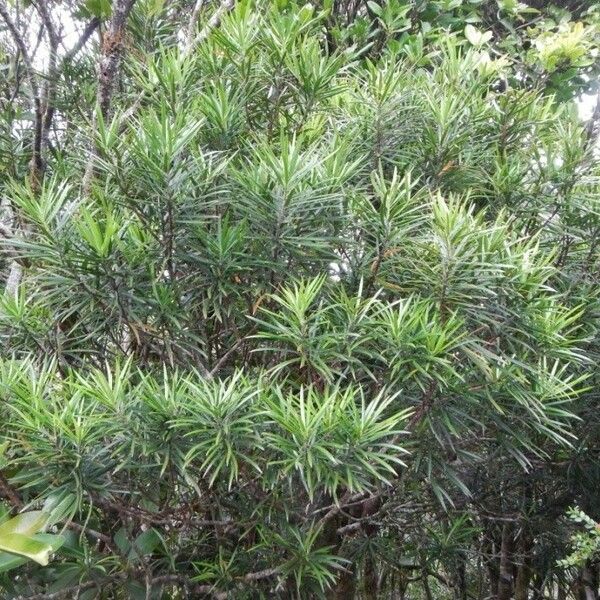
Plant Overview
Often called the "Forest Yellowwood," Podocarpus sylvestris is an elegant evergreen that hails from the ancient, mist-shrouded forests of New Caledonia. This "living fossil" looks like a sophisticated hybrid between a prehistoric pine and a tropical shrub, offering a lush, architectural feel to any collection. In its native habitat, it is a resilient sentinel that has survived relatively unchanged for millions of years.
🔍 How to Identify
- 🍃 Leaf Structure: Features slender, strap-like leaves that are leathery to the touch and arranged in a dense, spiral pattern along the branches.
- 🌳 Growth Habit: It typically maintains a neat, upright form, growing as a slow-moving shrub or a small, well-branched tree with grayish-brown bark.
- 🍒 The "Foot" Seed: Unlike northern pines, it doesn't produce traditional cones; instead, its seeds sit atop a fleshy, swollen base (receptacle) that often turns a dark, reddish-purple when mature.
🏡 In Your Garden
- 🌱 Root Consistency: This species is notoriously sensitive to root disturbance. It prefers to be planted in its "forever home" early, as frequent repotting or moving can lead to a growth standstill or "sulking."
- ☁️ Microclimate Needs: While it is a conifer, it thrives in high humidity and dappled light. It makes an excellent candidate for "bright shade" areas where traditional sun-loving evergreens might struggle.
⚠️ Safety & Toxicity
- 🐾 Pet Warning: The seeds and the fleshy receptacles contain toxins that can cause digestive upset, vomiting, or lethargy in cats and dogs if ingested.
- 🚫 Human Safety: While the colorful seed bases may look like edible berries, they are considered mildly toxic to humans and should never be consumed, especially by children.
✨ Fun Fact
The name Podocarpus literally translates to "foot-fruit" in Greek (podos meaning foot and karpos meaning fruit), referring to the unique fleshy stalk that holds the seed!

Detailed Care Instructions
To grow a Podocarpus Sylvestris plant, also known as the African fern pine, follow these steps:
- Find a suitable location: Choose a spot that offers partial shade to full sun, as this plant can tolerate a wide range of light conditions. It prefers well-draining soil.
- Prepare the soil: Ensure the soil is rich in organic matter and has good drainage. If the soil is heavy or compacted, amend it with compost or sand to improve drainage.
- Propagation: Podocarpus Sylvestris plants can be grown from seeds or cuttings. If using seeds, sow them in pots or trays with seed starting mix. If using cuttings, take semi-hardwood cuttings in early spring or late summer.
- Planting: If starting from seeds, plant them in prepared pots or trays at a depth of ¼ inch. Keep the soil slightly moist. For cuttings, dip them in rooting hormone and plant them in a well-draining potting mix. Water thoroughly after planting.
- Watering: Keep the soil evenly moist but not soaked. Water when the top inch of soil feels dry. Avoid overwatering, as it can lead to root rot.
- Mulching and fertilizing: Apply a layer of organic mulch, such as wood chips or compost, around the base of the plant to retain moisture and suppress weeds. Feed the plant with a balanced, slow-release fertilizer every spring.
- Pruning: Regular pruning helps maintain the desired shape and size of the plant. Prune in late winter or early spring to remove dead or damaged branches and to promote new growth.
- Pest and disease control: Podocarpus Sylvestris plants are generally resistant to pests and diseases. However, watch out for common issues like aphids or scale insects. Treat infestations with insecticidal soap or horticultural oil.
- Winter care: In colder climates, protect the plant from freezing temperatures by mulching around the base, covering with frost cloth, or moving potted plants indoors.
- Maintenance: Regularly check for weeds or signs of stress. Keep an eye out for any changes in plant health or appearance, and address issues promptly.
Remember to research and understand the specific needs and climate requirements of the Podocarpus Sylvestris plant to ensure its optimal growth and health.
To properly water this plant, it is important to consider the specific needs of its species. It is essential to ensure that the soil is moist, but not waterlogged. Watering should be done regularly, but not too frequently as the roots require oxygen to function properly. It may be necessary to adjust the watering schedule based on the climate and season. It is important to avoid getting water on the leaves as this may cause fungal growth. Using a watering can or hose with a gentle spray attachment can help control the amount of water being applied and prevent damage to the plant.
To fertilize this plant, apply a slow-release fertilizer in the spring and again in the fall. Use a balanced fertilizer with equal amounts of nitrogen, phosphorus, and potassium. Apply the fertilizer evenly around the plant's root zone, being careful not to let it touch the foliage or stem. Water the plant deeply after fertilizing to help the nutrients reach the root system. Avoid over-fertilizing, as this can lead to leaf burn or other plant problems.
Podocarpus Sylvestris prefers a well-draining soil mixture that is rich in organic matter. A recommended soil mix for this plant includes a combination of peat moss, perlite, and sand. The addition of pine bark or pine needles can also be beneficial, as they help to increase the acidity of the soil. It is important to avoid using heavy soils or soils that are prone to waterlogging as this can lead to root rot and other issues. Furthermore, Podocarpus Sylvestris prefers a slightly acidic soil pH in the range of 5.5 to 6.5. Regular fertilization with a balanced, water-soluble fertilizer is also recommended during the growing season to promote healthy growth.
To propagate this plant, take softwood cuttings from the parent plant during the growing season. Cuttings should be around 6-8 inches in length and taken from healthy, disease-free stems with a sharp, clean pair of shears. Remove the lower leaves and dip the cut end in rooting hormone. Place the cutting in a pot filled with a well-draining potting mix and water thoroughly. Cover the pot with a plastic bag to create a humid environment and place in a bright, but indirect, light. Keep the soil moist, but not waterlogged, and mist the cutting regularly. After a few weeks, roots should begin to develop and new growth will appear. Once the new plant has established, it can be transplanted into a larger pot or into the ground outside.








