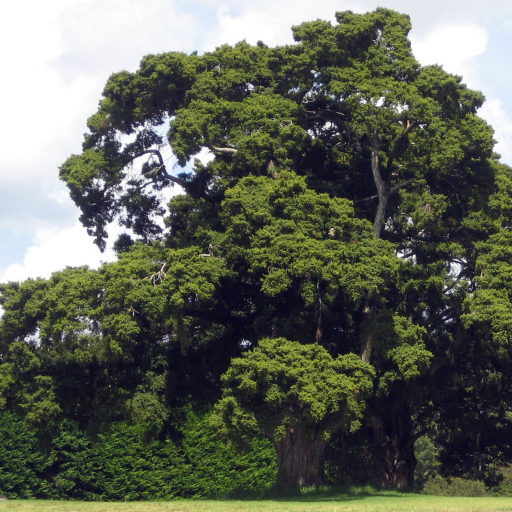
Plant Overview
The Totara is a true "King of the Forest" in its native New Zealand, revered for centuries by the Māori people as a symbol of strength and nobility. These evergreen giants can live for over a thousand years, growing into massive, craggy pillars that anchor the landscape. While they can become towering forest monarchs, they are surprisingly versatile and are often kept as elegant, slow-growing hedges or specimen trees in home landscapes.
🔍 How to Identify
- 🌿 The Foliage: Look for stiff, leathery, needle-like leaves that are brownish-green to dark green. They are quite sharp to the touch and arranged spirally around the branchlets.
- 🪵 The Bark: One of its most distinctive features is the thick, corky, and deeply furrowed bark. It often peels away in long, papery strips, giving the trunk a "shaggy" appearance.
- 🍒 The "Fruit": Technically a conifer, the Totara doesn't produce flowers. Instead, females grow a bright red, fleshy base (receptacle) that looks like a berry, with a greenish-black seed sitting prominently on top.
🏡 In Your Garden
- 🌱 Slow and Steady: Because the Totara is a slow grower, it is exceptionally easy to manage as a hedge. It responds beautifully to pruning, allowing you to create dense, "living walls" that provide excellent privacy and wind protection.
- 🦉 A Wildlife Magnet: If you plant a female Totara, expect a flurry of bird activity. Native birds are highly attracted to the sweet, succulent red bases of the seeds, making your garden a vital pit-stop for local biodiversity.
- 🌦️ Hardy Nature: Once established, this tree is incredibly tough. It possesses a deep root system that helps it withstand drought and high winds, though it prefers well-drained soil and will struggle in "wet feet" (stagnant water).
⚠️ Safety & Toxicity
- 🟢 General Safety: The Totara is generally considered non-toxic to humans and is not known for causing skin irritation.
- 🐾 Pets & Livestock: While the red fleshy part of the "berry" is technically edible for birds, the green seed attached to it contains podocarpic acid, which can be mildly toxic if ingested in large quantities by pets or livestock. It is best to keep curious chewers away from fallen seeds.
- 🌾 Allergy Note: As a conifer, male trees release pollen in the spring which may trigger mild hay fever in sensitive individuals.
✨ Fun Fact
The Totara was the primary choice for Māori "Waka" (canoes) because the wood is incredibly durable and resistant to rot. Some of the largest war canoes, capable of carrying 100 warriors, were carved from a single, massive Totara trunk!

Detailed Care Instructions
To grow a Podocarpus Totara plant, also known as the totara tree, you can follow these steps:
- Select a suitable location: Choose a spot with full sunlight or partial shade in your garden or yard. Totara trees prefer well-draining soil.
- Prepare the soil: Ensure the soil is well-draining and fertile. You can improve the soil by adding compost or well-rotted manure before planting.
- Plant the seedling: Dig a hole that is slightly larger than the root ball of your totara seedling. Place the seedling in the hole, making sure the top of the root ball is level with the surrounding soil. Gently backfill the hole and firm the soil around the seedling.
- Watering: After planting, thoroughly water the totara seedling to settle the soil around the roots. Keep the soil consistently moist but not waterlogged. Water deeply and regularly during dry spells.
- Mulch: Apply a layer of organic mulch around the base of the plant to help retain moisture and suppress weed growth. Keep the mulch a few inches away from the trunk to avoid rot.
- Pruning: Prune the totara tree lightly to maintain its shape and remove any dead or damaged branches. Avoid heavy pruning, as totara trees generally have a naturally tidy growth habit.
- Fertilizing: Totara trees generally do not require frequent fertilization. However, if the leaves appear pale or growth is slow, you can apply a balanced slow-release fertilizer in spring.
- Pest and disease control: Totara trees are generally resistant to many pests and diseases. However, keep an eye out for any signs of insect infestation or abnormal leaf coloration, and take appropriate measures if necessary.
- Provide support: If the totara tree is exposed to strong winds or is in an area prone to storms, it may benefit from staking or providing support until it establishes a strong root system.
- Monitor growth: Regularly monitor the growth and health of your totara tree. Ensure it has enough space to spread its branches as it matures.
Remember, growing a Podocarpus Totara tree requires patience as they are slow-growing. However, with proper care and maintenance, they can become beautiful and long-lived additions to your garden.

Place in a bright room that is sun drenched almost all day. Or directly in a south-facing window.

To properly water this plant, it is important to consider its soil type and drainage. Water should be given when the top inch of soil feels dry to the touch. This can be determined by sticking a finger into the soil or using a moisture meter. When watering, ensure that the water reaches the roots by watering slowly and deeply. Ideally, water should reach a depth of 6-8 inches to encourage deep root growth. Avoid overwatering as this can lead to root rot and other issues. Additionally, it is important to ensure proper drainage to prevent water from sitting in the bottom of the pot or in the soil.
To fertilize this plant, apply a balanced, slow-release fertilizer in early spring. Follow the manufacturer's instructions for the proper dosage and application method. Avoid over-fertilization as it can damage the roots of the plant. Water the plant thoroughly after fertilizing to help the fertilizer penetrate the soil. Repeat the process once every year, preferably in the same season.
When selecting soil for this particular plant, it is important to choose a well-draining soil that is able to retain moisture while allowing excess water to drain away quickly. The soil should ideally have a neutral to slightly acidic pH range and be rich in organic matter. It is recommended to avoid using heavy clay soils or soils that are too sandy. A good mix for planting this plant could include equal parts of peat moss, perlite, and organic compost. It is important to keep the soil consistently moist but not waterlogged as this can lead to root rot. Additionally, adding a layer of mulch around the base of the plant can help to retain moisture and regulate soil temperature.
Podocarpus Totara is a plant that can be propagated using either seeds or cuttings. For seed propagation, the seeds should be collected from mature cones in the fall, and then they should be soaked in warm water overnight before planting. Plant the seeds in a well-draining soil mix and keep them moist. Germination can take up to several months.
Cuttings can also be used for propagation. Take cuttings from young, healthy growth in the early summer and strip the leaves from the lower half of the stem. Dip the cut end in hormone powder and plant it in a well-draining soil mix. Keep the soil moist and cover the cutting with a plastic bag to increase humidity. The cutting should root within several weeks.
It is important to note that Podocarpus Totara is a slow-growing plant and may take several years to reach maturity. Additionally, it prefers moist, well-draining soil and partial shade.








